An-124 Condor vs C-17 Globemaster III
An-124 Condor vs C-17 Globemaster III at a glance — top speed 865 vs 930 km/h, range 3,700 vs 11,540 km, max takeoff weight 405,000 vs 265,352 kg, built 55 vs 279 units.
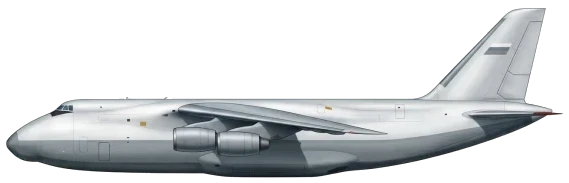
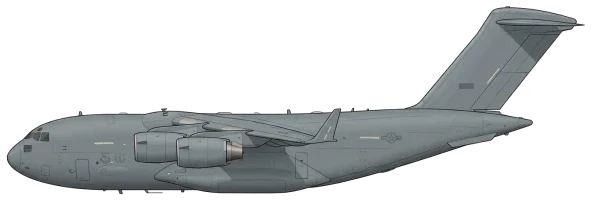
| An-124 Condor | C-17 Globemaster III | |
|---|---|---|
| Origin country | 🇷🇺 Ex-USSR | 🇺🇸 United States |
| Category | Military Transport Aircraft | Military Transport Aircraft |
| Manufacturer | Antonov | McDonnell Douglas |
| First flight | 26 December 1982 | 15 September 1991 |
| Year introduced | 1986 | 1993 |
| Number produced | 55 units | 279 units |
| Average unit price | $100 million | $340 million |
| Wing area | 628.0 m² | 353.0 m² |
| Wingspan | 73.3 m | 51.8 m |
| Height | 20.8 m | 16.8 m |
| Length | 69.0 m | 53.0 m |
| Maximum speed | 865 km/h | 930 km/h |
| Operational range | 3,700 km | 11,540 km |
| Service ceiling | 9,000 m | 13,715 m |
| Max. takeoff weight | 405,000 kg | 265,352 kg |
| Empty weight | 175,000 kg | 128,140 kg |
| Total thrust | 4 x 23,400 kgf | 4 x 18,344 kgf |
Detailed Comparison
The C-17 Globemaster III and the An-124 Condor provide distinct strategic airlift solutions, shaped by different operational doctrines. The American C-17 was designed as a versatile platform blending strategic range with the tactical ability to operate from short, austere airfields. In contrast, the Soviet-era An-124 was engineered primarily to transport outsized and exceptionally heavy cargo over vast distances, prioritizing maximum payload capacity above all else. This fundamental difference in purpose is evident in every aspect of their design and employment.
Development and Design
The C-17 is a product of late Cold War U.S. Air Force requirements for a single airframe to replace the C-141 and augment the C-5, while also possessing tactical capabilities similar to the C-130. Its design incorporates a high-lift wing, powerful F117 turbofans with thrust reversers directed upwards to prevent foreign object debris ingestion, and a robust landing gear system. These features grant it remarkable short takeoff and landing (STOL) performance on unimproved runways. Its cockpit is highly automated, requiring a crew of only three. The An-124 was the Soviet Union's response to the Lockheed C-5 Galaxy. Its design includes a nose visor and a rear ramp for simultaneous loading/unloading, an onboard overhead crane system, and a 24-wheel landing gear that can "kneel" to facilitate cargo handling. While it has rough-field capabilities, its size and weight limit it to longer, more substantial runways than the C-17. It requires a larger crew of seven, reflecting its more complex systems and earlier design era.
Specifications and Performances
The An-124’s specifications underscore its role as a heavy hauler. It possesses a maximum takeoff weight of 405,000 kg and can carry a payload of up to 150 tonnes, nearly double the C-17's 77-tonne capacity. Its cavernous cargo hold (36m x 6.4m x 4.4m) is designed for items like main battle tanks or industrial machinery. However, this scale comes with trade-offs. The C-17, with its lower MTOW of 259,460 kg, has a higher service ceiling (13,715 m vs. 9,000 m) and can operate from runways as short as 1,067 meters, a feat impossible for the An-124. While the An-124 has a longer maximum ferry range, the C-17's combination of range and tactical access gives it a unique operational flexibility.
Deployment and usage
The deployment histories of the two aircraft reflect their design philosophies. The C-17 is a core asset of the U.S. Air Force and its allies, serving as the backbone for rapid global deployment. It has been used extensively to move troops and equipment directly into active combat zones like Afghanistan and Iraq. Its role in humanitarian aid is equally critical, delivering supplies to disaster areas with damaged infrastructure. The An-124, while a military asset, has found a second life as a premier commercial charter aircraft for outsized cargo. Under programs like NATO's Strategic Airlift International Solution (SALIS), it has provided critical lift for member nations. It is frequently contracted to move specialized items such as satellites, rocket components, and heavy industrial equipment that no other aircraft can accommodate.
Conclusion
The C-17 and An-124 are not direct competitors but complementary assets in the global airlift ecosystem. The C-17 provides an unparalleled blend of strategic reach and tactical access, making it an indispensable tool for military power projection and rapid response. The An-124 occupies a unique niche, offering a sheer volume and weight-carrying capability that is unmatched. The choice between them is a clear function of the mission: the C-17 is for delivering substantial force and materiel to the point of need, while the An-124 is for moving the largest and heaviest objects on an intercontinental scale.


