DHC-6 Twin Otter vs Y-12
DHC-6 Twin Otter vs Y-12 at a glance — top speed 315 vs 328 km/h, range 1,480 vs 1,340 km, max takeoff weight 5,670 vs 5,300 kg, built 985 vs 71 units.
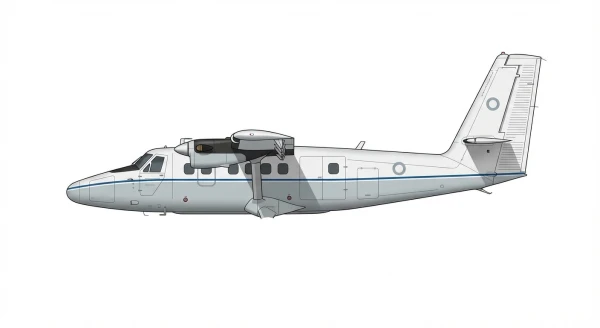
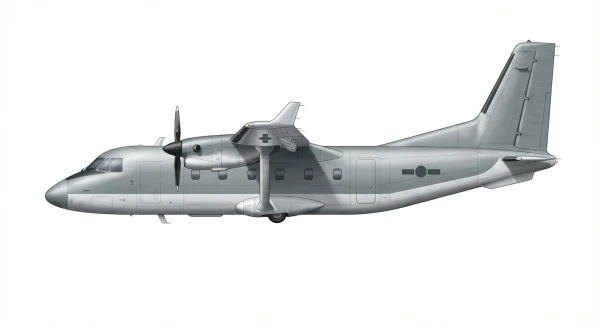
| DHC-6 Twin Otter | Y-12 | |
|---|---|---|
| Origin country | 🇨🇦 Canada | 🇨🇳 China |
| Category | Military Transport Aircraft | Military Transport Aircraft |
| Manufacturer | De Havilland Canada | Harbin |
| First flight | 20 May 1965 | 14 July 1982 |
| Year introduced | 1966 | 1985 |
| Number produced | 985 units | 71 units |
| Average unit price | $7 million | $5 million |
| Wing area | 39.0 m² | 34.3 m² |
| Wingspan | 20.0 m | 17.2 m |
| Height | 6.0 m | 5.7 m |
| Length | 15.8 m | 18.9 m |
| Maximum speed | 315 km/h | 328 km/h |
| Operational range | 1,480 km | 1,340 km |
| Service ceiling | 7,620 m | 7,000 m |
| Max. takeoff weight | 5,670 kg | 5,300 kg |
| Empty weight | 3,175 kg | 2,840 kg |
| Total thrust | 2 x 410 kW | 2 x 410 kW |
Detailed Comparison
The Harbin Y-12 serves as a Chinese challenge to the market dominance of the De Havilland Canada DHC-6 Twin Otter, offering a similar twin-turboprop configuration at a roughly 30% lower acquisition cost. While the DHC-6 established the benchmark for utility bush flying in 1966, the Y-12 entered service two decades later, attempting to undercut Western competitors in developing markets by combining a Chinese airframe with Western powerplants.
Development and Design
De Havilland Canada designed the DHC-6 specifically to replace the single-engine Otter, utilizing a high-lift wing with double-slotted flaps and ailerons acting in unison. This design prioritizes extreme Short Takeoff and Landing (STOL) performance in primitive environments. The recent resumption of production by Viking Air (now DHC) updates this 1960s airframe with modern avionics while retaining the aerodynamic profile.
Conversely, the Harbin Y-12 evolved from the piston-engined Y-11. Harbin adopted a supercritical airfoil and a wider fuselage to maximize volume. Crucially, Harbin relied on Canadian Pratt & Whitney PT6A-27 engines—the same powerplant found in the DHC-6 Series 300—to ensure reliability and exportability, tacitly acknowledging domestic Chinese engine limitations during the 1980s. While the Y-12 mimics the Twin Otter’s utility role, its design is less focused on extreme STOL performance and more on cabin volume and pave-way operations.
Specifications and Performances
The DHC-6 holds a distinct advantage in heavy-lift utility, with a Maximum Takeoff Weight (MTOW) of 5,670 kg compared to the Y-12's 5,300 kg. While the Y-12 offers a marginal speed advantage at 328 km/h against the Otter's 315 km/h, the DHC-6 compensates with superior range (1,480 km versus 1,340 km) and ceiling. The Y-12 is nearly three meters longer, theoretically offering greater passenger volume, but the DHC-6's wing area (39.0 m²) exceeds the Y-12's (34.27 m²), directly contributing to the Canadian platform's superior lift generation and low-speed handling characteristics required for tactical insertions.
Deployment and Usage
The Twin Otter maintains a ubiquitous footprint in Western special operations and paramilitary roles. The USAF Academy operates the UV-18B for parachute training, while the Series 400 "Guardian" variant serves maritime patrol roles for nations like Vietnam and the UAE. Its logistical chain is global, mature, and battle-tested in environments ranging from Antarctic ice shelves to Afghan highlands.
The Y-12 serves primarily with the People's Liberation Army Air Force for airborne training and light transport. Beijing has aggressively marketed the platform to African and Pacific Rim states—including Kenya, Sri Lanka, and Djibouti—often leveraging financing deals. However, operational readiness in export fleets frequently suffers. Nepal Airlines, for example, grounded its Chinese-made fleet, citing maintenance issues and unprofitability compared to their Canadian counterparts.
Conclusion
For operators prioritizing immediate acquisition cost, the $5.0 million Y-12 presents a functional alternative, provided the operator can tolerate a fragile logistics chain. However, the DHC-6 Twin Otter remains the superior military investment. Its higher MTOW, greater wing area, and the widespread availability of parts for the Viking Series 400 outweigh the $2.0 million price premium. The Twin Otter is a proven operational capability; the Y-12 functions largely as a geopolitical commodity for Chinese soft power.