H225M / EC725 Caracal vs NH90 / Caiman
H225M / EC725 Caracal vs NH90 / Caiman at a glance — top speed 324 vs 300 km/h, range 1,253 vs 880 km, max takeoff weight 11,200 vs 10,600 kg, built 90 vs 471 units.
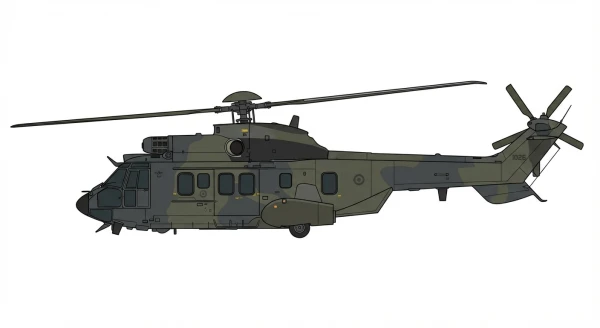
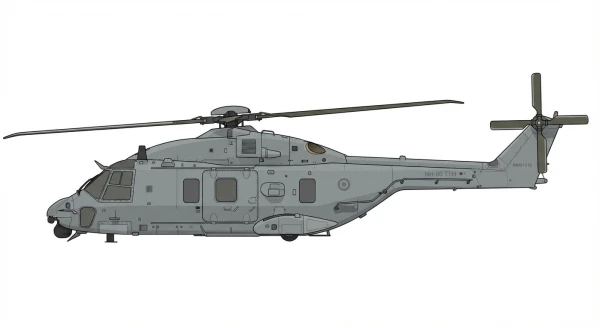
| H225M / EC725 Caracal | NH90 / Caiman | |
|---|---|---|
| Origin country | 🇩🇪 Germany🇫🇷 France | 🇩🇪 Germany🇫🇷 France🇮🇹 Italy🇳🇱 Netherlands |
| Category | Military Helicopters | Military Helicopters |
| Manufacturer | Airbus Helicopters | NHIndustries |
| First flight | 27 November 2000 | 18 December 1995 |
| Year introduced | 2005 | 2004 |
| Number produced | 90 units | 471 units |
| Average unit price | $70 million | $42 million |
| Wingspan | 16.2 m | 16.3 m |
| Height | 4.6 m | 5.3 m |
| Length | 19.5 m | 19.6 m |
| Maximum speed | 324 km/h | 300 km/h |
| Operational range | 1,253 km | 880 km |
| Service ceiling | 6,100 m | 6,000 m |
| Max. takeoff weight | 11,200 kg | 10,600 kg |
| Empty weight | 5,330 kg | 6,400 kg |
| Total thrust | 2 x 1,776 kW | 2 x 1,693 kW |
Detailed Comparison
The H225M Caracal is a specialized combat search and rescue (CSAR) platform evolved from the proven AS 532 Cougar airframe, prioritizing ruggedness and increased power. In contrast, the NH90 Caiman was a multinational "clean-sheet" design intended to fulfill a broad range of NATO battlefield and naval requirements, incorporating advanced technologies like a full composite fuselage and fly-by-wire controls from its inception.
Development and Design
The Caracal's development was a direct response to a French Air Force requirement for a dedicated CSAR helicopter with greater endurance and durability than its predecessor. This evolutionary approach, building upon the well-understood Cougar family, resulted in a relatively straightforward development cycle. Its key design features include a five-bladed main rotor to reduce vibration, removable armor, and powerful Makila 2A1 engines. The NH90's origin lies in a more ambitious NATO project to create a common, next-generation utility and naval helicopter. Its design philosophy emphasized technological advancement. It was the world's first helicopter with full fly-by-wire flight controls, and its diamond-shaped composite fuselage was designed to reduce its radar signature. This complexity, however, contributed to a prolonged development and a more challenging service introduction.
Specifications and Performances
A comparison of performance metrics reveals distinct operational profiles. The Caracal possesses a higher maximum speed (324 km/h vs. 300 km/h) and a slightly longer range (930 km vs. 880 km). Critically, its lower empty weight (5,330 kg) combined with a higher maximum takeoff weight (11,200 kg) gives it a significantly greater useful load compared to the NH90, which has an empty weight of 6,400 kg and an MTOW of 10,600 kg. This makes the Caracal particularly effective for transporting troops or heavy internal loads. Conversely, the NH90 boasts a superior rate of climb (11.2 m/s vs. 7.4 m/s), indicative of its high performance and agility, enabled by its advanced flight control system and powerful engines.
Deployment and usage
Both helicopters have seen extensive operational use. The Caracal was rapidly deployed after its introduction, serving in CSAR, special operations, and medical evacuation roles in theaters like Lebanon and Afghanistan. Its operational history is one of consistent, reliable performance in its designated roles. The NH90 has been deployed by numerous nations in two primary variants: the Tactical Transport Helicopter (TTH) and the naval NATO Frigate Helicopter (NFH). While capable in missions from anti-submarine warfare to troop transport, its service record has been marked by reports of high maintenance demands, software issues, and low availability rates in some user nations, leading countries like Norway and Australia to opt for early retirement of their fleets.
Conclusion
The H225M Caracal represents an evolutionary, lower-risk design that resulted in a robust and reliable platform, highly effective in roles like special operations and combat rescue. Its strengths lie in its payload capacity and proven service record. The NH90 is a technologically ambitious aircraft that pushed the boundaries of helicopter design with its fly-by-wire system and composite construction. While it offers advanced capabilities, particularly in its naval variant, this technological leap came with significant integration challenges, higher operating costs, and a mixed service history. The choice between them reflects a fundamental procurement decision: a proven, specialized workhorse versus a technologically advanced but complex multi-role system.