Hermes 900 vs IAI Heron
Hermes 900 vs IAI Heron at a glance — top speed 220 vs 207 km/h, range 1,000 vs 1,000 km, max takeoff weight 1,400 vs 1,270 kg.
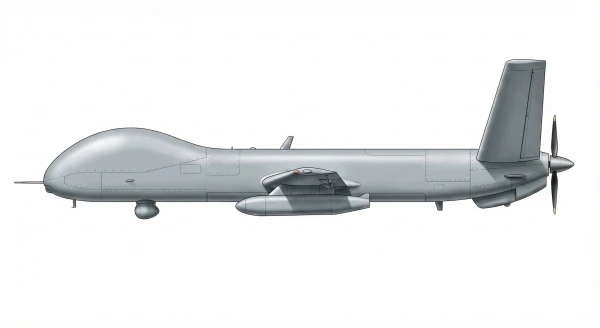
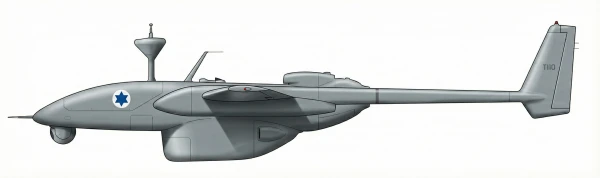
| Hermes 900 | IAI Heron | |
|---|---|---|
| Origin country | 🇮🇱 Israel | 🇮🇱 Israel |
| Category | Military Drones | Military Drones |
| Manufacturer | Elbit | IAI |
| First flight | 9 December 2009 | 1 January 1994 |
| Year introduced | 2012 | 2005 |
| Number produced | 200 units | N/A |
| Average unit price | $6.8 million | $9.5 million |
| Wingspan | 15.0 m | 16.6 m |
| Length | 8.3 m | 8.5 m |
| Maximum speed | 220 km/h | 207 km/h |
| Operational range | 1,000 km | 1,000 km |
| Service ceiling | 9,100 m | 10,000 m |
| Max. takeoff weight | 1,400 kg | 1,270 kg |
| Empty weight | 950 kg | -- kg |
| Total thrust | 1 x 160 kW | -- |
Detailed Comparison
The Elbit Hermes 900 and IAI Heron are two leading Israeli-developed Medium Altitude Long Endurance (MALE) unmanned aerial vehicles (UAVs), but they stem from different generations and design priorities. The Hermes 900 is a more modern platform offering superior payload capacity and multi-mission flexibility, including strike options. The older IAI Heron, a foundational design in the MALE category, prioritizes exceptional endurance for persistent intelligence, surveillance, and reconnaissance (ISR) missions.
Development and Design
The IAI Heron first flew in 1994, establishing it as a pioneering MALE UAV. Its design philosophy centers on maximizing flight duration for persistent surveillance over a target area. It is built around the reliable, but less powerful, Rotax 914 engine, and its airframe is optimized for long, stable flight. Its long service life and modularity have led to numerous derivatives, including the larger Heron TP and the French Harfang, demonstrating the adaptability of the core design.
In contrast, the Hermes 900, which first flew in 2009, is a direct successor to the smaller Hermes 450. It represents a later design generation, incorporating lessons from nearly two decades of UAV operations. It utilizes a more powerful Rotax 916 engine (160 kW), enabling it to carry a heavier payload and offering greater operational flexibility. Its design anticipates multi-payload integration from the outset, including sensor packages and munitions.
Specifications and Performances
While both aircraft operate at similar medium altitudes (9,100-10,000 m), their performance metrics reflect their distinct design goals.
- Endurance vs. Payload: The Heron has a clear advantage in endurance, capable of missions lasting up to 45 hours, compared to the Hermes 900's 36 hours. This makes it exceptionally suited for continuous, unbroken surveillance. However, the Hermes 900 has a significantly higher payload capacity, listed at 300 kg (with some sources citing 450 kg), versus the Heron's 250 kg. This allows the Hermes 900 to carry more advanced sensor suites, multiple payloads simultaneously, or weapon systems like the Spike missile.
- Airframe and Power: The Hermes 900's greater power and higher maximum takeoff weight (1400 kg vs. the Heron's 1270 kg) directly contribute to its payload advantage and slightly higher maximum speed (220 km/h vs. 207 km/h).
Deployment and Usage
The Heron has an extensive and well-documented operational history. It was a key asset in Israel's Operation Cast Lead (2008-2009), where it provided direct ISR support to ground forces, a significant tactical evolution at the time. Its reliability has led to its adoption or lease by numerous countries, including India, Canada, and Australia for operations in Afghanistan, and by the EU's Frontex agency for maritime surveillance.
The Hermes 900 entered service later but was quickly combat-proven by Israel during Operation Protective Edge in 2014. It has been used effectively by Azerbaijan and demonstrated its utility in non-military roles, such as locating flood victims in Brazil. However, its recent combat losses to surface-to-air missiles in Lebanon underscore the increasing vulnerability of MALE UAVs in contested or semi-permissive airspace.
Conclusion
The choice between these two platforms is a function of primary mission requirements. The IAI Heron remains a highly effective and reliable system for long-endurance ISR, where loiter time is the most critical factor. Its long history and widespread adoption attest to its success. The Elbit Hermes 900 is a more contemporary and versatile asset, trading a degree of endurance for superior payload and multi-role capability, including light strike. It reflects a more modern approach to UAV employment, but its combat losses also highlight the evolving threats that all such platforms now face.