Il-38 May vs P-3 Orion
Il-38 May vs P-3 Orion at a glance — top speed 650 vs 750 km/h, range 7,500 vs 2,491 km, max takeoff weight 66,000 vs 64,410 kg, built 58 vs 757 units.
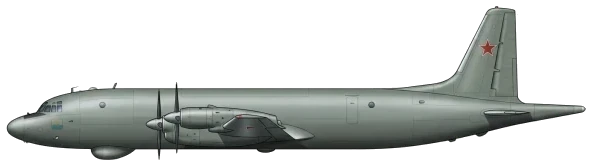
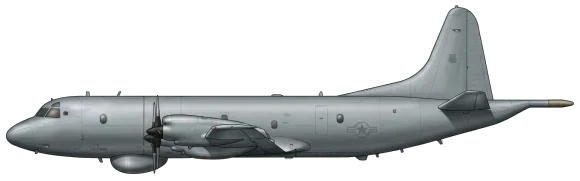
| Il-38 May | P-3 Orion | |
|---|---|---|
| Origin country | 🇷🇺 Ex-USSR | 🇺🇸 United States |
| Category | Military Special Mission Aircraft | Military Special Mission Aircraft |
| Manufacturer | Ilyushin | Lockheed |
| First flight | 27 September 1961 | 19 August 1958 |
| Year introduced | 1967 | 1962 |
| Number produced | 58 units | 757 units |
| Average unit price | -- | $36 million |
| Wing area | 140.0 m² | 121.0 m² |
| Wingspan | 37.4 m | 30.4 m |
| Height | 10.2 m | 11.8 m |
| Length | 40.1 m | 35.6 m |
| Maximum speed | 650 km/h | 750 km/h |
| Operational range | 7,500 km | 2,491 km |
| Service ceiling | 11,000 m | 8,626 m |
| Max. takeoff weight | 66,000 kg | 64,410 kg |
| Empty weight | 34,630 kg | 35,017 kg |
| Total thrust | 4 x 3,126 kW | 4 x 3,430 kW |
Detailed Comparison
The P-3 Orion and Il-38 May are both four-engine turboprop maritime patrol aircraft (MPA) derived from commercial airliners, yet they represent divergent paths in production scale and operational history. The American P-3, based on the Lockheed L-188 Electra, was produced in vast numbers (757 units) and became a ubiquitous asset for the U.S. and its allies. In contrast, the Soviet Il-38, an adaptation of the Ilyushin Il-18, had a very limited production run of 58 aircraft, serving a more niche role primarily within Soviet and later Russian naval aviation.
Development and Design
Both aircraft were conceived in the late 1950s to counter the threat of ballistic missile submarines. Lockheed’s design involved significant structural modifications to the Electra airframe, including a shorter forward fuselage to accommodate a large internal bomb bay and the integration of a distinctive tail "stinger" for its Magnetic Anomaly Detector (MAD) boom. The Il-38 was a more direct conversion of the Il-18, its most notable change being the wings moved 3 meters forward to maintain the center of gravity. It features two internal weapons bays—one for sonobuoys and another for ordnance—and a ventral radome for its "Berkut" search radar. The P-3's design proved more adaptable, spawning numerous specialized variants like the EP-3E Aries for signals intelligence, a mission diversity not matched by the Il-38.
Specifications and Performances
The P-3 Orion holds a distinct performance advantage. Powered by four Allison T56 turboprops, each producing 3430 kW, it achieves a maximum speed of 750 km/h and a service ceiling of 8,626 m. The Il-38's Ivchenko AI-20M engines are less powerful (3126 kW each), resulting in a lower top speed of 650 km/h. While both aircraft can carry a 9,100 kg (20,000 lb) payload, their armament philosophy differs. The P-3 was designed with 10 external hardpoints in addition to its bomb bay, allowing it to carry a wide array of standoff missiles like the AGM-84 Harpoon and AGM-65 Maverick from its inception. The Il-38 relied almost exclusively on its internal bays for torpedoes and depth charges, with external pylons for anti-ship missiles being a later modification, notably for export clients like India.
Deployment and usage
The P-3's operational history is extensive and global. It was a frontline asset from the Cuban Missile Crisis and Vietnam War to modern conflicts in the Middle East. Critically, its mission expanded beyond maritime patrol to include overland intelligence, surveillance, and reconnaissance (ISR), as demonstrated by its use over Afghanistan. The Il-38's deployment was far more limited, with primary service in the Soviet Northern and Pacific Fleets and temporary Cold War deployments to allied nations like Egypt and Syria. While it saw service with the Indian and Pakistan Navies, its combat record is less extensive and it never achieved the global reach or mission flexibility of the Orion.
Conclusion
The P-3 Orion stands as a more successful and influential MPA platform. Its superior performance, larger production scale, and inherent design adaptability allowed for continuous upgrades and mission expansion over a service life spanning more than 60 years. The Il-38, while a competent ASW aircraft based on a robust airframe, was effectively a supplemental platform, produced in small numbers and quickly overshadowed by the larger Tupolev Tu-142. Consequently, the Orion defined the standard for Western maritime patrol aviation for decades, whereas the May remained a specialized asset with a much smaller operational footprint.


