K2 Black Panther vs Type 10
K2 Black Panther vs Type 10 at a glance — weight 55,000 vs 48,000 kg, top speed 70 vs 70 km/h, range 430 vs 500 km, crew 3 vs 3 (commander, gunner and driver).
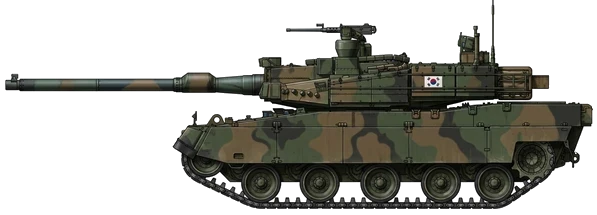
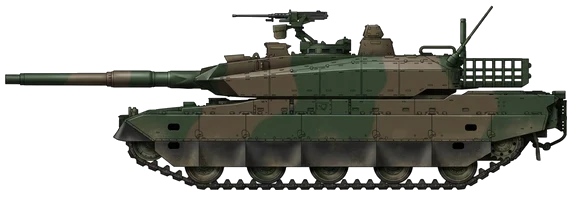
| K2 Black Panther | Type 10 | |
|---|---|---|
| Origin country | 🇰🇷 South Korea | 🇯🇵 Japan |
| Category | Main Battle Tank | Main Battle Tank |
| Type | Heavy Main Battle Tank | Main battle tank |
| Manufacturer | Hyundai Precision / Sangyong Heavy Industries | Mitsubishi Heavy Industries |
| Number produced | 440 units | 117 units |
| Estimated unit price | $8.5 million | $11.3 million |
| Combat weight | 55.0 tons | 48.0 tons |
| Maximum speed | 70 km/h | 70 km/h |
| Operational range | 430 km | 500 km |
| Length | 10.80 m | 9.49 m |
| Width | 3.60 m | 3.24 m |
| Height | 2.40 m | 2.30 m |
| Crew | 3 | 3 (commander, gunner and driver) |
| K2 Black Panther | Type 10 | |
|---|---|---|
| Main armament | 1 120mm gun | Japan Steel Works 120 mm L/44 calibers-long smoothbore cannon with automatic loader |
| Secondary weapon | K-6 12.7mm machine gun | Type 90 12.7 mm machine gun |
| Engine | Diesel Engine with 1500 hp | 4-stroke 22.6-litre diesel V8 MHI 8VA34WTK 1,200 hp/2,300 rpm |
Detailed Comparison
The South Korean K2 Black Panther and Japanese Type 10 are fourth-generation main battle tanks (MBTs) developed in East Asia to meet post-Cold War requirements. Both platforms utilize three-man crews, automatic loading mechanisms, and advanced C4I systems for network-centric warfare. While sharing technological sophistication, their physical profiles differ substantially: the K2 is a 60.6-ton heavy MBT built for high-intensity continental warfare, whereas the Type 10 is a 48-ton platform optimized for strategic mobility within the Japanese archipelago.
Development and Design
The K2 was developed by the Agency for Defense Development and Hyundai Rotem starting in 1995 to replace the ROK Army's M48 Patton fleet. The design emphasizes survivability and firepower against heavy North Korean armor, integrating domestic technologies to reduce reliance on export-controlled foreign components. Japan's TK-X project, initiated by Mitsubishi Heavy Industries in the 1990s, prioritized weight reduction. The resulting Type 10 addresses the logistical limitations of the heavier Type 90, specifically its inability to cross many Japanese bridges. Consequently, the Type 10 incorporates a modular design where armor sections can be removed to facilitate transport on civilian roadways.
Protection and Firepower
The K2 mounts a CN08 120mm L/55 smoothbore gun, capable of firing K279 tungsten penetrators and the KSTAM fire-and-forget top-attack munition. Its fire control system integrates a pulsed Doppler radar for automatic target tracking. Protection consists of MIL-12560H steel, silicon carbide ceramics, and ERA, supplemented by a soft-kill active protection system. The Type 10 utilizes a Japan Steel Works 120mm L/44 gun with an autoloader capable of a 3.5-second firing interval. Its protection relies on modular ceramic composite armor, configurable based on mission profiles. While the Type 10's armor resists 120mm kinetic threats frontally, the K2's heavier weight allowance permits a more comprehensive passive armor package.
Mobility and Logistics
Powered by a 1,500 hp diesel engine, the K2 uses an In-arm Suspension Unit (ISU) for posture control, enabling the hull to tilt or kneel to improve gun elevation in mountainous terrain. It features a snorkel system for deep river crossing. The Type 10 employs a 1,200 hp V8 diesel with a continuously variable transmission (CVT), allowing the vehicle to reach its 70 km/h top speed in both forward and reverse. Its hydropneumatic suspension also manages recoil and chassis height. The Type 10’s lighter weight ensures transit across a wider percentage of Japanese infrastructure compared to the heavier footprint of the K2.
Deployment and Combat Record
The Republic of Korea Army deploys the K2 across maneuver divisions facing the Demilitarized Zone. The platform achieved export success with the Polish Land Forces, which operates the tank in multiple brigades with plans for local production. Turkey also utilized K2 technology transfer for its Altay MBT program. The Type 10 serves exclusively with the Japan Ground Self-Defense Force (JGSDF), replacing older Type 74 units. Attempts to export Type 10 engine technology to Turkey failed due to Japanese arms export regulations. Neither vehicle has seen active combat.
Conclusion
The K2 Black Panther functions as a high-end main battle tank comparable to Western heavy armor, offering superior raw firepower through its longer barrel and heavier passive protection suitable for attrition warfare. Conversely, the Type 10 prioritizes strategic mobility and high-tech networking, limiting raw mass to operate effectively within restricted island geography and urban infrastructure. The K2 remains the superior candidate for export and conventional armored thrusts, while the Type 10 is strictly optimized for the specific defensive requirements of the Japanese archipelago.