CV-90 vs Puma IFV
CV-90 vs Puma IFV at a glance — weight 26,000 vs 43,000 kg, top speed 70 vs 70 km/h, range 560 vs 600 km, crew 3 vs 3.
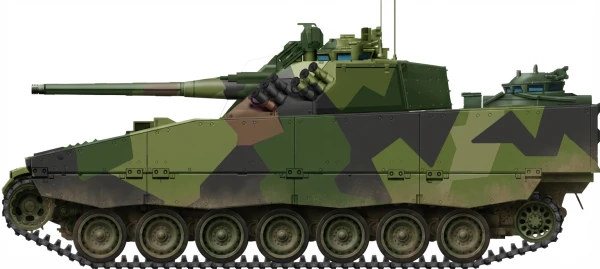
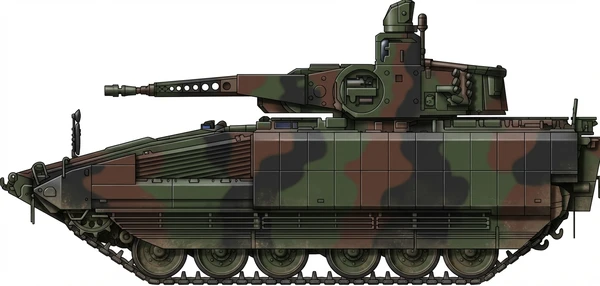
| CV-90 | Puma IFV | |
|---|---|---|
| Origin country | 🇸🇪 Sweden | 🇩🇪 Germany |
| Category | Infantry Fighting Vehicle | Infantry Fighting Vehicle |
| Type | Infantry Fighting Vehicle | Infantry fighting vehicle |
| Manufacturer | Bofors | PSM |
| Number produced | 1,400 units | 350 units |
| Estimated unit price | $10 million | $21 million |
| Combat weight | 26.0 tons | 43.0 tons |
| Maximum speed | 70 km/h | 70 km/h |
| Operational range | 560 km | 600 km |
| Length | 6.47 m | 7.40 m |
| Width | 3.19 m | 4.00 m |
| Height | 2.50 m | 3.60 m |
| Crew | 3 | 3 |
Detailed Comparison
The Swedish CV-90 serves as a highly adaptable, export-oriented platform prioritizing mobility and firepower in subarctic conditions, whereas the German Puma IFV functions as a heavier, specialized successor to the Marder, specifically engineered for maximum crew survivability and network-centric warfare. While the CV-90 utilizes a conventional manned turret layout across a 26-ton chassis, the Puma adopts a distinct 43-ton profile with an unmanned turret and a unitary crew capsule, reflecting a shift toward heavy armor in modern infantry fighting vehicle design.
Development and Design
Originating in the mid-1980s, the CV-90 was developed by Bofors and Hägglunds to meet Swedish requirements for deep snow mobility and anti-air capability. Its design focuses on a low profile to minimize radar and thermal signatures, evolving through generations Mk 0 to Mk IV. Conversely, the Puma (KMW and Rheinmetall) represents a post-Cold War philosophy, entering service in 2015. It features a unique single-volume crew cabin housing three crew and six dismounts, decoupled from the hull for blast mitigation. The Puma's modular design allows for scalable protection levels (Class A and C), a significant departure from the CV-90's traditional fixed-hull architecture.
Protection and Firepower
The Puma prioritizes survivability, utilizing AMAP composite armor and a roof-mounted MUSS softkill active protection system. Its unmanned turret protects the crew from ammunition cook-offs, while the hull resists heavy kinetic threats and mine blasts. The CV-90 relies on spall liners and a frontal arc rated for 30mm APFSDS, though recent variants can integrate active protection systems like Iron Fist.
In terms of firepower, the CV-90 offers caliber flexibility, with the Swedish variant fielding the heavy 40mm Bofors L/70 and export models typically using 30mm or 35mm cannons. The Puma standardizes on the 30mm MK 30-2/ABM, capable of firing airburst munitions to engage infantry behind cover. Both platforms integrate Spike LR/MELLS missiles for anti-tank engagements, but the Puma’s digitized turret architecture offers superior hunter-killer capabilities.
Mobility and Logistics
Despite the Puma's substantial weight of 43 tons, its 1,088 hp MTU v10 engine ensures a power-to-weight ratio sufficient to match the Leopard 2 MBT. Its hydropneumatic suspension minimizes vibration for on-the-move firing. The CV-90, significantly lighter at 26 tons, utilizes a Scania 550 hp diesel. While the Puma offers raw power, the CV-90 excels in operational mobility, particularly in soft terrain like snow or marshland, and presents a lower logistical burden regarding fuel consumption and air transportability.
Deployment and Combat Record
The CV-90 possesses a robust combat lineage, seeing action in Liberia, heavy fighting in Afghanistan with Norwegian and Danish forces, and high-intensity warfare in Ukraine (2023-2024). It is widely exported to nations including Finland, the Netherlands, and Switzerland. The Puma remains exclusive to the German Army. Its operational history has been complicated by readiness issues, notably the 2022 incident where 18 vehicles became inoperable during exercises, though a modernization to the "S1" standard aims to rectify these reliability concerns.
Conclusion
The CV-90 stands as the premier choice for nations requiring a battle-proven, adaptable platform capable of traversing difficult terrain with minimal logistical strain. It balances firepower and mobility with adequate protection. The Puma, however, represents a high-end solution for peer-conflict survivability and digitization. It is best suited for scenarios where maximum armor and network integration justify its high cost and complexity, provided its reliability reaches maturity.