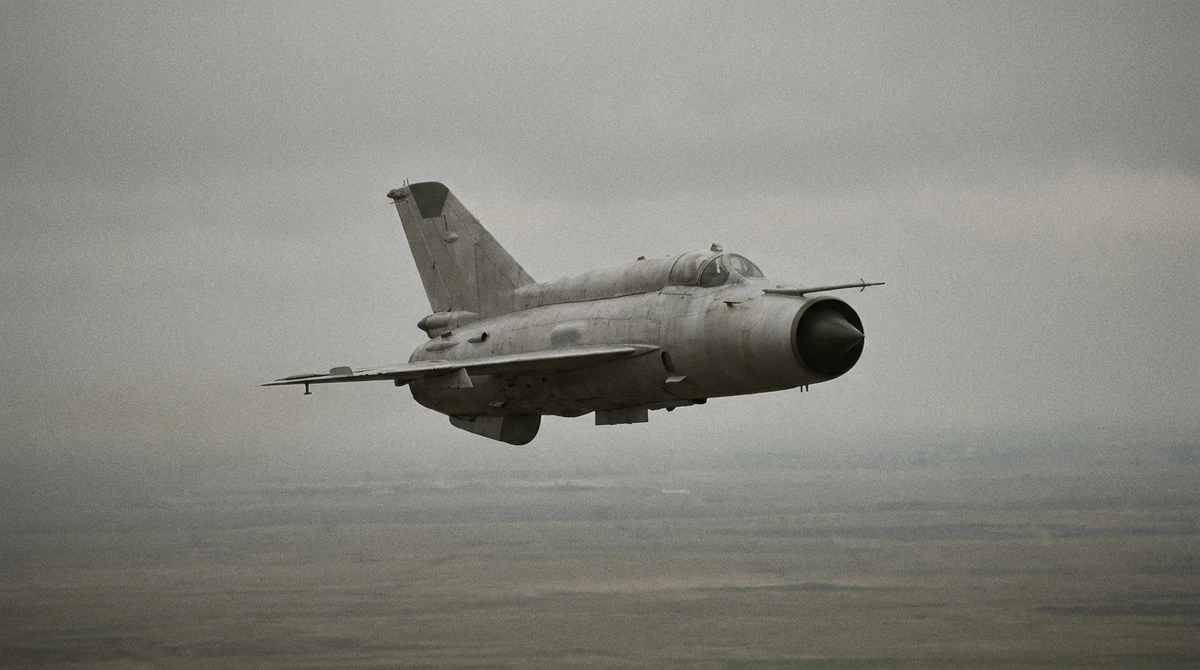
The average combat aircraft flown by North Korea is based on a design that entered service 65 years ago, the widest gap between any air force and the modern state of the art, according to an analysis of GlobalMilitary.net inventory data for 2026.
The figure is an average of every combat type in a country's active inventory, weighted by how many of each it operates. North Korea's 571 combat aircraft are dominated by first- and second-generation jets: 241 Shenyang J-5s and their two-seat FT-5 derivatives, the Chinese-built MiG-17 family that entered service in 1956, 97 MiG-19 Farmers from 1955, and 34 MiG-15s, a design that first flew in 1947. Only 35 MiG-29s and 34 Su-25s postdate 1980.
Syria follows at 56.6 years across 225 aircraft, and Iran at 54.6 across 295 — both fleets sustained under decades of arms embargoes, with Iran still flying F-4 Phantoms and F-14 Tomcats delivered before the 1979 revolution. Turkey ranks fourth at 50.3 years, an outlier among NATO members: its 299 combat aircraft are 238 F-16s of a 1979 design plus 48 F-4E Phantoms from 1962, a consequence of its 2019 removal from the F-35 program.
Greece (45.5), the United Arab Emirates (45.3), Ukraine (45.0) and Egypt (44.6) form the next tier. Egypt is notable for scale — 557 combat aircraft, the sixth-largest fleet in the world, at an average design age above 44 years.
The large powers cluster in the middle. China averages 34.8 years across 2,043 combat aircraft and the United States 33.4 across 2,948, both figures pulled down by large recent deliveries of J-20s and F-35s but held up by long-serving fleets of F-16s, F-15s and J-7s. The Russian Air Force fleet averages 38.5 years across 1,524 aircraft. At the other end, the United Kingdom posts the youngest large fleet at 20.4 years, operating only two combat types — 111 Typhoons and 40 F-35Bs — followed by Qatar at 18.9 and Italy at 25.9.
One methodological caveat matters. The measure uses the year each type entered service, not the build date of individual airframes. A Block 70 F-16 delivered in 2025 counts as a 1979 design, and a rebuilt MiG-29 counts as 1983. The ranking therefore describes how old a country's aeronautical designs are, not how worn its aircraft are. A modern-build F-16 with an AESA radar is a far more capable aircraft than the number suggests; a J-5 is not.
The distinction still carries operational weight. Design age constrains what an airframe can be upgraded to carry — radar aperture, electrical power, cooling capacity and internal volume are fixed at the drawing board — which is why fleets in the upper half of this table are largely restricted to short-range weapons and daylight operations regardless of how recently the individual jets were overhauled.
The analysis covers the 29 air forces operating at least 100 combat aircraft. All 16,188 combat airframes in the 2026 inventory carry a recorded service-entry year, so no fleet is affected by missing data. Full per-country inventories are published in the air forces of the world ranked section.
More News
All news →
Only Four Air Forces Fly High-Altitude Surveillance Drones, and Japan Has Just Lost One of Its Three
A Japan Air Self-Defense Force RQ-4B Global Hawk went down over international waters north of Tottori prefecture on 15 September 2026, the first loss of a Japanese Global Hawk and one of only 39 high-altitude surveillance drones GlobalMilitary.net records in service worldwide.
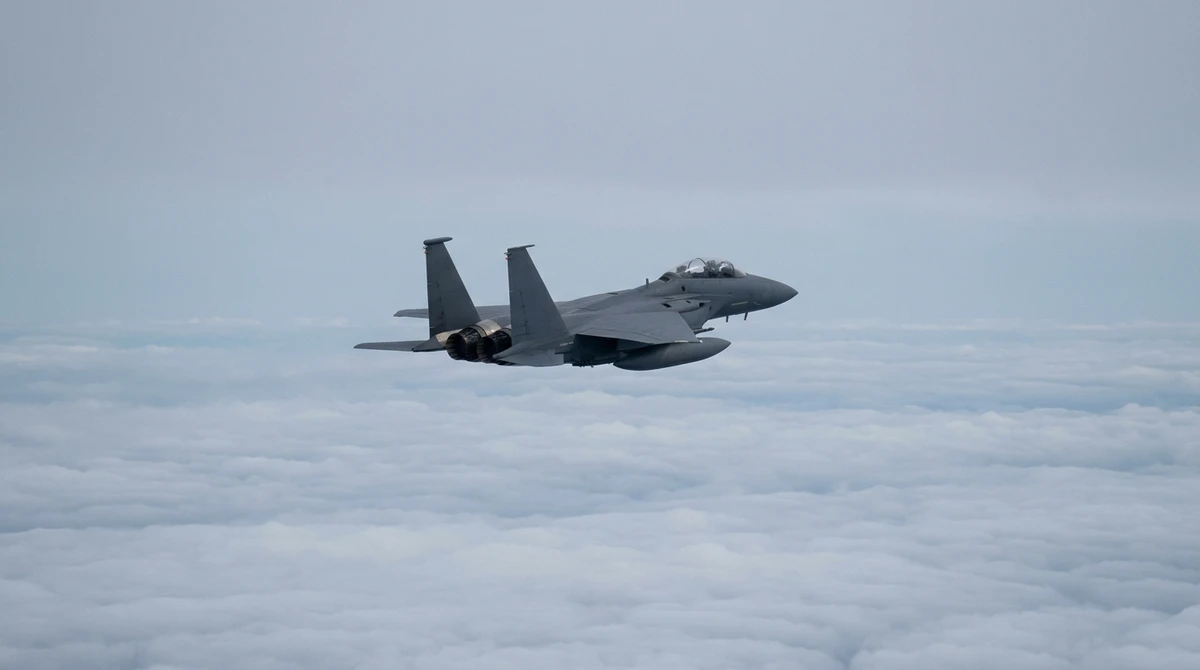
Pentagon Report Puts Iran War Aircraft Losses at Up to 30 Reapers, Four F-15Es and One A-10
A Department of Defense inspector general report on Operation Epic Fury, made public September 15, lists four F-15Es, one A-10, six helicopters, an MQ-4C and as many as 30 MQ-9 Reapers destroyed between February 28 and June 30, 2026, in an operation costed at $33.4 billion.
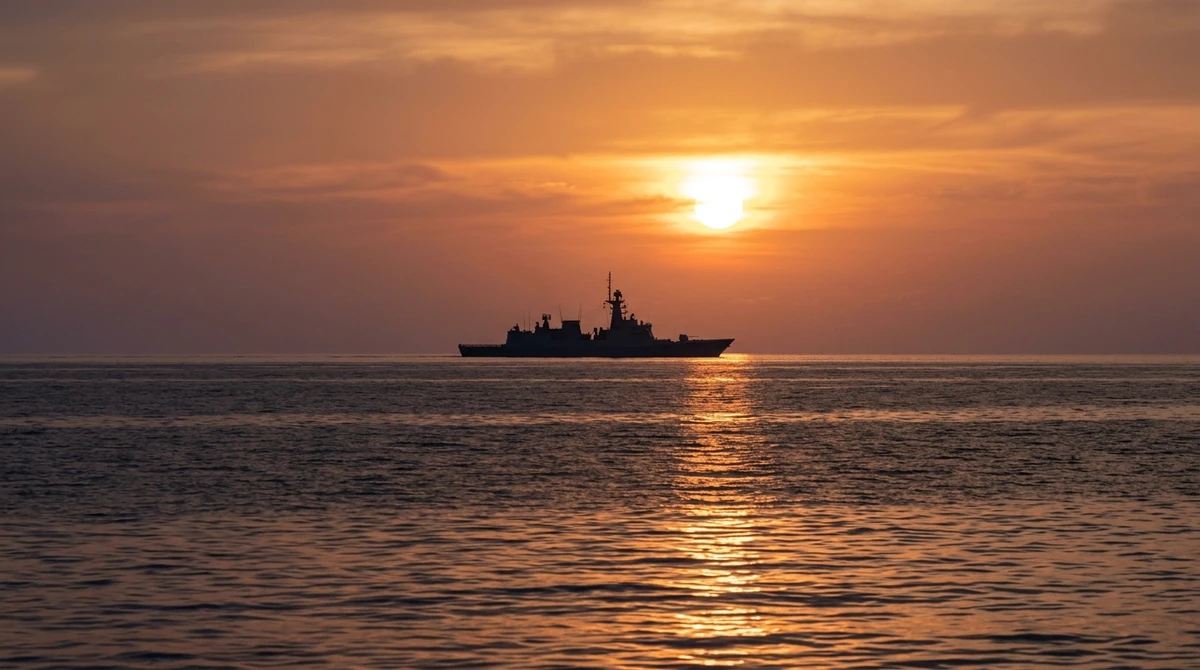
South Korean Warships Serve in Seven Foreign Navies, but Only Three Bought Them New
Hanwha Ocean was named preferred bidder for the Royal Thai Navy's next frigate on September 9, 2026; GlobalMilitary.net's inventories count 15 Korean-designed warships in seven foreign navies, nine of them second-hand corvettes.

Acting Navy Secretary Says Iran 'Blew the Hell Out of' Fifth Fleet Base in Bahrain
The acting US Secretary of the Navy told The Epoch Times on 9 September 2026 that Iranian strikes "blew the hell out of" Naval Support Activity Bahrain, headquarters of the Fifth Fleet, and that a task force is weighing whether to rebuild the base.

Hormuz Transits Average Three a Day in Early September, 96% Below the 2025 Norm
IMF PortWatch data published on GMN's Strait of Hormuz tracker shows commercial ship transits averaging 3.17 a day over 1-6 September 2026, against 85.5 a day in 2025; other counters read higher, but every independent count is a small fraction of the pre-war norm.

Poland Unveils 40-Ton Heavy IFV Demonstrator as Soviet-Era BWP-1s Still Make Up 69% of Its IFV Fleet
State group PGZ and Huta Stalowa Wola presented the Ciężki Bojowy Wóz Piechoty technology demonstrator on September 8 at the MSPO show in Kielce, a 40-ton-class vehicle planned for about 700 units, while GlobalMilitary.net's inventory data show 916 BWP-1s still in Polish service.