B-36 Peacemaker Turns 80: No Combat Aircraft Since Has Matched Its 70-Meter Wingspan
The Convair XB-36 made its first flight at Fort Worth on August 8, 1946. Eight decades on, the ten-engined Peacemaker still holds the longest wingspan of any combat aircraft ever built: 70 meters, 14 more than the B-52 that replaced it and 30 more than the incoming B-21 Raider.
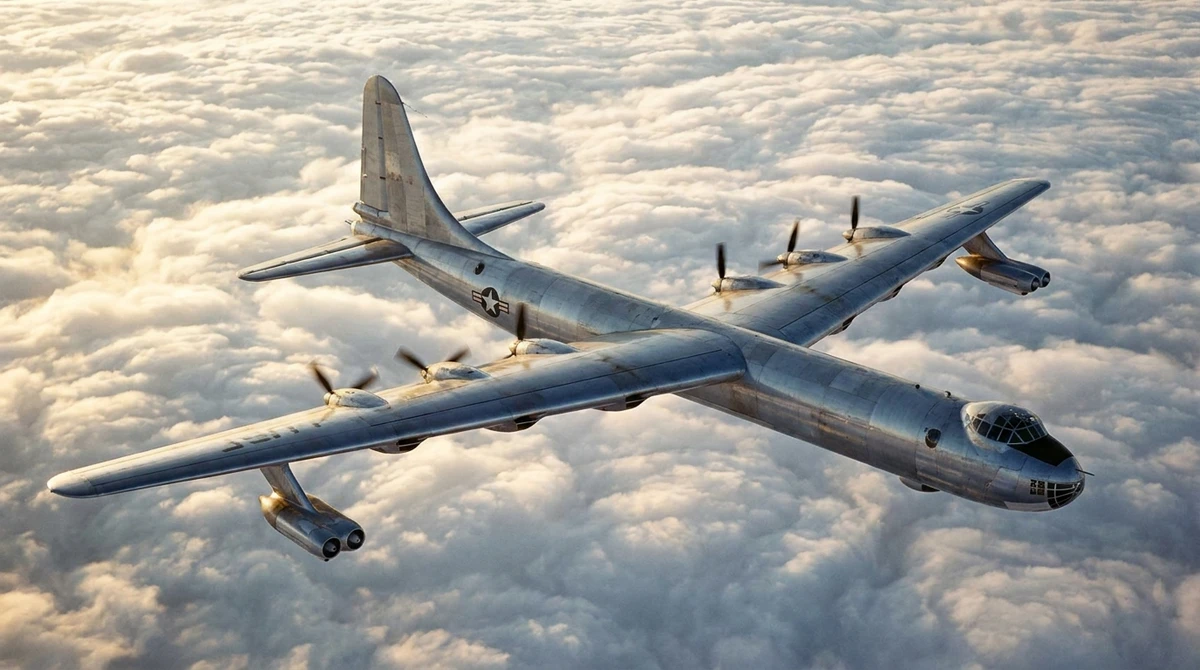
Eighty years ago, on August 8, 1946, the prototype Convair XB-36 lifted off from Fort Worth, Texas, on a 37-minute first flight flown with the landing gear locked down throughout. The bomber that came out of that program never dropped a bomb in combat, but it set a mark that has stood ever since: no combat aircraft has been built with a longer wingspan.
The B-36 Peacemaker spanned 70 meters (230 ft), on a wing thick enough at the root, about 1.8 meters, for crew members to crawl out to the engines in flight. Six Pratt & Whitney R-4360 Wasp Major radials drove pusher propellers mounted behind the trailing edge; from the B-36D onward, four General Electric J47 turbojets were added under the outer wings, giving the type ten engines, more than any other mass-produced aircraft. Convair completed 384 airframes between 1946 and 1954.
Deliveries to Strategic Air Command began in June 1948, and the B-36 became the primary carrier for the first generation of US thermonuclear weapons, the only bomber cleared for the largest of them. Maximum range approached 16,000 km and combat radius exceeded 6,400 km, enough to reach targets inside the Soviet Union from bases in the continental United States without refueling. RB-36 reconnaissance variants flew higher and farther than any other US aircraft until the U-2 arrived, and one modified airframe, the NB-36H, carried an operating nuclear reactor aloft to test the feasibility of nuclear-powered flight.
What has never been repeated is the sheer scale. GMN specifications put the B-52 Stratofortress at 56.4 meters of span, the Tu-160 Blackjack at 55.7 meters and the B-2 Spirit at 52 meters. The B-21 Raider now entering service is smaller again, at roughly 40 meters: modern bomber design is driven by low observability rather than by the raw wing area a piston-engined aircraft needed to reach 13,000 meters. A direct comparison with the B-52 shows the trade-off, with the jet roughly 55 percent faster on eight engines but 14 meters shorter across the wing.
The B-36 never flew a combat mission. Its role was to be seen: Strategic Air Command deployed it to Britain and French Morocco to demonstrate intercontinental reach in the opening years of the Cold War. The "Peacemaker" name was submitted by Convair to a naming contest and never formally adopted by the Air Force, but it stuck for exactly that reason.
The last aircraft was retired on February 12, 1959, displaced by the jet-powered B-52 barely a decade after the type entered service. That successor is still in the inventory: GMN fleet data credits the US Air Force with 76 B-52s, 45 B-1B Lancers and 19 B-2 Spirits in 2026, plus the first three B-21 Raiders against a program of record of 100 aircraft, by some distance the heaviest bomber force among the air forces of the world ranked by fleet strength. Four B-36s survive intact, in museums at Dayton, Tucson, Ashland and Atwater.
More News
All news →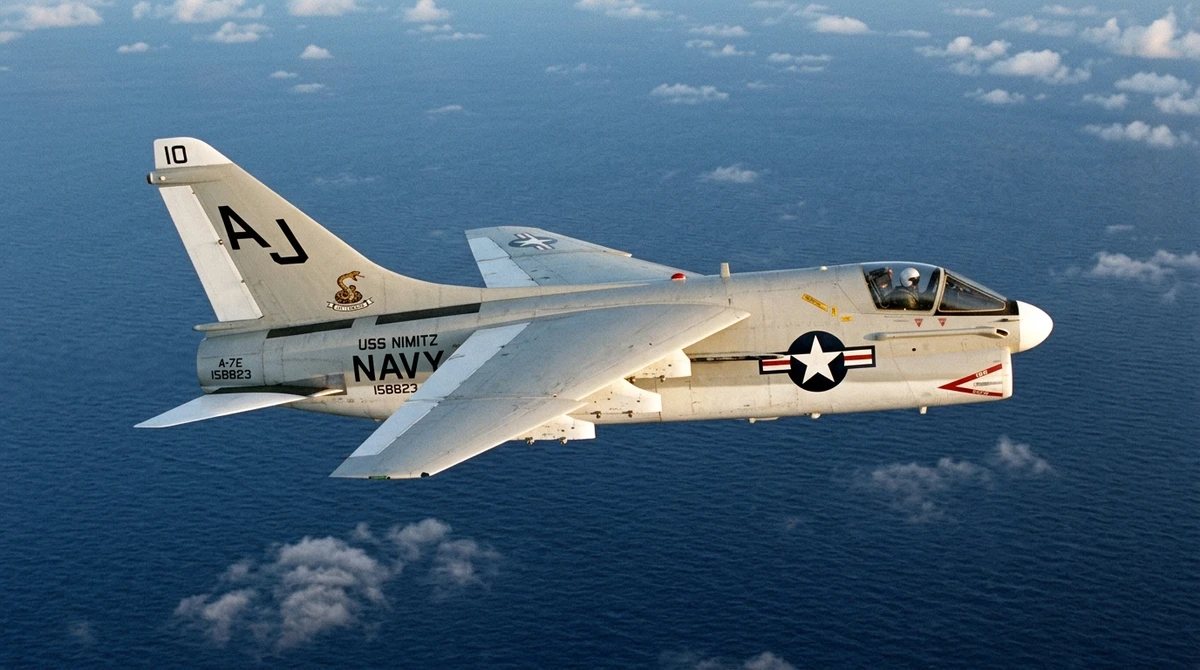
A-7 Corsair II Turns 60: Vought's Carrier Attack Jet First Flew on September 26, 1965
Sixty years after the Vought A-7 Corsair II prototype first flew on September 26, 1965, the single-engine light attack aircraft that served US carrier decks from the Vietnam War to the 1991 Gulf War marks its anniversary this week.
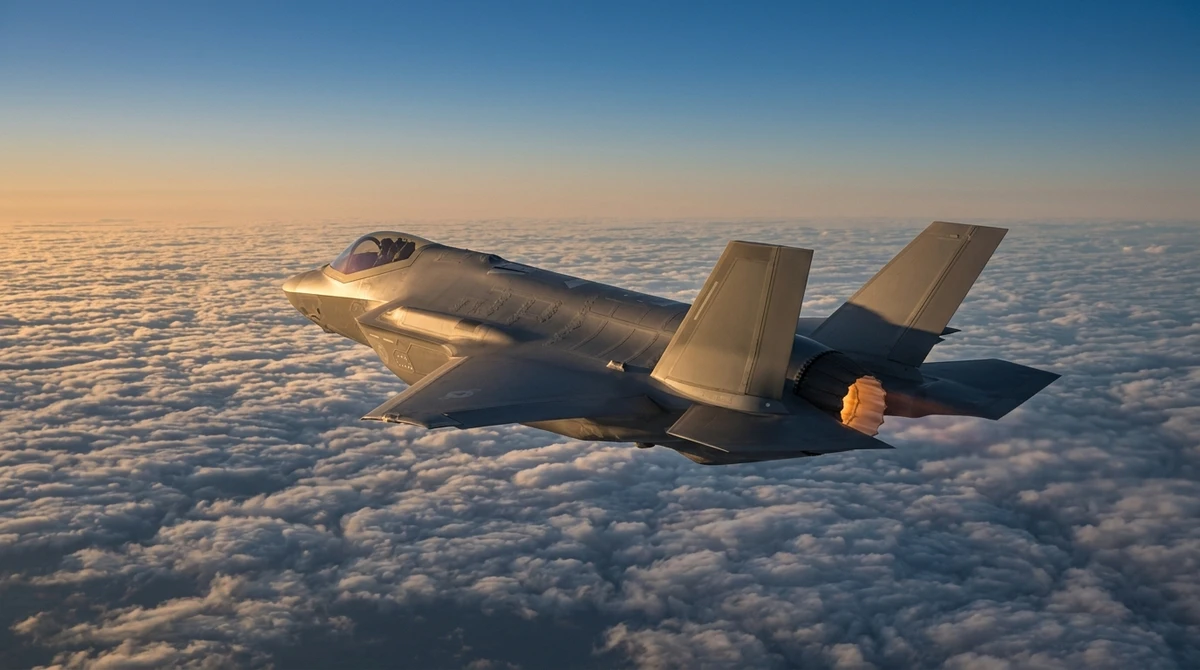
General Atomics Delivers FQ-42 Vengeance Uncrewed Fighter to Creech Air Force Base
General Atomics delivered one FQ-42 Vengeance uncrewed fighter to Creech Air Force Base, Nevada, on September 18, as the company says it is on track to build six a month and the Secretary of the Air Force expects at least 500 autonomous aircraft in service by 2032.
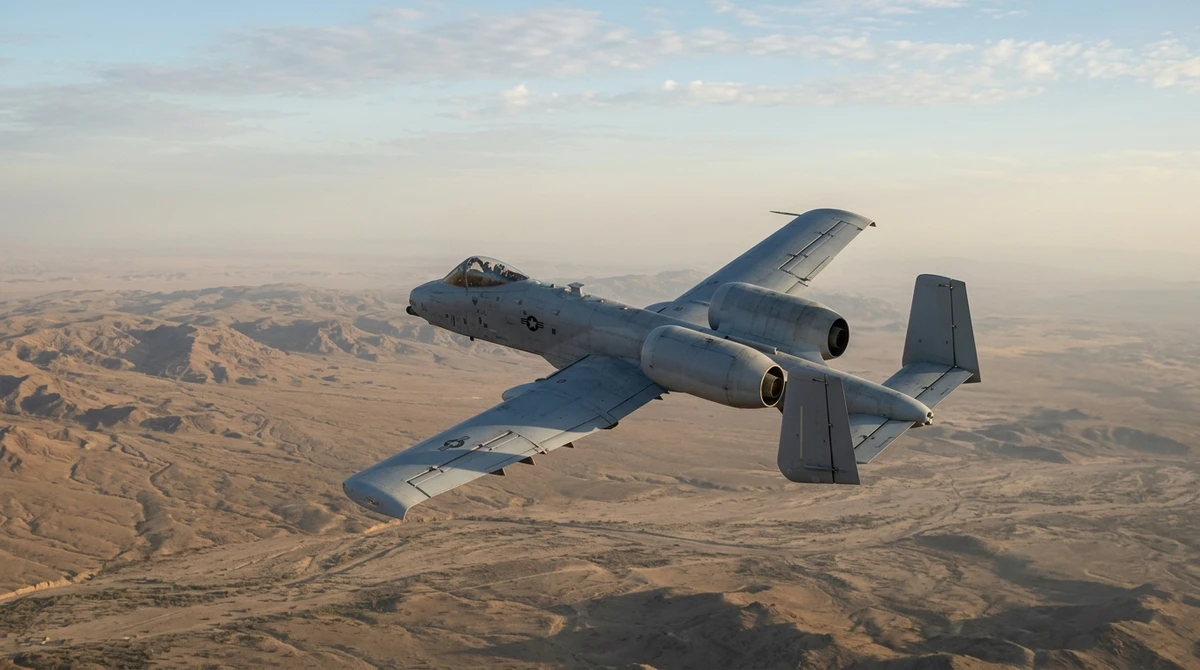
Davis-Monthan Inactivates Four A-10 Units, Ending the Base's Thunderbolt II Mission
The US Air Force inactivated four A-10 units at Davis-Monthan Air Force Base, Arizona, on September 18, 2026, ending the type's presence at the base while the FY2026 defense authorization act holds the fleet at no fewer than 103 aircraft through fiscal 2026.
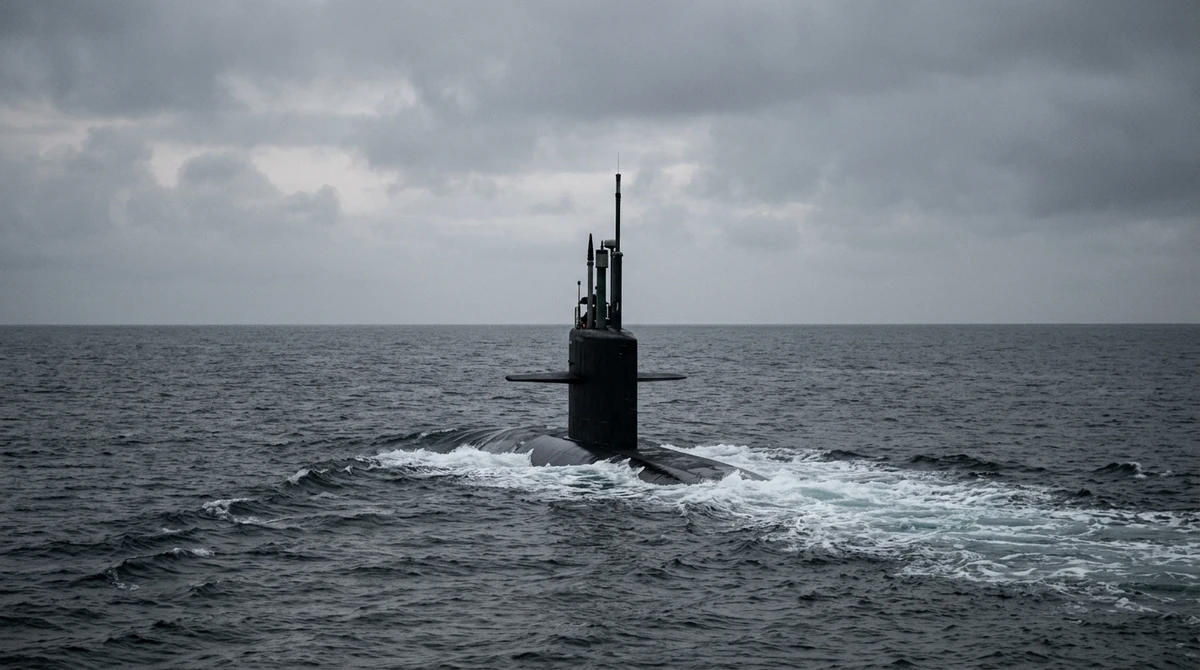
Nuclear vs Air-Independent Propulsion: How a Submarine Runs Without Air, and What Japan Is Weighing
After Japan's defense minister declined on September 11, 2026 to rule out nuclear-powered submarines, a technical explainer on how a reactor, a Stirling engine, a fuel cell and a lithium-ion battery each keep a boat under water, and what each one buys.
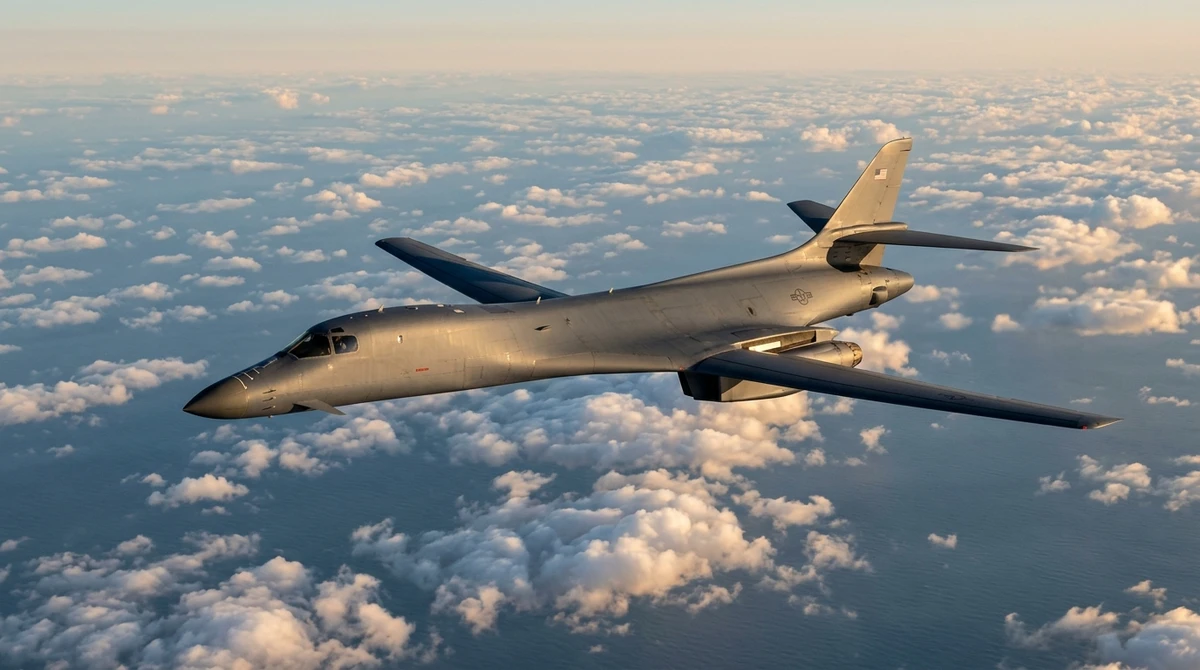
US Air Force to Extend B-1 and B-2 Service Lives With Only Three B-21s in the Fleet
Air Force Global Strike Command said on 17 September 2026 that the B-1 Lancer and B-2 Spirit will fly beyond their planned retirements, keeping a US bomber force built on 1955, 1986 and 1993 designs in service while the B-21 Raider arrives at three aircraft.
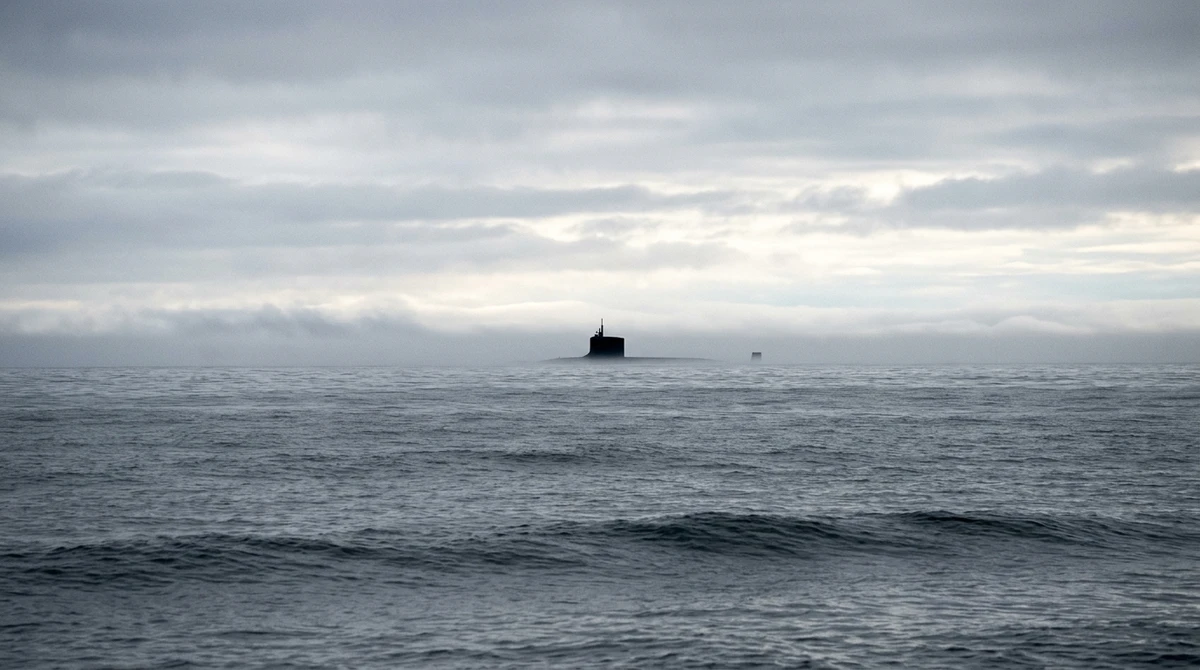
Japan Will Not Rule Out Nuclear-Powered Submarines as Six Navies Field 140 Between Them
Japan's defense minister said on 11 September 2026 that nuclear-powered submarines "will not be ruled out" in the year-end revision of the country's security documents, an option that would put the JMSDF alongside the six navies operating 140 nuclear boats today.