The US Navy Fields Four Minesweepers to Europe's 157, and Sailed Two From Japan to Hormuz
The United States decommissioned its four Bahrain-based Avenger-class mine hunters in September 2025 and shipped the hulls home in January 2026. When Iran began mining the Strait of Hormuz two months later, the Navy had to sail two of its last four minesweepers from Japan.
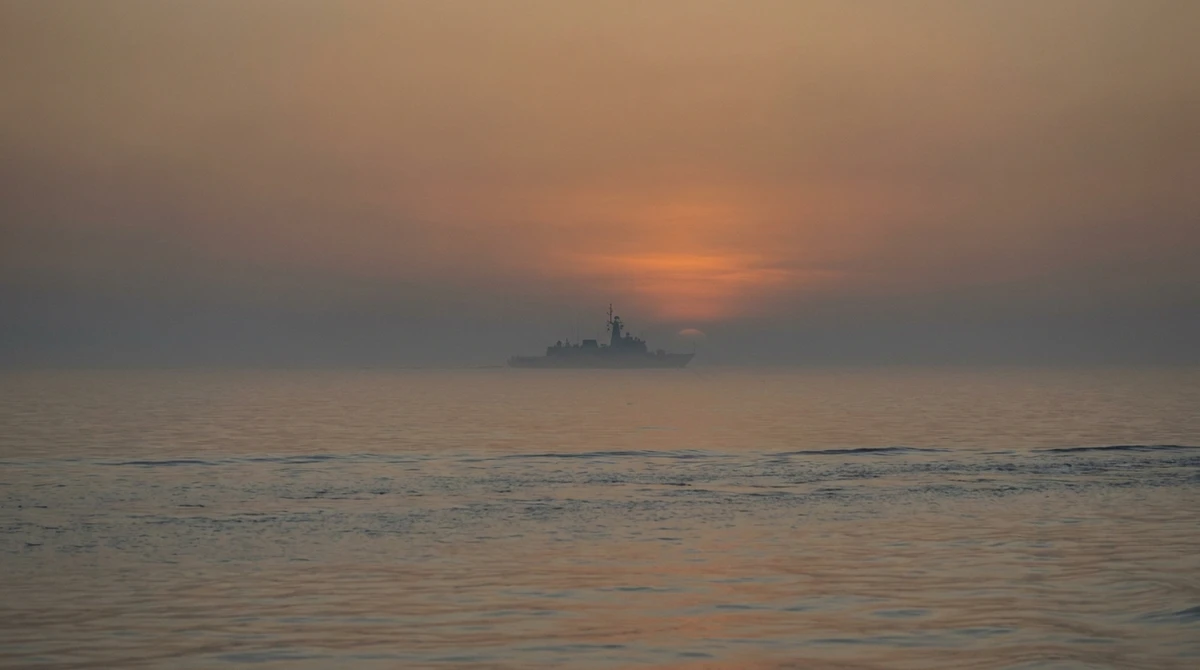
President Donald Trump announced on August 25 that the US Navy had removed or detonated all the sea mines in the Strait of Hormuz, closing a five-month clearance campaign, and warned that any vessel caught laying new ones would be destroyed. Iran's deputy foreign minister rejected the claim the following day, saying no one but Iran knows where the mines are. What is not disputed is how the campaign had to be fought: the two dedicated minesweepers that took part sailed in from Japan, because the United States Navy's 232-ship active fleet contains exactly four of them.
Those four are the survivors of the fourteen Avenger-class mine countermeasures ships built from 1987 — Chief, Patriot, Pioneer and Warrior, all forward-deployed at Sasebo, Japan. The four that used to sit at Bahrain covering US 5th Fleet were decommissioned in September 2025: Dextrous on the 3rd, Gladiator on the 4th, Sentry and Devastator on the 25th. On January 9, 2026 the hulls were loaded aboard the heavy-lift ship M/V Seaway Hawk and sent to the inactive-ship facility in Philadelphia for disposal.
Iran began laying mines in the strait in the second week of March 2026, two months later, as part of the 2026 Iran conflict. US officials counted about a dozen at first, then a second round in late April. USS Chief and USS Pioneer left Sasebo and passed Singapore on April 10, bound for the Gulf. What had replaced the Bahrain minesweepers was three Independence-class littoral combat ships carrying the mine countermeasures mission package; the Pentagon's Director of Operational Test and Evaluation reported in its FY2025 assessment that the package's Unmanned Influence Sweep System was "not operationally suitable" at 29 percent operational availability, and that the Navy had not supplied enough data to judge its airborne mine-neutralization systems.
The traffic figures explain why clearance mattered. IMF PortWatch counted an average of 75 tanker and cargo transits a day through Hormuz in 2025, and 70 a day in February 2026. In March, the month the mining began, the average was 2.8. Over the 30 days to August 23, the last day on file, it was 4.5.
Against the rest of the world, the American total is an outlier. GlobalMilitary.net's inventory records 391 active mine-warfare hulls across 47 navies in 2026. European NATO members hold 157 of them. Poland alone has 25, and Finland 18, against 12 for Germany, 11 for Turkey and 10 each for Italy and Bulgaria. Russia has 44, including ten Alexandrit-class hulls commissioned since 2016, and China 37, built around the Wochi and Wosao classes.
Those totals need a caveat, because mine warfare is a loose category. Poland's 25 includes five Lublin-class minelayer-landing ships and a command vessel. South Korea's 23 includes nine landing-craft minelayers. France's 19 counts four clearance diving vessels, five diving-support craft and two sonar-towing boats; its minehunter force proper is eight Éridan-class hulls, and the naval staff confirmed in March that Andromède will pay off this year after 42 years, taking the flotilla to seven. Counting only dedicated hunters and sweepers cuts the world figure to roughly 350 and European NATO's to about 130. The American figure does not move: all four US hulls are dedicated mine countermeasures ships.
Europe's flotillas are old, and some are making the same bet Washington has. The Royal Navy is down to a handful of Hunt- and Sandown-class boats and commissioned HMS Stirling Castle in June 2026 as a mother ship for autonomous mine-hunting systems — one hull in place of a flotilla. Poland is the counter-example: three Kormoran II minehunters in service, three more building.
Iran's stockpile is why the mission is unlikely to end with an announcement. The Defense Intelligence Agency put its naval mine inventory at more than 5,000 in 2019, and 2026 open-source estimates range from 2,000 to 8,000. Mines have caught the US Navy in these waters before: USS Samuel B. Roberts struck an Iranian contact mine on April 14, 1988, and Iraqi mines damaged USS Tripoli and USS Princeton on a single day in February 1991. The Joint Maritime Information Center still warns of drifting and uncharted mines inside the traffic separation scheme, and war-risk premiums for a Hormuz transit remain at 7.5 to 10 percent of hull value against 1 to 3 percent before the war. The Navy has not said when Chief and Pioneer sail home.
More News
All news →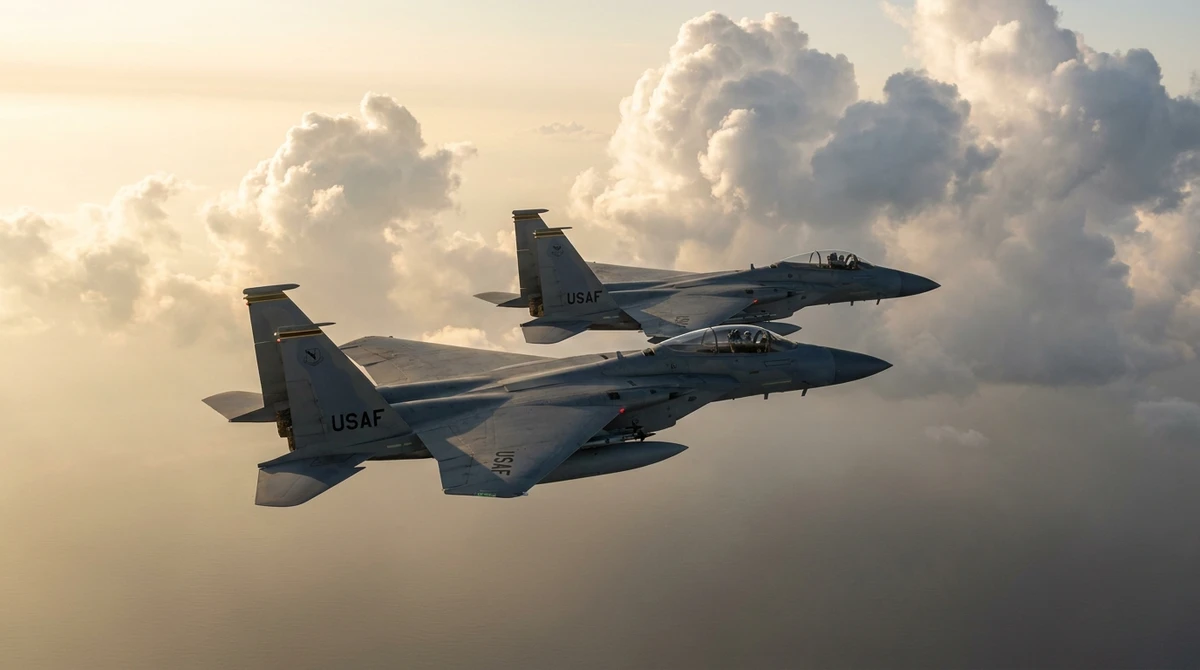
Boeing's $131 Billion F-15 Eagle Crest Contract Covers 1,000 Eagles in Seven Air Forces
The US Air Force awarded Boeing a $131.2 billion ceiling IDIQ contract on 24 August 2026 for F-15 production, upgrades and sustainment through 2037, with foreign military sales to Japan, Israel, Saudi Arabia, South Korea, Singapore, Indonesia and Poland.

Poland Receives First 28 K2 Black Panther Tanks Under Its Second Hyundai Rotem Contract
The first 28 K2 tanks of Poland's second 180-vehicle order arrived on 25 August 2026 and will equip the 16th Mechanized Division, a year after the follow-on contract took effect.
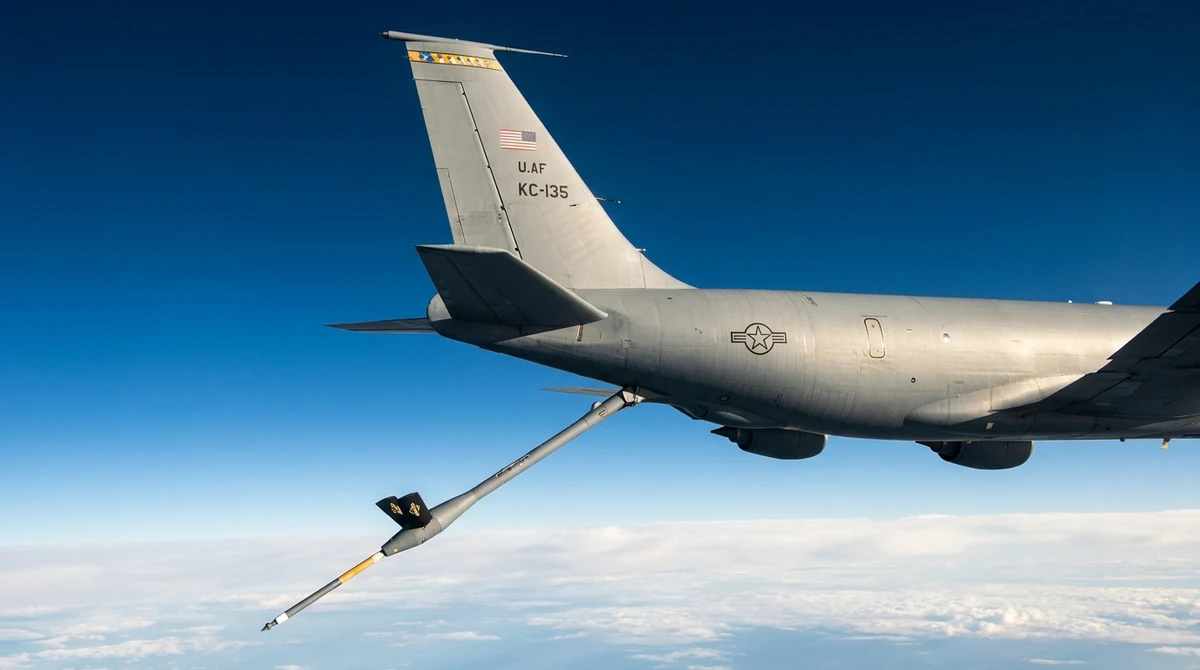
Only 30 Air Forces Can Refuel in Flight, and the US Owns Three of Every Four Tankers
The US State Department cleared a $4.5 billion sale of up to four KC-46A tankers to Qatar on August 20; GlobalMilitary.net data show why the buy matters: of 111 air forces flying combat aircraft, 81 have no tanker at all, and the United States operates 561 of the world's 740.

Argentina Retires the Super Étendard for Good, 44 Years After the Falklands
The Argentine Navy announced on August 20 the definitive retirement of its Dassault Super Étendard strike jets under Plan Dédalo, ending a 44-year career and leaving naval aviation with no fixed-wing combat aircraft.
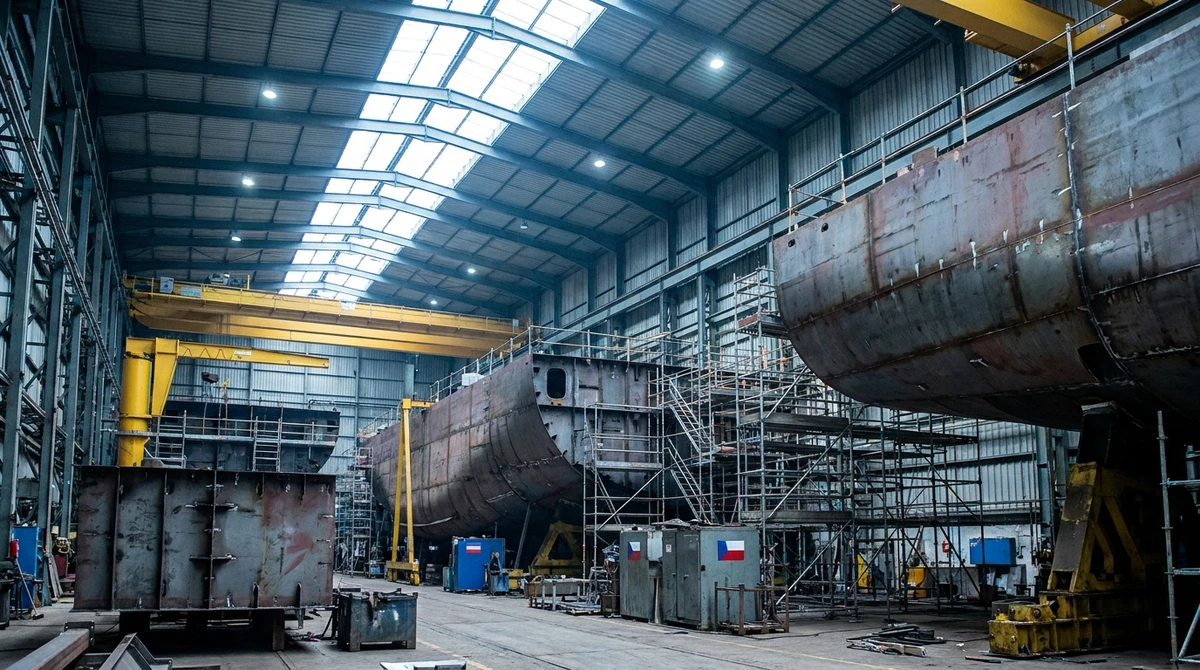
Australia Lays the Keel of Its First Hunter Frigate as the Type 26 Reaches 34 Hulls in Four Navies
BAE Systems Australia laid the keel of NUSHIP Hunter at Osborne on 24 August 2026, starting hull assembly on the first of six ships and taking the British Type 26 design to 34 hulls ordered across the Royal Navy, Australia, Canada and Norway.
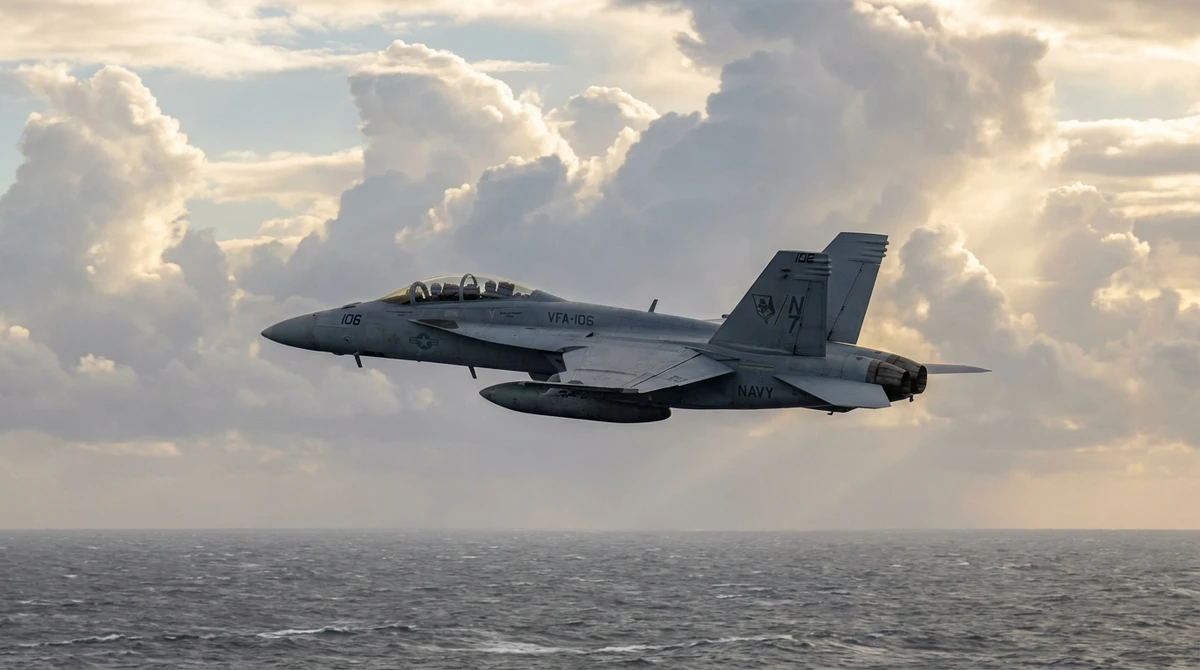
US Navy Reveals the AIM-424 Malice, a 463 km Air-to-Air Missile to Close the Gap With China
The US Navy disclosed the Raytheon-built AIM-424 Malice at the Tailhook symposium in Reno on 22 August 2026: a 1,500-pound two-stage weapon credited with more than 250 nautical miles of reach, destined for the Super Hornet, the F-35C and the future F/A-XX.