US Navy Has No Frigates in Service While 50 Other Navies Field 407 as Washington Weighs Foreign Designs
GlobalMilitary.net data shows the US Navy with no frigates in commission against 407 in 50 other fleets, as a White House-ordered plan for new surface combatants falls due in mid-November and foreign designs are offered.
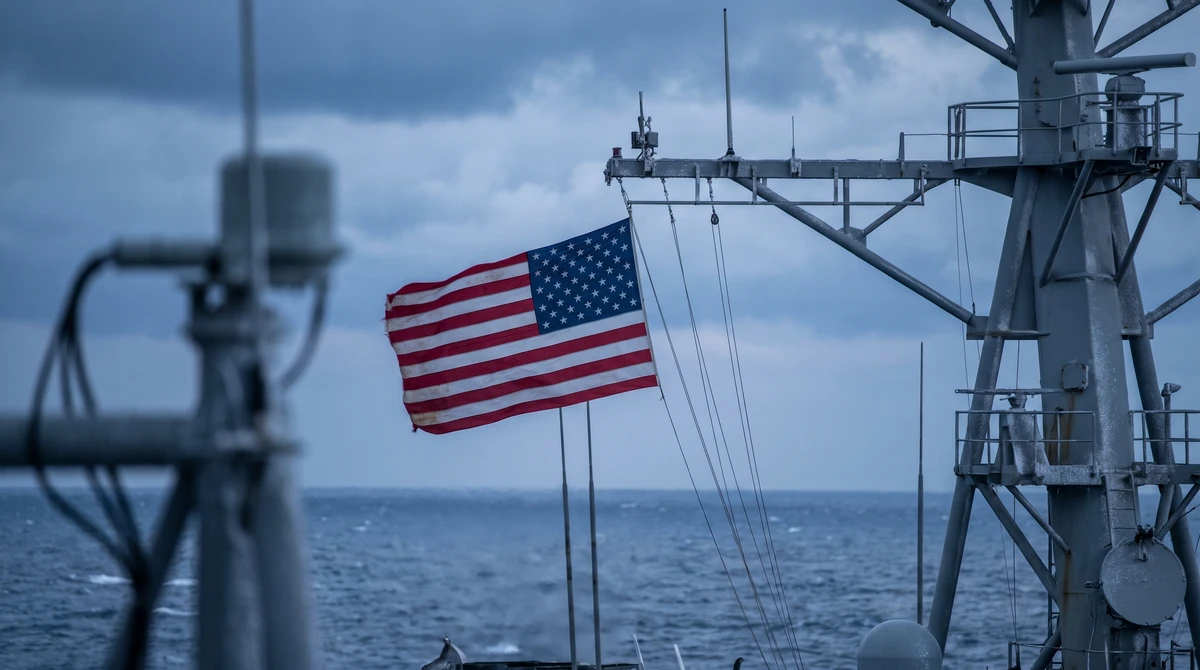
The US Navy has no frigates in commission, while 50 other navies field 407 between them, according to GlobalMilitary.net's inventory data, as Washington weighs foreign parent designs to fill the gap. A Navy assessment of the options is due on 12 November, according to The War Zone, and a White House memorandum of 13 August requires a plan for "a new competitive acquisition approach for surface combatants" within 90 days, which falls in mid-November.
The memorandum, "Rebuilding the United States Navy and America's Shipbuilding Industrial Base", states that the Navy "has experienced a series of shipbuilding setbacks stemming from overly complex designs and iterative design change procedures, which have resulted in cost growth, delays, and cancellations". The Constellation program was cancelled after schedule and cost problems that The War Zone attributes to extensive changes made to its parent design. That parent was the Franco-Italian FREMM.
The memorandum invokes 10 U.S.C. 8679(b) to permit what it calls a "Finland Model" for up to three ship classes: a foreign supplier must build or acquire a US shipyard, train an American workforce, license its shipbuilding techniques to US yards and source a US supply chain. The White House fact sheet on the memorandum says foreign builders are "temporarily permitted to build up to two ships in their parent shipyards" to bridge gaps on a quick turnaround, with every later ship built in US yards. Section 3(c) states that "the Navy shall not impose iterative design changes upon the original mature parent designs", and no change may be made without the approval of the Secretary of War. The surface combatants the plan must cover are to perform anti-submarine warfare, surface warfare and convoy escort duties; the memorandum itself does not use the word "frigate".
A Fleet Without Frigates
GlobalMilitary.net lists 76 active Arleigh Burke-class destroyers in the US Navy and no frigate of any kind. Its 27 active littoral combat ships are categorized as corvettes, not frigates, since GMN records each class under its own navy's designation. Seventeen of them belong to the Independence class; the other ten are Freedom-class ships.
The last US frigates, the Oliver Hazard Perry class, survive only abroad. Nineteen remain active in six foreign navies: eight in Turkey, four in Egypt, two each in Bahrain, Chile and Poland, and one in Pakistan. More ex-US Perry-class frigates serve in foreign fleets than the US Navy has frigates of any kind.
Alongside the search for a parent design, the Navy is pursuing FF(X), a patrol frigate to be built by HII on the basis of the Coast Guard's Legend-class National Security Cutter, initially without vertical launch cells, according to The War Zone.
The Candidate Designs in Service
Babcock is offering its Arrowhead 140, the design on which the Type 31 is based, and HII is reportedly exploring an arrangement to build it in the United States under license, according to The War Zone, which reports that Babcock has said it is interested. At about 5,700 tonnes it is the largest of the contenders, and none is yet in service. The Royal Navy has two fitting out and three on order, and its five active frigates are all Type 23s; derivatives of the design are also building for Poland and Indonesia.
Japan's Mogami class is the most mature of the field, with 10 ships in commission and two fitting out. The design on offer, however, is the upgraded Mogami, of which none is in service: the Japan Maritime Self-Defense Force has five on order, and Australia three.
South Korea's Chungnam class, at about 4,300 tonnes, has two ships in commission. The Republic of Korea Navy has two more fitting out and two on order.
Turkey's Istanbul class, the smallest of the contenders at about 3,100 tonnes, has one ship in commission; the Turkish Navy has five fitting out and two on order. Fincantieri may also pitch a design, and Rheinmetall's GMF 140 is being offered in North America, according to The War Zone.
Where the US Stands Against the World's Frigate Fleets
GlobalMilitary.net's ranking of the navies with the most frigates is led by China, with 58 in commission, more than any other fleet. The rest of the top twelve, by active frigates, runs as follows:
- Taiwan: 21
- India: 20
- South Korea: 18
- Turkey: 16
- Egypt and Greece: 13 each
- Canada, France and Russia: 12 each
- Germany and Spain: 11 each
The figures follow each navy's own designation. France's 12 therefore exclude its eight FREMMs, which the French Navy designates as destroyers and which GlobalMilitary.net lists accordingly; by the same rule, the US littoral combat ships stay among the corvettes. Of the four designs named by The War Zone, two, the Chungnam and Istanbul classes, are already in commission with their home navies, while the upgraded Mogami and the Type 31 have yet to enter service.
The next fixed dates are the Navy's assessment of the options, due on 12 November according to The War Zone, and the plan to the President required by the memorandum within 90 days of 13 August. No contract has been awarded, according to The War Zone. Under the memorandum, whichever design is chosen is to be built to its mature parent configuration, with any departure subject to the approval of the Secretary of War.
More News
All news →
Pentagon Picks Poland to Host Europe's PAC-3 Missile Maintenance Facility
The US government and Lockheed Martin named Poland on October 27 as host of a European maintenance facility for PAC-3 Patriot interceptors, with Germany, the Netherlands and Sweden as original signatories to the agreement.
ARRW Hypersonic Missile Enters Production as U.S. Fields 140 Bombers, Russia 116 and China 219 H-6s
The Department of the Air Force has moved the AGM-183A hypersonic missile into production for a U.S. bomber force of 140 aircraft, which GlobalMilitary.net's inventory sets against Russia's 116 bombers and China's 219 H-6s.
USS Colorado to Be First Virginia-Class Submarine Rotated to Australia Under AUKUS From Late 2027
The United States, Australia and the United Kingdom said on October 26, 2026 that USS Colorado (SSN 788) will be the first U.S. Navy Virginia-class attack submarine assigned to Submarine Rotational Force-West at HMAS Stirling, Western Australia, beginning in late 2027.

Why 52-Caliber Howitzers Outrange the M777 as the UK and US Move to Make More 155mm Barrels
As the UK restarted 155mm barrel production on October 22, 2026 and the US Army sought new makers for its M777 and Paladin tubes, the reach of a howitzer comes down to barrel length in calibers first, then to what the shell itself can do.
F-35 at 25: The 2001 Joint Strike Fighter Award Promised 3,000 Jets and a First Delivery in 2008
Twenty-five years after the Pentagon chose the Lockheed Martin-led team to build the Joint Strike Fighter on October 26, 2001, Lockheed counts more than 1,375 F-35s fielded, the Joint Program Office lists 20 partner and customer nations, and production lots 20 and higher remain under negotiation.
USS Pinckney Begins US Navy's First SPY-6(V)4 Radar Installation on an Arleigh Burke Destroyer
The US Navy said on October 22 that the Arleigh Burke-class destroyer USS Pinckney (DDG 91) has entered a Depot Modernization Period at General Dynamics NASSCO in San Diego, the service's first installation of the SPY-6(V)4 radar and HESC cooling plants under the DDG MOD 2.0 program.