ARRW Hypersonic Missile Enters Production as U.S. Fields 140 Bombers, Russia 116 and China 219 H-6s
The Department of the Air Force has moved the AGM-183A hypersonic missile into production for a U.S. bomber force of 140 aircraft, which GlobalMilitary.net's inventory sets against Russia's 116 bombers and China's 219 H-6s.
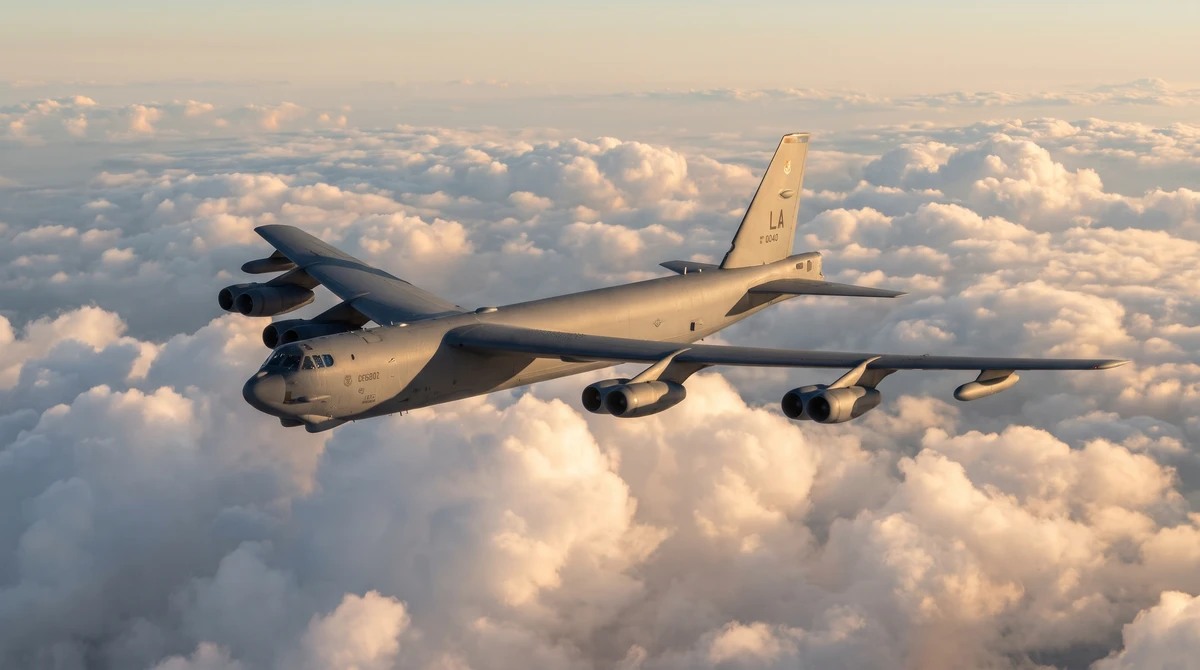
The Department of the Air Force said on October 26, 2026 that it had awarded Lockheed Martin a contract for the production and fielding of the AGM-183A Air-Launched Rapid Response Weapon, the formal transition of the boost-glide hypersonic missile program from prototyping and flight testing into production.
The contract is worth $694 million, was awarded on September 29 and announced on October 26, and the Air Force has not disclosed how many missiles it covers or when they will be delivered, The War Zone reported. The same report recalled that the Air Force moved to cancel ARRW in 2023 after failed flight tests, shifting resources to the Hypersonic Attack Cruise Missile, which remains in development and is now in flight testing; that the service has disclosed plans to integrate the missile on both the B-52 Stratofortress and the B-1B Lancer; and that an AGM-183A with a live warhead was launched in 2024 from a B-52 flying from Andersen Air Force Base in Guam. According to The War Zone, the FY2027 budget request also asks for $296 million for an Increment 2 fitted with a terminal seeker and a data link to engage moving targets, including ships.
The older of those two carriers, the B-52, entered service in 1955. An airframe of that age is the normal condition of the world's long-range bomber fleets in 2026: according to GlobalMilitary.net's inventory, only three countries operate them, and the airframes that make up most of their strength were designed in the 1950s.
Three fleets, 475 aircraft
GMN's inventory counts 140 bombers in service with the United States Air Force: 75 B-52s, 45 B-1Bs and 20 B-2 Spirits. The B-21 Raider stands at three aircraft, all in flight test, and has not yet entered service. The Russian Air Force's Long-Range Aviation fields 116: 44 Tu-95 Bears, 55 Tu-22M Backfires and 17 Tu-160 Blackjacks.
China's fleet is built on a single type. The PLA Air Force operates 219 bombers of the H-6 family, a Chinese development of the Soviet Tu-16 and a design dating to the late 1950s, according to GMN's count, which excludes the 15 H-6U/DU tankers. The breakdown is as follows:
- H-6K: 110 aircraft, the largest single bomber sub-fleet in GMN's inventory
- H-6H/M: 40 aircraft
- H-6G: 27 aircraft
- H-6J: 18 aircraft
- H-6A and H-6N: 12 aircraft each
Together the three fleets amount to 475 bombers, and the H-6 force alone, at 219 airframes, outnumbers the entire U.S. bomber force of 140 in GMN's ranking of the world's bomber fleets. That arithmetic is not a measure of capability. The H-6 has a far shorter range and a lower payload than the U.S. heavy bombers, and only the United States and Russia field intercontinental heavy bombers, the B-52, B-2 and B-1B on one side and the Tu-95 and Tu-160 on the other. The only other bomber fleet in GMN's inventory is North Korea's, whose air force keeps 80 Il-28 Beagles, a light jet bomber of the 1950s.
Designs from the mid-1950s
The service-entry years recorded on GMN's type pages show how little the top of the bomber league has turned over. The B-52 entered service in 1955 and the Tu-95 in 1956, so the two most numerous intercontinental types in the U.S. and Russian fleets are both designs that have flown operationally for seven decades, a pairing set out on GMN's B-52 versus Tu-95 comparison. The Tu-22M followed in 1973, the B-1B in 1985, the Tu-160 in 1987 and the B-2 in 1993. The H-6, as a derivative of the Tu-16, belongs to the same generation as the B-52 and the Tu-95.
Russia's bomber losses in 2026
The Russian fleet is the only one of the three losing aircraft in combat. GMN's fleet records for 2026 log four bombers removed from Long-Range Aviation's strength: three Tu-95MS and one Tu-22M3. In the war in Ukraine, a Tu-95MS was destroyed by Ukrainian long-range drones at Engels-2 air base on July 16, 2026, according to the sources cited on GMN's event record, and a second Tu-95MS was hit at Engels-2 on August 28, 2026 and assessed as beyond economic repair in the open-source reporting the event record cites. Away from the front, a Tu-95MS crashed on a training flight in the Amur region on September 29, 2026, the Russian Defense Ministry said, and a Tu-22M3 crashed near Svirsk, in Irkutsk Oblast, on June 15, 2026.
Those losses follow the heavier toll of Operation Spiderweb on June 1, 2025, when Ukrainian drones struck Russian bomber bases. For that single day, GMN's records carry seven Tu-95MS and four Tu-22M3 destroyed, sourced to the imagery assessments cited on the two event pages for the Tu-95MS losses and the Tu-22M3 losses.
The U.S. fleet recorded one loss of its own this year. A B-52H crashed shortly after takeoff from Edwards Air Force Base, California, on June 15, 2026, during a test flight, the first crash of the type since 2016 according to GMN's event record.
The figures in this article are GMN's air force inventory as of October 27, 2026: for each country, the latest inventory row plus every loss and delivery logged after its date. They count active aircraft only, exclude tankers and the retired F-117, and are a count of airframes, not of readiness.
The Air Force has not disclosed how many ARRWs the new contract will buy, The War Zone reported, and the HACM that was once meant to replace it is in flight testing. The B-21 remains in flight test, with three aircraft in GMN's count.
More News
All news →
USS Colorado to Be First Virginia-Class Submarine Rotated to Australia Under AUKUS From Late 2027
The United States, Australia and the United Kingdom said on October 26, 2026 that USS Colorado (SSN 788) will be the first U.S. Navy Virginia-class attack submarine assigned to Submarine Rotational Force-West at HMAS Stirling, Western Australia, beginning in late 2027.

Why 52-Caliber Howitzers Outrange the M777 as the UK and US Move to Make More 155mm Barrels
As the UK restarted 155mm barrel production on October 22, 2026 and the US Army sought new makers for its M777 and Paladin tubes, the reach of a howitzer comes down to barrel length in calibers first, then to what the shell itself can do.
F-35 at 25: The 2001 Joint Strike Fighter Award Promised 3,000 Jets and a First Delivery in 2008
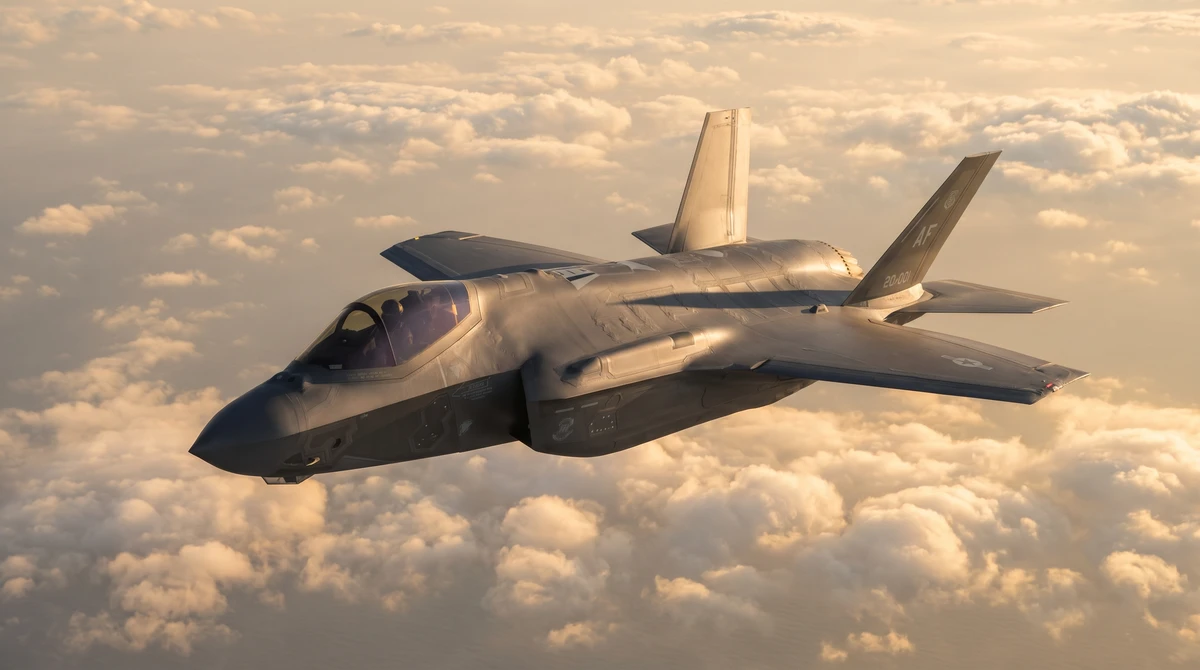
Twenty-five years after the Pentagon chose the Lockheed Martin-led team to build the Joint Strike Fighter on October 26, 2001, Lockheed counts more than 1,375 F-35s fielded, the Joint Program Office lists 20 partner and customer nations, and production lots 20 and higher remain under negotiation.
USS Pinckney Begins US Navy's First SPY-6(V)4 Radar Installation on an Arleigh Burke Destroyer
The US Navy said on October 22 that the Arleigh Burke-class destroyer USS Pinckney (DDG 91) has entered a Depot Modernization Period at General Dynamics NASSCO in San Diego, the service's first installation of the SPY-6(V)4 radar and HESC cooling plants under the DDG MOD 2.0 program.

UK Restarts Tank and Howitzer Barrel Production as US Army Seeks New 155mm Tube Makers
Rheinmetall UK has begun making 120mm and 155mm barrels in Telford, the Ministry of Defence said on 22 October, a day after a US Army contracting command posted a market survey for domestic makers of Paladin and M777 cannon tubes.
Pentagon and Lockheed Martin Unveil 10-Year F-35 Framework for 850 US Jets, Pending Congress
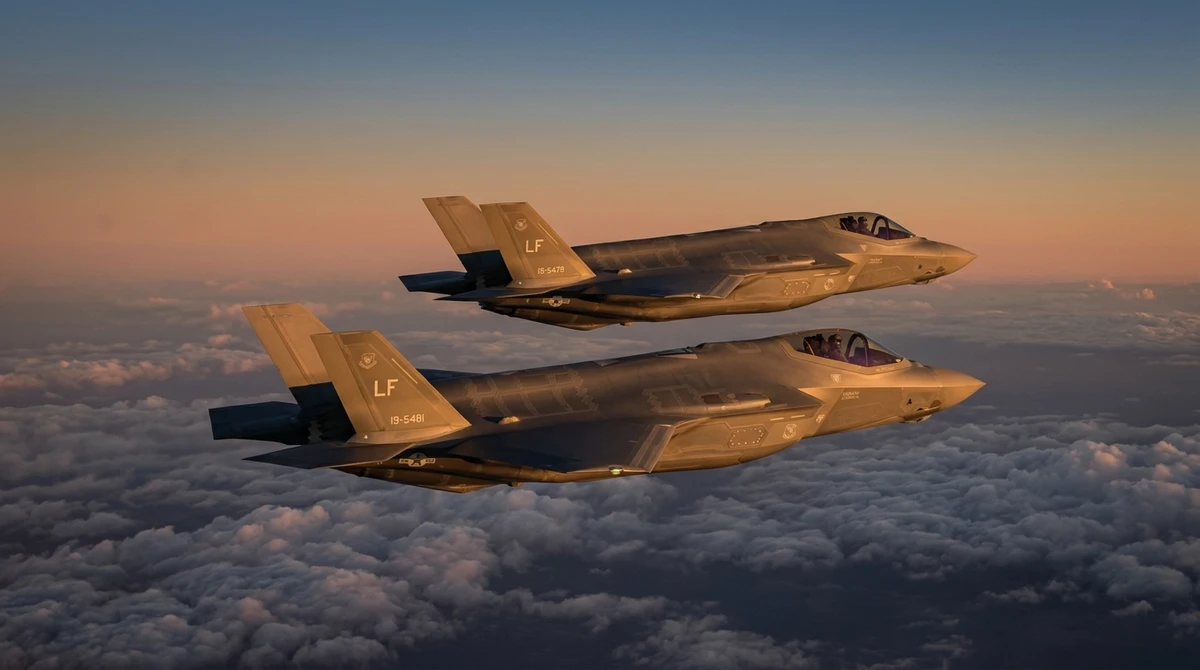
The Department of War and Lockheed Martin announced on October 22 a framework agreement covering 850 US F-35s over 10 years at a steady 156 aircraft a year, an arrangement that requires multiyear authority and appropriations from Congress before any contract is awarded.