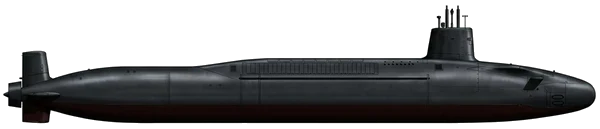
The Dreadnought class is the future replacement for the Royal Navy's Vanguard-class ballistic missile submarines, the platform of the United Kingdom's continuous at-sea nuclear deterrent. Four boats — Dreadnought, Valiant, Warspite and King George VI — are under construction at BAE Systems' Barrow-in-Furness yard, with the lead boat expected to enter service in the early 2030s. The programme's whole-life cost was estimated at £31 billion, with an additional contingency of £10 billion.
At 153.6 meters and about 17,200 tonnes, the Dreadnoughts will be the largest submarines ever built for the Royal Navy. Each carries twelve missile tubes from the Common Missile Compartment developed jointly with the American Columbia class, armed with Trident II D5 missiles, alongside four 533 mm torpedo tubes for Spearfish heavyweight torpedoes. The new PWR3 reactor — a UK design benefiting from US technology — drives a turbo-electric propulsion system and pump-jet, promising a step change in quietness and a reactor core that lasts the life of the boat.
The programme was provisionally known as "Successor" until 2016, when the government confirmed the lead ship would revive the name Dreadnought. Delivery is phased so the Vanguard boats, in service since the 1990s and already stretched well beyond their design life, can retire one for one as the new class arrives.