Karrar
Iranian jet-powered target drone and long-range bomber, developed in the early 21st century and used for air-defense training and precision strikes. Key figures: top speed 900 km/h, range 1,000 km, max takeoff weight 700 kg.
| Length | 4 m (13.1 ft) |
| Wingspan | 2.5 m (8.2 ft) |
| Max. takeoff weight | 700 kg (1,543 lbs) |
| Powerplant | 1 × Tolloue 5 or Microturbo TRI 60-5 turbojet 4 kN each |
| Maximum speed | 900 km/h (559 mph) |
| Operational range | 1,000 km (621 mi) |
- Air-to-Air Short-Range Majid
- Air-to-Air Short-Range Shahab-e-Saqeb
- Anti-Ship Kowsar
- Anti-Ship Nasr-1
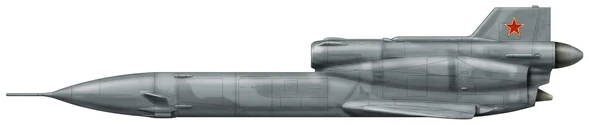

Description
The HESA Karrar is an Iranian jet-powered unmanned aerial vehicle (UAV) produced by the Iran Aircraft Manufacturing Industrial Company (HESA) since 2010. Developed during the Ahmadinejad presidency, the aircraft is a derivative of the 1970s-era American Beechcraft MQM-107 Streaker, incorporating design elements from the South African Denel Dynamics Skua. Development was underway as of 2002, potentially under the designation "Hadaf-1," with a subscale model appearing in 2004. The aircraft was officially unveiled on August 23, 2010.
Design
The Karrar features a cylindrical, blunt-nosed fuselage with a low-mounted, clipped delta wing and high-mounted twin arrowhead-shaped endplate tailfins. It is powered by a single Tolloue 5 or Microturbo TRI 60-5 turbojet engine producing approximately 4.2–4.4 kN of thrust, fed by a dorsal air intake. The aircraft utilizes a rocket-assist system for launch and is recovered by parachute; Iranian officials also claim air-launch capability. Avionics include an autopilot system with INS and GPS guidance, allowing for pre-programmed flight paths that can be updated in flight. The Karrar is capable of high and low altitude flight during day or night and may possess terrain-following capabilities. The platform lacks visible electro-optical or infrared (EO/IR) sensors.
Armament
The aircraft has a maximum takeoff weight of 700 kg and a payload capacity of 227 kg (500 lb) across three hardpoints. The centerline station can carry a single 500 lb Mk 82 general-purpose bomb or a Mark 46 torpedo. Underwing stations carry two Nasr-1 or Kowsar anti-ship missiles, or two 250 lb Mk 81 bombs. Since 2019, the Karrar has been integrated with the Balaban satellite-guided glide bomb. For air-to-air engagements, the platform is equipped with Shahab-e-Saqeb missiles or the Majid heat-seeking missile, which has an 8 km range. Carrying weapons reduces the aircraft's operational range.
Operational History
The Islamic Republic of Iran Air Defense Force uses the Karrar primarily as a target drone to simulate aerial threats for training air-defense crews. It has been used to test various systems, including Mersad, S-300PMU-2, and Sayyad-2/3 surface-to-air missiles, as well as Fakour-90 air-to-air missiles. Although initially framed as a "long-range bomber drone," the first recorded deployment of munitions by a Karrar occurred during a 2020 exercise. The platform has been exported to Hezbollah and has reportedly been used in the Syrian Civil War. Specifications include a maximum speed of 900 km/h and a maximum range of 1,000 km.
Frequently Asked Questions
What type of aircraft is the Karrar?
What is the maximum speed of the Karrar?
What is the range of the Karrar?
When did the Karrar first fly?
- MAR 102026 Created Page created: Karrar
- JAN 162026 Created Page created: Karrar