SR-71 Blackbird
American strategic reconnaissance aircraft, operational from 1966-1998, unmatched speed and altitude records, infamous for Cold War and NASA missions. Key figures: top speed 3,541 km/h, range 5,230 km, service ceiling 25,908 m, max takeoff weight 78,018 kg, unit price $185M, built 32.

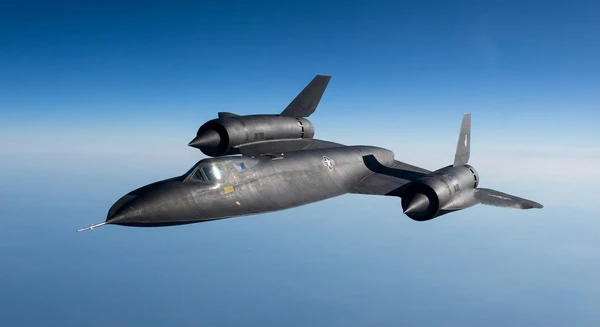
| Crew | 2 (pilot, reconnaissance systems officer) |
| Length | 32.8 m (107.5 ft) |
| Wingspan | 17.0 m (55.7 ft) |
| Height | 5.7 m (18.6 ft) |
| Wing area | 167 m² (1797.6 sqft) |
| Empty weight | 30,617 kg (67,499 lbs) |
| Max. takeoff weight | 78,018 kg (172,000 lbs) |
| Powerplant | 2 × turbojets Pratt & Whitney J58-P4 15,422 kgf each |
| Ejection seat | Lockheed SR-1 |
| Maximum speed | 3541 km/h (Mach 3.54) |
| Operational range | 5,230 km (3,250 mi) |
| Endurance | 2 hours |
| Service ceiling | 25,908 m (85,000 ft) |
| Climb rate | 60.0 m/s (196.9 ft/s) |
Description
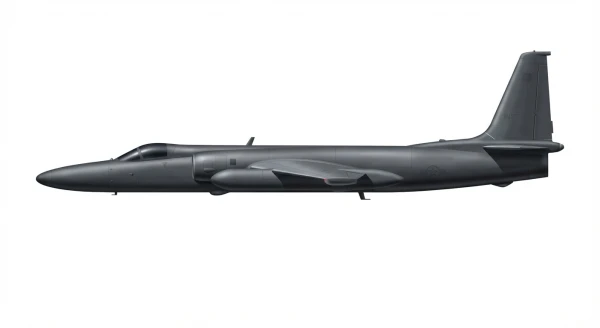
The SR-71 Blackbird was a specialized high-speed, high-altitude reconnaissance aircraft developed by Lockheed in the 1960s for the United States Air Force. Nicknamed "Blackbird" for its distinctive black matte exterior finish, the SR-71 featured a long, slender fuselage optimized for stealth and aerodynamics at very high speeds.
Design
The Blackbird was powered by two Pratt & Whitney J58 turbojet engines, capable of propelling the aircraft to astonishing speeds exceeding Mach 3 and to altitudes of 85,000 feet and beyond. To withstand the extreme temperatures generated by air friction at such velocities, Lockheed pioneered the use of titanium alloys and advanced composite materials in the SR-71's construction.
Operational History
To fulfill its role as a surveillance platform, the SR-71 carried an array of sensors, cameras, and signals intelligence gathering equipment. However, it had no defensive armaments, relying on sheer speed and operating altitude for protection. The Blackbird entered service with the USAF in 1966 and conducted numerous intelligence gathering missions over sensitive regions including the Soviet Union, Middle East, Vietnam, and Korea until its retirement in 1998.
Over its career, the SR-71 established several world records for airspeed and altitude, including a 3529 km/h speed record set in 1976. A total of 32 Blackbirds were built, of which 12 were lost in accidents. However, not a single SR-71 was ever shot down by adversaries. Even today, decades after its retirement, the SR-71 remains the fastest and highest-flying operational manned aircraft in history, demonstrating the capabilities of sustained flight at hypersonic speeds.
Frequently Asked Questions
What type of aircraft is the SR-71 Blackbird?
What is the maximum speed of the SR-71 Blackbird?
What is the range of the SR-71 Blackbird?
When did the SR-71 Blackbird first fly?
How many SR-71 Blackbird have been built?
How much does a SR-71 Blackbird cost?
What is the service ceiling of the SR-71 Blackbird?
- AUG 142026 Updated Per-engine thrust corrected against the engine variant the entry names
- JUL 232026 Updated Sources and cross-references refreshed
- APR 72026 Updated Sources and cross-references refreshed
- FEB 72026 Updated Endurance added
- JAN 122026 Updated Range updated in a site-wide editorial pass