Yak-38 Forger
Soviet vertical takeoff/landing fighter, developed during the Cold War, primarily utilized on Soviet naval aviation carriers. Key figures: top speed 1,210 km/h, range 1,300 km, service ceiling 11,300 m, max takeoff weight 11,200 kg, unit price $12M, built 231.
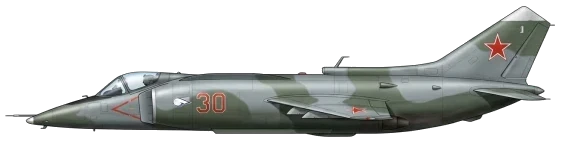
| Crew | 1 |
| Length | 15.5 m (50.9 ft) |
| Wingspan | 7.3 m (24.0 ft) |
| Height | 4.4 m (14.3 ft) |
| Wing area | 18.5 m² (199.1 sqft) |
| Empty weight | 7,020 kg (15,476 lbs) |
| Max. takeoff weight | 11,200 kg (24,692 lbs) |
| Powerplant | 1 × turbofan Tumansky R-27V-300 (+ 2 Rybinsk RD-36-35FVR lift jets) 6,801 kgf each |
| Ejection seat | Zvezda K-36DM |
| Maximum speed | 1210 km/h (752 mph) |
| Operational range | 1,300 km (808 mi) |
| Service ceiling | 11,300 m (37,073 ft) |
| Climb rate | 75.0 m/s (246.1 ft/s) |
- Air-to-Air Short-Range Vympel R-3 (AA-2 Atoll)
- Air-to-Surface Zvezda Kh-23 (AS-7 Kerry)
Description
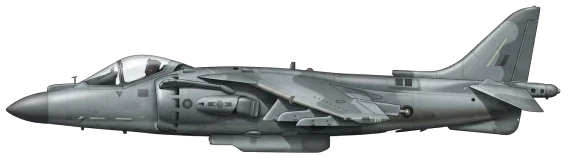
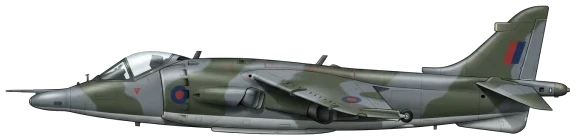
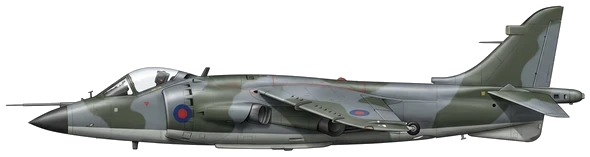
The Yakovlev Yak-38 is a development of the Yak-36, an experimental aircraft. And in many ways, the Yak-38 was also an experimental aircraft. Technologically inferior to the British Harrier, the Forger did not have a radar (except for a small telemetry system) and had limited military capabilities. The Yak was first observed aboard the aircraft carrier Kiev in the summer of 1976, during a trip between Nikolaev and Murmansk. It could only land vertically, severely limiting its possibilities. The dozen aircraft deployed on each Soviet aircraft carrier were supposed to fulfill missions of attack, air defense, and reconnaissance. In reality, it would have been very difficult for it to face real carrier-based fighters, such as the Grumman F-14 Tomcat.
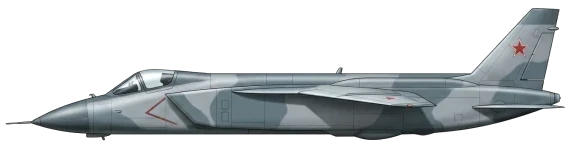
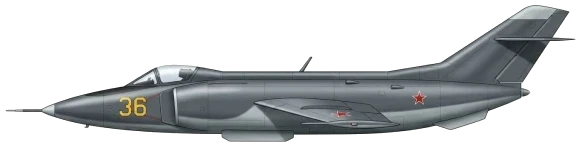
With its strange appearance, featuring two small mid-wing partially folding wings, the Forger had a twin-engine configuration, with a thrust vectoring engine and two lift jets at the front. Its electronic equipment was very limited and mainly consisted of an IFF Odd Rods system, a guidance system for landing (mounted under the radar nose), and a radio equipment. Three main versions of the Forger have been identified: the Yak-38, the more powerful and better armed Yak-38M (about 50 units produced), and the two-seater training aircraft Yak-38 Forger-B (tandem cockpit, lowered nose; 38 units). Approximately 230 units of the Yak-38 were produced by Soviet production lines. The aircraft was retired from service fairly quickly, while its designated successor, the Yak-141, could not withstand the fall of the Soviet Union.
Frequently Asked Questions
What type of aircraft is the Yak-38 Forger?
What is the maximum speed of the Yak-38 Forger?
What is the range of the Yak-38 Forger?
When did the Yak-38 Forger first fly?
How many Yak-38 Forger have been built?
Which countries operate the Yak-38 Forger?
How much does a Yak-38 Forger cost?
What is the service ceiling of the Yak-38 Forger?
- AUG 52026 Updated Climb rate added; powerplant, thrust and engine count updated
- APR 72026 Updated Sources and cross-references refreshed
- JAN 242026 Updated Thrust updated
- JAN 122026 Updated Range updated in a site-wide editorial pass