Ka-27 Helix
Soviet maritime helicopter, primarily deployed for anti-submarine warfare and rescue operations during the Cold War era. Key figures: top speed 270 km/h, range 980 km, service ceiling 5,000 m, max takeoff weight 12,000 kg, built 201. In service with 12 air forces as of 2026 — Russia (108), China (17), India (14) and 9 others.
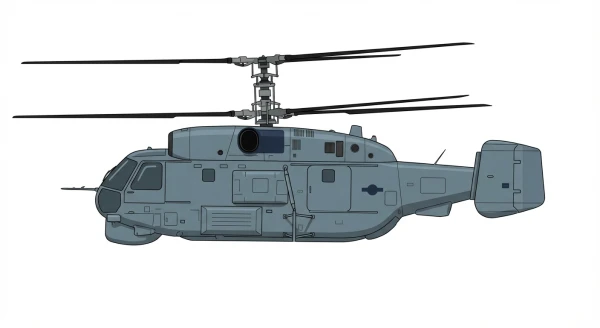
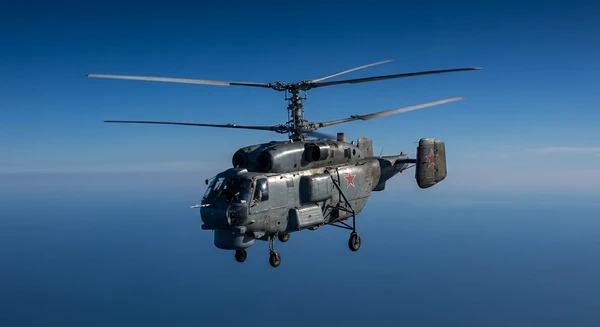
| Crew | 3 |
| Length | 11.3 m (37.1 ft) |
| Wingspan | 15.8 m (51.8 ft) |
| Height | 5.5 m (18.0 ft) |
| Empty weight | 6,500 kg (14,330 lbs) |
| Max. takeoff weight | 12,000 kg (26,455 lbs) |
| Powerplant | 2 × turboshafts Klimov TV3-117V 1,659 kW each |
| Maximum speed | 270 km/h (168 mph) |
| Operational range | 980 km (609 mi) |
| Service ceiling | 5,000 m (16,404 ft) |
-
 Russia
108
Russia
108
-
 China
17
China
17
-
 India
14
India
14
-
 Vietnam
10
Vietnam
10
-
 South Korea
7
South Korea
7
-
 Ukraine
4
Ukraine
4
-
 Azerbaijan
3
Azerbaijan
3
-
 Algeria
3
Algeria
3
- 🇱🇦 Laos 2
-
 Syria
2
Syria
2
-
 Yemen
2
Yemen
2
- 🇬🇶 Equatorial Guinea 1
- Anti-Submarine PLAB-250-120
Recent Events — Ka-27 Helix
3 events →-
AUG 302026
 Russia
Ka-27 destroyed by Ukrainian drones at Yeysk Air Base, Krasnodar Krai, Ukraine's General Staff said; naval aviation training centre also hit.
Destroyed
Russia
Ka-27 destroyed by Ukrainian drones at Yeysk Air Base, Krasnodar Krai, Ukraine's General Staff said; naval aviation training centre also hit.
Destroyed
-
MAR 52026
Russia
Ka-27PS destroyed by Ukrainian FPV drone while landing on Syvash drilling platform in the Black Sea; crew survived.
Shot down
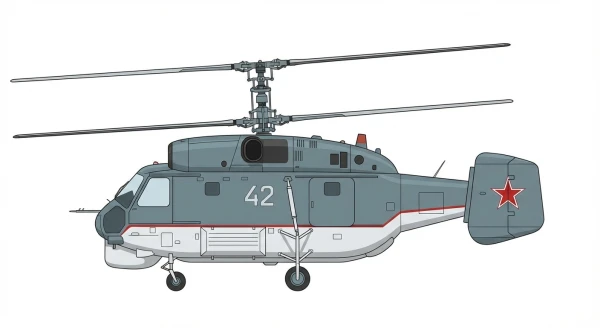
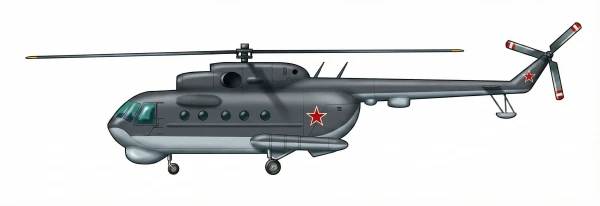
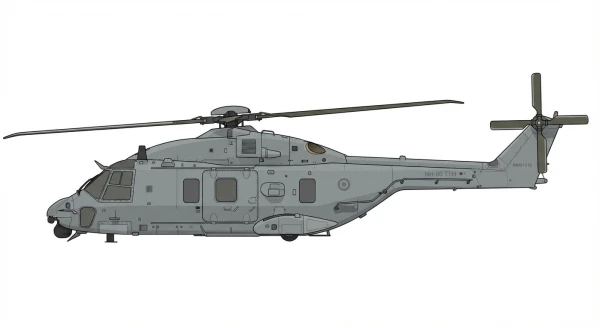
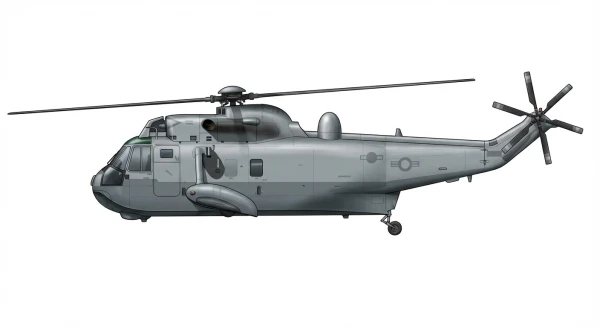
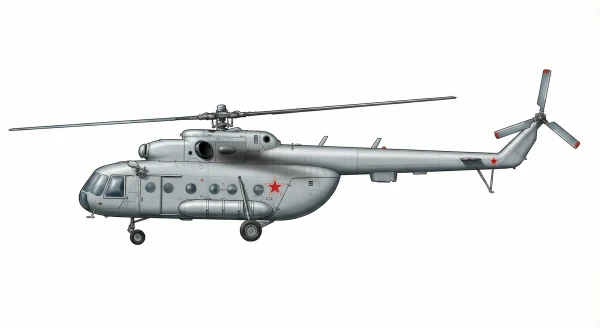
Description
The Kamov Ka-27 (NATO reporting name "Helix") is a naval multi-role helicopter developed by Kamov in the Soviet Union for anti-submarine warfare, search and rescue, and troop transport. Utilizing coaxial contra-rotating rotors that eliminate the need for a tail rotor, the type officially entered service with the Soviet Navy in April 1981. It is operated by military and civil entities in nations including Russia, China, India, Ukraine, Vietnam, and South Korea.
Development
Design work on the Ka-27 began in 1969 to replace the Kamov Ka-25 while matching or reducing its external dimensions. The first prototype, designated Ka-252, flew in 1973, with a total of five prototypes and pre-series aircraft constructed. Series production commenced at the Kumertau plant in July 1979, leading to official entry into Soviet Navy service in April 1981. Over 240 units of the civil Ka-32 export family alone were produced by 2019.
Design
The Ka-27 features a coaxial contra-rotating main rotor design driven by two Isotov TV3-117V turboshaft engines rated at 1,660 kW each. The airframe uses a four-leg fixed landing gear and includes two lateral inflatable buoys for forced water landings. The operational crew consists of a pilot and navigator in the forward cockpit, along with a sonar operator seated behind them. Depending on the variant, avionics include search radar, dipping sonar, magnetic anomaly detectors, and sonobuoys, while modernized Ka-27M models integrate an under-fuselage FH-A active electronically scanned array radar.
Armament
The anti-submarine Ka-27PL features an internal bay configured for up to 36 sonobuoys or a single torpedo, such as the AT-1M, VTT-1, UMGT-1 Orlan, or APR-2 Yastreb. It can also carry six to eight conventional depth charges or a single nuclear depth charge. The Ka-29TB assault transport variant incorporates four external hardpoints for unguided rockets, bombs, gun pods, or 9K114 Shturm anti-tank missile launchers, complemented by a forward-firing 7.62 mm machine gun or an optional 30 mm 2A42 cannon.
Operational History
The Soviet Navy and Russian Naval Aviation systematically operated the Ka-27PL in pairs as hunter-killer anti-submarine teams. Export operations include China's acquisition of Ka-28 and Ka-31 variants for the People's Liberation Army Navy, and India's operation of 20 units. Syrian Navy Ka-27s saw use during the Syrian Civil War, and a Russian Navy unit performed deck landing training aboard USS Mount Whitney in July 2010. Operational losses include a Ka-29 shot down over Crimea in June 2024 and a Ka-27 destroyed at Yeysk airport in May 2026.
Variants
- Ka-27PL: Anti-submarine warfare variant fitted with search radar, dipping sonar or magnetic anomaly detectors, and depth charges or torpedoes.
- Ka-27PS: Search and rescue variant with anti-submarine equipment removed, equipped with a 300 kg hoist and cabin space for stretchers or seats.
- Ka-27M: Upgraded modification equipped with an FH-A active electronically scanned array radar and an integrated command and tactical radar system.
- Ka-28: Export variant of the Ka-27PL featuring an increased maximum takeoff weight of 12,000 kg and expanded fuel capacity.
- Ka-29TB: Armored assault transport variant designed to carry 16 troops, equipped with external hardpoints, anti-tank missiles, and cannons.
Identified in 36 sorties in the official China-Taiwan Tensions activity reports between 2022 and 2023 — a floor, not a census: only sorties the source identified by type are counted, and how much it disclosed varies by year.
Frequently Asked Questions
What type of aircraft is the Ka-27 Helix?
What is the maximum speed of the Ka-27 Helix?
What is the range of the Ka-27 Helix?
When did the Ka-27 Helix first fly?
How many Ka-27 Helix have been built?
Which countries operate the Ka-27 Helix?
What is the service ceiling of the Ka-27 Helix?
- AUG 62026 Updated Description updated
- AUG 52026 Updated Powerplant updated in a site-wide editorial pass
- JUL 232026 Updated Sources and cross-references refreshed
- APR 72026 Updated Sources and cross-references refreshed
- FEB 72026 Updated Wingspan added
- JAN 122026 Updated Range updated in a site-wide editorial pass