Airbus A310 MRTT vs KC-135 Stratotanker
Airbus A310 MRTT vs KC-135 Stratotanker at a glance — top speed 978 vs 933 km/h, range 8,889 vs 2,400 km, max takeoff weight 163,998 vs 146,283 kg, built 6 vs 803 units.
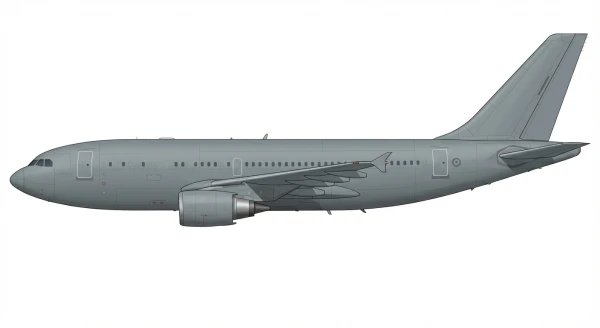
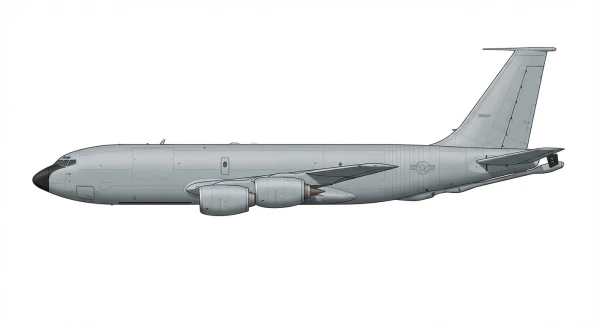
| Airbus A310 MRTT | KC-135 Stratotanker | |
|---|---|---|
| Origin country | 🇪🇺 Europe | 🇺🇸 United States |
| Category | Military Special Mission Aircraft | Military Special Mission Aircraft |
| Manufacturer | Airbus | Boeing |
| First flight | 1 December 2003 | 31 August 1956 |
| Year introduced | 2004 | 1957 |
| Number produced | 6 units | 803 units |
| Average unit price | $108 million | $39 million |
| Wing area | 219.0 m² | 226.0 m² |
| Wingspan | 43.9 m | 39.9 m |
| Height | 15.8 m | 12.7 m |
| Length | 47.5 m | 41.5 m |
| Maximum speed | 978 km/h | 933 km/h |
| Operational range | 8,889 km | 2,400 km |
| Service ceiling | 12,497 m | 15,240 m |
| Max. takeoff weight | 163,998 kg | 146,283 kg |
| Empty weight | 113,999 kg | 44,663 kg |
| Total thrust | 2 x 27,306 kgf | 4 x 9,813 kgf |
Detailed Comparison
The Airbus A310 Multi-Role Tanker Transport (MRTT) and the Boeing KC-135 Stratotanker represent two fundamentally different generations of aerial refueling aircraft, separated by nearly five decades of aerospace evolution. The KC-135, introduced in 1957, was a purpose-built Cold War-era military derivative of the Dash 80 prototype designed to support Strategic Air Command bombers. The A310 MRTT, entering service in 2004, adapts a modern wide-body civilian airframe to multi-role military standards, bringing contemporary avionics, engines, and operational flexibility that the 1950s-era KC-135 design simply could not envision.
Development and Design
The KC-135 was conceived for a single mission: refueling jet bombers at speed and altitude using a dedicated flying boom controlled by a rear-stationed operator. Its narrow fuselage and analog-era cockpit reflect 1950s design philosophy. While later upgrades such as the KC-135R variant introduced CFM56 high-bypass turbofans, the fundamental airframe, flight systems, and crew interfaces remain rooted in their original era, requiring extensive maintenance to remain airworthy after nearly seven decades of service. The A310 MRTT, by contrast, is built on the Airbus A310-300 wide-body platform from the 1980s, featuring a modern glass cockpit, digital fly-by-wire flight controls, and fully computerized fuel management. The military conversion adds center fuel tanks, underwing Mk32B refueling pods for a hose-and-drogue system capable of simultaneously refueling two receivers, and a digital Fuel Operator Station managed from the cockpit. The aircraft retains substantial cargo capability through a main deck cargo door and four separate cargo systems, reflecting its inherent multi-role design.
Specifications and Performances
The generational advantage of the A310 MRTT is evident in its specifications. Its wide-body architecture delivers a higher MTOW of 163,998 kg compared to the KC-135's 146,283 kg. Powered by two General Electric CF6-80C2 high-bypass turbofans, the A310 achieves a higher maximum speed of 978 km/h versus the KC-135's 933 km/h, while burning significantly less fuel per hour thanks to modern engine technology — a critical advantage for a tanker aircraft. The Airbus platform provides a non-fuel payload of 37 tonnes or 214 personnel. The KC-135, despite its four engines, offers lower overall efficiency, and its primary capacity is dedicated to fuel transfer, though later configurations allow limited cargo and personnel transport. The A310's dual-pod system is optimized for probe-equipped tactical fighters, while the KC-135's boom system facilitates rapid high-volume transfer to receptacle-equipped heavy aircraft.
Deployment and Usage
With 803 units produced, the KC-135 remains the backbone of USAF tanker operations, having supported every major American conflict from Vietnam through the Gulf War and post-9/11 campaigns. Its longevity is a testament to ongoing modernization programs, though the fleet's average age — now exceeding 60 years — increasingly strains maintenance budgets and readiness. Specialized variants conduct electronic intelligence (RC-135) and nuclear sampling (WC-135). The A310 MRTT sees more limited deployment, with six converted units serving the German Air Force and Royal Canadian Air Force (designated CC-150 Polaris). However, these aircraft demonstrate the operational versatility that modern platforms offer: the German fleet actively supports NATO Reaction Forces and can be rapidly reconfigured for Medical Evacuation missions, housing six intensive care units and 56 stretchers — a multi-role flexibility that the KC-135's original design never anticipated.
Conclusion
The KC-135 Stratotanker remains a workhorse of strategic aerial refueling, its flying boom providing the high-volume fuel delivery required for bomber fleets and long-range power projection. However, the A310 MRTT represents a generational leap in tanker design, combining modern avionics, fuel-efficient engines, reduced crew workload, and genuine multi-role capability — refueling, strategic airlift, and aeromedical evacuation — in a single platform. The contrast between these two aircraft illustrates the broader shift in military aviation from dedicated single-role Cold War platforms to versatile, digitally-integrated modern systems.