Il-78 Midas vs KC-135 Stratotanker
Il-78 Midas vs KC-135 Stratotanker at a glance — top speed 850 vs 933 km/h, range 7,300 vs 2,400 km, max takeoff weight 210,000 vs 146,283 kg, built 53 vs 803 units.
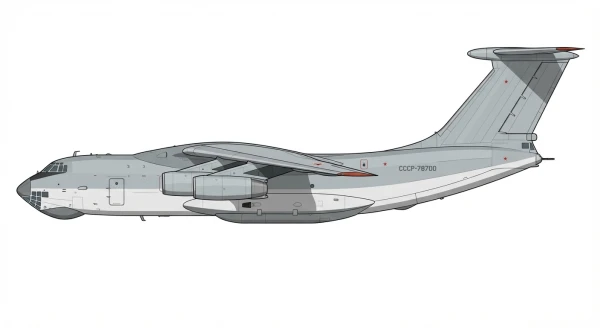
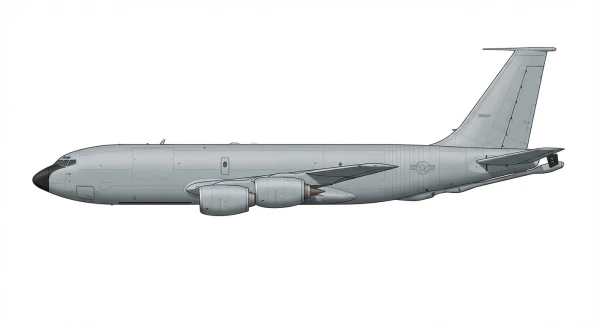
| Il-78 Midas | KC-135 Stratotanker | |
|---|---|---|
| Origin country | 🇷🇺 Ex-USSR | 🇺🇸 United States |
| Category | Military Special Mission Aircraft | Military Special Mission Aircraft |
| Manufacturer | Ilyushin | Boeing |
| First flight | 26 June 1983 | 31 August 1956 |
| Year introduced | 1984 | 1957 |
| Number produced | 53 units | 803 units |
| Average unit price | -- | $39 million |
| Wing area | 300.0 m² | 226.0 m² |
| Wingspan | 50.5 m | 39.9 m |
| Height | 14.8 m | 12.7 m |
| Length | 46.6 m | 41.5 m |
| Maximum speed | 850 km/h | 933 km/h |
| Operational range | 7,300 km | 2,400 km |
| Service ceiling | 12,000 m | 15,240 m |
| Max. takeoff weight | 210,000 kg | 146,283 kg |
| Empty weight | 72,000 kg | 44,663 kg |
| Total thrust | 4 x 12,020 kgf | 4 x 9,813 kgf |
Detailed Comparison
The KC-135 Stratotanker and Il-78 Midas represent divergent paths in aerial refueling platform development, with the former being a purpose-built strategic asset and the latter an adaptation of a successful heavy airlifter. The KC-135 was developed from a clean-sheet prototype to support high-altitude jet bombers, necessitating its speed and the introduction of the high-flow-rate flying boom system. Conversely, the Il-78 was derived from the rugged Il-76 transport, leveraging a proven airframe for the tanker role and employing a three-point probe-and-drogue system suitable for simultaneously refueling multiple tactical aircraft.
Development and Design
The KC-135's design was a direct response to Cold War requirements for a fast, high-altitude tanker. Developed from the Boeing 367-80 prototype, it features a fuselage narrower than its Boeing 707 commercial cousin, optimized specifically for its refueling mission. Its key design innovation is the flying boom, a rigid, steerable tube controlled by an operator that provides a stable, high-volume fuel transfer, essential for refueling large strategic aircraft like the B-52. Continuous upgrades, most notably the re-engining of the KC-135R fleet with efficient CFM56 turbofans, have ensured its operational relevance for over six decades.
The Il-78 was developed by converting the Il-76MD airlifter. This approach retained the Il-76's robust structure and ability to operate from austere airfields but adapted it for refueling. The primary modification was the installation of three UPAZ aerial refueling pods—one under each wing and a third on the port side of the rear fuselage. This probe-and-drogue system is standard for Soviet/Russian-designed aircraft. Early Il-78 variants featured removable fuel tanks in the cargo bay, allowing for conversion back to a cargo transport role, while the dedicated Il-78M version incorporates permanent tanks for increased fuel offload capacity.
Specifications and Performances
While both are four-engine jet tankers, their performance characteristics reflect their distinct origins. The Il-78 is a physically larger aircraft, with a greater wingspan (50.5 m vs. 39.88 m) and a significantly higher maximum takeoff weight of 210,000 kg compared to the KC-135's 146,283 kg. This size contributes to the Il-78M's superior maximum fuel offload capacity of up to 105.7 tonnes. The KC-135, however, offers superior flight performance with a higher maximum speed (933 km/h vs. 850 km/h) and service ceiling (15,240 m vs. 12,000 m), critical for its original role supporting strategic bombers. The modernized KC-135R's high-bypass turbofans also provide greater fuel efficiency than the Il-78's older D-30 low-bypass engines.
Deployment and usage
The scale of production and deployment highlights differing strategic doctrines. With over 800 units built, the KC-135 has been the backbone of U.S. and allied air power projection for decades, participating in every major American conflict since the Vietnam War. Its boom system is the standard for the U.S. Air Force, servicing fighters, bombers, and transport aircraft. In contrast, the much smaller fleet of around 53 Il-78s serves primarily the Russian Aerospace Forces and key export partners like India and China. Its three-point drogue system gives it a tactical advantage in refueling multiple fighters in a single operation, supporting large-scale air defense or offensive counter-air missions.
Conclusion
The KC-135 Stratotanker is a highly specialized, high-performance tanker whose design and boom refueling system were tailored for the strategic demands of a global superpower. Its longevity is a product of a sound original design and extensive modernization. The Il-78 Midas is a more utilitarian platform, leveraging the robust and versatile Il-76 airframe to create a high-capacity tanker. Its multi-point drogue system and large fuel offload serve a doctrine that often emphasizes the support of large tactical aircraft formations. The two aircraft are not direct competitors but rather reflections of the distinct operational requirements and industrial philosophies from which they emerged.