Airbus A321 vs Boeing 737
Airbus A321 vs Boeing 737 at a glance — top speed 871 vs 904 km/h, range 5,930 vs 4,800 km, max takeoff weight 78,000 vs 52,163 kg, built 2,917 vs 11,535 units.
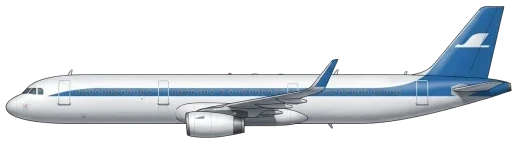
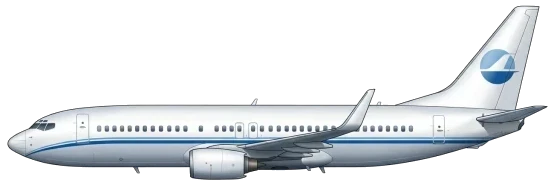
| Airbus A321 | Boeing 737 | |
|---|---|---|
| Origin country | 🇪🇺 Europe | 🇺🇸 United States |
| Category | Military Transport Aircraft | Military Transport Aircraft |
| Manufacturer | Airbus | Boeing |
| First flight | 27 February 1987 | 9 April 1967 |
| Year introduced | 1994 | 1967 |
| Number produced | 2917 units | 11535 units |
| Average unit price | $120 million | $115 million |
| Wing area | 122.6 m² | 91.0 m² |
| Wingspan | 34.1 m | 28.0 m |
| Height | 11.8 m | 11.0 m |
| Length | 37.6 m | 30.0 m |
| Maximum speed | 871 km/h | 904 km/h |
| Operational range | 5,930 km | 4,800 km |
| Service ceiling | 12,000 m | 11,278 m |
| Max. takeoff weight | 78,000 kg | 52,163 kg |
| Empty weight | 42,600 kg | 29,071 kg |
| Total thrust | 2 x 11,340 kgf | 2 x 6,577 kgf |
Detailed Comparison
The Boeing 737 and Airbus A321 occupy the same narrowbody commercial market but diverge sharply in their defense applications. Boeing leveraged the 737’s airframe to monopolize Western maritime patrol and airborne early warning sectors, while the A321 remains confined to logistical and troop transport roles.
Development and Design
The 737’s 1967 origin mandated a low-slung stance for austere airfield operations without ground support equipment. This low ground clearance created integration hurdles for modern, larger-diameter engines, forcing the flattened nacelle design on the CFM56. However, Boeing bypassed these limitations in defense variants like the P-8 Poseidon by heavily modifying the 737-800ERX airframe, adding raked wingtips, reinforced fuselage sections, and an internal weapons bay behind the wing root.
The A321, stretched from the fly-by-wire A320 baseline in 1988, sits higher, easily accommodating larger turbofans without airframe geometry compromises. Its composite-heavy structure and advanced aerodynamics yield high fuel efficiency, but Airbus has not engineered a structurally modified weapons-bay variant for the A321, keeping it a strictly clean-wing platform restricted to roll-on/roll-off internal payloads.
Specifications and Performances
Baseline performance metrics favor the European airframe in payload and endurance. The initial A321-100 operates with a 78,000 kg maximum takeoff weight (MTOW) and a 122.6 m² wing area, generating a 5,930 km range. Early 737 variants managed only a 52,163 kg MTOW and a 4,800 km range from a 91.0 m² wing. While modern 737 derivatives match the baseline A321’s endurance, the newer A321XLR pushes the narrowbody range envelope past 8,700 km using permanent rear center tanks. Despite this raw kinematic advantage, the A321’s aerodynamic profile translates only to high-altitude point-to-point transit. It lacks the low-altitude loiter optimization Boeing engineered into the P-8’s altered wing structure for anti-submarine warfare.
Deployment and usage
Boeing’s airframe executes active combat and ISR missions globally through several dedicated variants:
- P-8 Poseidon: Deploys Mk 54 torpedoes and AGM-84 Harpoons for anti-submarine warfare (US Navy, Royal Air Force, Indian Navy).
- E-7 Wedgetail: Utilizes the 737-700 airframe to carry a MESA radar for airborne early warning (Australia, UK, USAF).
- C-40 Clipper: Provides fleet logistics support and high-priority cargo transport.
Conversely, the A321's military footprint is strictly logistical. The German Luftwaffe operates A321-200s and A321LRs for medical evacuation and VIP transport. The UK Ministry of Defence utilizes chartered A321neos for Falkland Islands troop rotations. The A321 does not deploy kinetic munitions or carry active external sensor arrays in any current military service.
Conclusion
The Boeing 737 holds a definitive edge in the tactical, combat, and ISR domains. Its structural adaptation into the P-8 and E-7 established a monopoly on Western narrowbody special missions, backed by integrated weapons bays and heavy radar modifications. The A321 outperforms the 737 in range, payload efficiency, and passenger density, making it the more efficient platform for theater logistics and troop transport. Until Airbus commits to a heavily militarized maritime patrol variant of the A321 with internal weapon stations, the 737 will remain the sole combat-capable asset in this weight class.