An-124 Condor vs C-130 Hercules
An-124 Condor vs C-130 Hercules at a glance — top speed 865 vs 593 km/h, range 3,700 vs 3,800 km, max takeoff weight 405,000 vs 70,307 kg, built 55 vs 2,700 units.
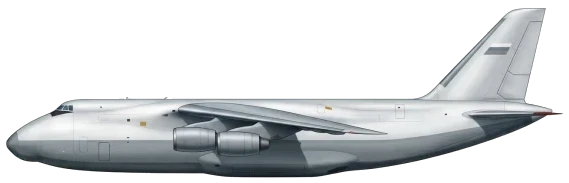
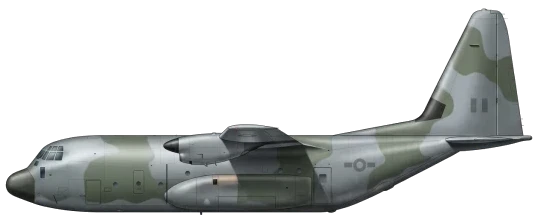
| An-124 Condor | C-130 Hercules | |
|---|---|---|
| Origin country | 🇷🇺 Ex-USSR | 🇺🇸 United States |
| Category | Military Transport Aircraft | Military Transport Aircraft |
| Manufacturer | Antonov | Lockheed |
| First flight | 26 December 1982 | 23 August 1954 |
| Year introduced | 1986 | 1956 |
| Number produced | 55 units | 2700 units |
| Average unit price | $100 million | $68 million |
| Wing area | 628.0 m² | 162.0 m² |
| Wingspan | 73.3 m | 40.4 m |
| Height | 20.8 m | 11.7 m |
| Length | 69.0 m | 29.8 m |
| Maximum speed | 865 km/h | 593 km/h |
| Operational range | 3,700 km | 3,800 km |
| Service ceiling | 9,000 m | 10,058 m |
| Max. takeoff weight | 405,000 kg | 70,307 kg |
| Empty weight | 175,000 kg | 35,800 kg |
| Total thrust | 4 x 23,400 kgf | 4 x 3,661 kW |
Detailed Comparison
The Antonov An-124 Condor is a strategic airlifter designed for outsized, super-heavy cargo, while the Lockheed C-130 Hercules is a tactical transport optimized for versatility and austere field operations. The An-124 was developed by the Soviet Union to provide airlift capacity comparable to the American C-5 Galaxy, resulting in a jet-powered aircraft for intercontinental transport of uniquely heavy assets. In contrast, the C-130 was born from a US requirement for a turboprop-powered transport to move troops and supplies to forward operating locations.
Development and Design
The An-124’s design philosophy prioritized maximum payload capacity. Its double-fuselage structure incorporates a "kneeling" landing gear system with 24 wheels, a visor-type upward-hinging nose, and a rear cargo ramp, allowing for simultaneous loading and unloading. This contrasts with the C-130’s simpler, more rugged design, which features a high-wing configuration, four turboprop engines, and a single rear-loading ramp. The C-130's design is not for outsized cargo but for operational flexibility, enabling it to use short, unprepared airstrips inaccessible to a jet airlifter of the An-124's scale. While the An-124 incorporated advanced materials like titanium and composites, the C-130’s success lies in its conventional, robust, and easily maintainable aluminum airframe, which has allowed for continuous production and evolution for over 60 years.
Specifications and Performances
The performance metrics of these aircraft reflect their distinct roles. The An-124 has a maximum takeoff weight of 405,000 kg and can carry a payload of up to 150 tonnes, enabling it to transport multiple main battle tanks or massive industrial components. Its four turbofan engines give it a high cruise speed of 865 km/h and a long ferry range. The C-130 is far smaller, with a maximum takeoff weight of 70,307 kg and a typical payload of around 20 tonnes. Its key performance advantage is its short takeoff and landing (STOL) capability, requiring only 1,093 meters of runway, less than half that of the An-124. This, combined with its turboprop engines, makes the C-130 ideal for tactical airlift directly into contested or underdeveloped areas.
Deployment and usage
The An-124's small production run (55 units) has confined its use to a highly specialized niche. Militarily, it has been used by NATO under the SALIS program for strategic lift to theaters like Afghanistan. Commercially, it is a key asset for moving indivisible cargo such as satellites, turbines, and aerospace components. The C-130, with over 2,500 units built, is a ubiquitous tactical workhorse for dozens of air forces. Beyond transport, its airframe has been adapted into numerous special-mission platforms, including:
- AC-130 gunships for close air support.
- MC-130 for special operations infiltration/exfiltration.
- KC-130 tankers for tactical aerial refueling.
- EC-130 for electronic warfare.
Conclusion
The An-124 and C-130 are not direct competitors; they represent solutions to fundamentally different logistical problems. The An-124 is a high-value, low-density strategic asset, essential for moving cargo that no other aircraft can. Its limited availability and reliance on long, paved runways define its role. The C-130 is the backbone of tactical airlift, providing unparalleled versatility and access to forward locations. Its value comes not from carrying the largest loads, but from its adaptability, reliability, and sheer numbers, which have made it an indispensable tool for military operations worldwide for decades.

-
 United States
408
United States
408
-
 Saudi Arabia
33
Saudi Arabia
33
-
 Indonesia
28
Indonesia
28
- All 59 operators →