An-32 Cline vs C-295 Persuader
An-32 Cline vs C-295 Persuader at a glance — top speed 530 vs 576 km/h, range 1,400 vs 5,750 km, max takeoff weight 28,500 vs 23,200 kg, built 373 vs 209 units.
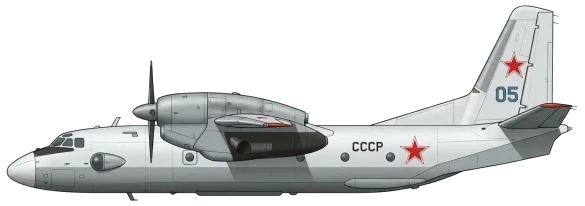
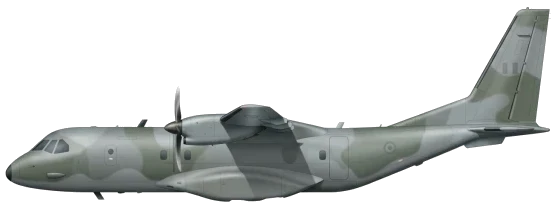
| An-32 Cline | C-295 Persuader | |
|---|---|---|
| Origin country | 🇺🇦 Ukraine | 🇪🇸 Spain |
| Category | Military Transport Aircraft | Military Transport Aircraft |
| Manufacturer | Antonov | Airbus |
| First flight | 9 July 1976 | 28 November 1997 |
| Year introduced | 1982 | 2001 |
| Number produced | 373 units | 209 units |
| Average unit price | $15 million | $78 million |
| Wing area | -- m² | 59.0 m² |
| Wingspan | 29.2 m | 25.8 m |
| Height | 8.8 m | 8.6 m |
| Length | 24.5 m | 24.5 m |
| Maximum speed | 530 km/h | 576 km/h |
| Operational range | 1,400 km | 5,750 km |
| Service ceiling | 9,000 m | 7,620 m |
| Max. takeoff weight | 28,500 kg | 23,200 kg |
| Empty weight | 16,800 kg | 9,250 kg |
| Total thrust | 2 x 3,812 kW | 2 x 1,972 kW |
Detailed Comparison
The Antonov An-32 and Airbus C-295 occupy the same tactical medium-transport weight class but serve entirely opposing procurement requirements. The An-32 is a brute-force modification of the An-26 airframe, engineering raw power to overcome austere, high-altitude environments. The C-295 relies on aerodynamic efficiency, extended range, and modular avionics to secure export markets demanding multi-mission adaptability over sheer short-field payload limits.
Development and Design
Antonov developed the An-32 by mating 5,100 hp Ivchenko AI-20 turboprops to the An-26. Placing these oversized engines 1.5 meters above the wing generated clearance for larger propellers and mitigated foreign object damage on unpaved strips. This resulted in a hot-and-high transport tailor-made for its primary backer, the Indian Air Force. Airbus derived the C-295 from the CASA/IPTN CN-235, stretching the fuselage to increase payload capacity by 50% while transitioning to Pratt & Whitney PW127G engines. Where the An-32 relies on mechanical simplicity and high thrust, the C-295 prioritizes systems integration, utilizing the Thales Topdeck digital suite and modular hardpoints to allow configurations ranging from troop transport to anti-submarine warfare (MPA/Persuader) and airborne early warning (AEW&C).
Specifications and Performances
The performance delta between the two airframes dictates their tactical application.
- The An-32 utilizes a massive thrust surplus to lift its 28,500 kg maximum takeoff weight (MTOW), yielding a 6,700 kg payload limit.
- The C-295 achieves a higher 7,100 kg payload class (at a 23,200 kg MTOW) using nearly half the engine output (1,972 kW per engine).
This efficiency disparity translates directly to endurance. The C-295 executes theater-level logistics with a 5,750 km range, whereas the An-32 is restricted to localized hubs by its 1,400 km radius. However, the An-32's power reserve grants it a 9,000 m service ceiling—1,380 m higher than the C-295—enabling operations over mountain ranges that structurally limit the Airbus platform.
Deployment and usage
India remains the primary arbiter of the An-32's operational record, utilizing over 100 airframes to sustain outposts in the Himalayas where low air density grounds competing transports. The C-295 dominates the contemporary export market, securing fleets in Egypt (21 aircraft), Poland, and Canada. While it lost the US Joint Cargo Aircraft bid to the C-27J Spartan due to the latter's wider cabin and floor strength, the C-295 capitalized on lower operating costs globally. Combat feedback from Polish and Egyptian operators indicates high dispatch reliability for standard logistics, though the Canadian CC-295 Kingfisher variant suffered multi-year procurement delays due to software and equipment integration failures.
Conclusion
The C-295 defeats the An-32 in any modern, integrated air force requiring range, sensor networking, or multi-role tasking. Its ability to pivot from dropping paratroopers to deploying anti-tank missiles or conducting maritime patrol justifies its $78.0 million unit cost for mature militaries. Conversely, for specialized Himalayan operations or underdeveloped airstrips where raw thrust and mechanical resilience supersede loiter time, the An-32 is the only viable platform. Militaries prioritizing cost-effective endurance should acquire the C-295; those tasked with lifting heavy equipment off unpaved, high-altitude runways require the An-32.