C-27J Spartan
Italian military transport aircraft, developed in the late 20th century, used globally for tactical airlift and specialized missions. Key figures: top speed 602 km/h, range 1,759 km, service ceiling 9,144 m, max takeoff weight 32,500 kg, unit price $32M, built 117. In service with 17 air forces as of 2026 — Australia (10), Italy (10), Greece (8) and 14 others.
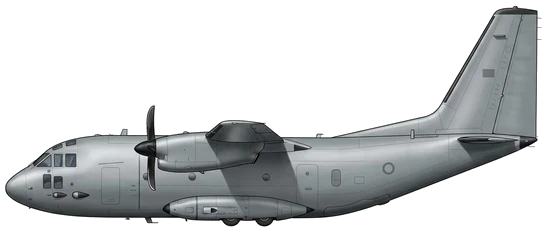
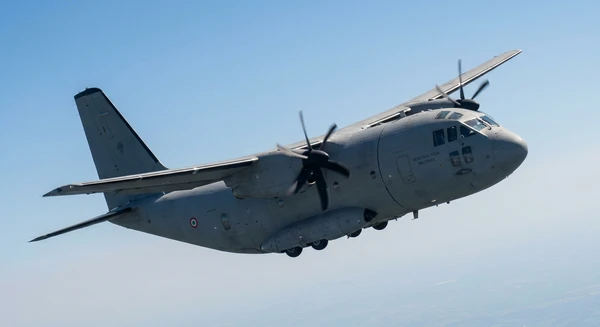
| Crew | 2 (pilot, co-pilot) |
| Length | 22.7 m (74.5 ft) |
| Wingspan | 28.7 m (94.2 ft) |
| Height | 9.6 m (31.6 ft) |
| Wing area | 82 m² (882.6 sqft) |
| Empty weight | 17,500 kg (38,581 lbs) |
| Max. takeoff weight | 32,500 kg (71,650 lbs) |
| Powerplant | 2 × Rolls-Royce AE2100-D2A 3,458 kW each |
| Maximum speed | 602 km/h (374 mph) |
| Operational range | 1,759 km (1,093 mi) |
| Service ceiling | 9,144 m (30,000 ft) |
| Climb rate | 13.0 m/s (42.7 ft/s) |
-
 Australia
10
Australia
10
-
 Italy
10
Italy
10
-
 Greece
8
Greece
8
-
 Romania
7
Romania
7
-
 United States
7
United States
7
-
 Peru
4 +1
Peru
4 +1
-
 Mexico
4
Mexico
4
-
 Morocco
4
Morocco
4
-
 Bulgaria
3
Bulgaria
3
-
 Kenya
3
Kenya
3
-
 Lithuania
3
Lithuania
3
-
 Azerbaijan
2
Azerbaijan
2
-
 Slovakia
2
Slovakia
2
-
 Slovenia
2
Slovenia
2
-
 Turkmenistan
2
Turkmenistan
2
-
 Zambia
2
Zambia
2
-
 Chad
1
Chad
1
-
 Tanzania
0 +2
Tanzania
0 +2
Recent Events — C-27J Spartan
2 events →
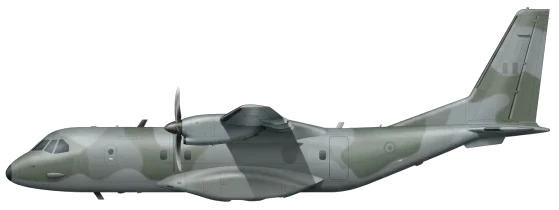
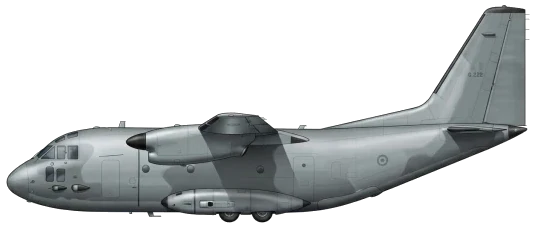
Description
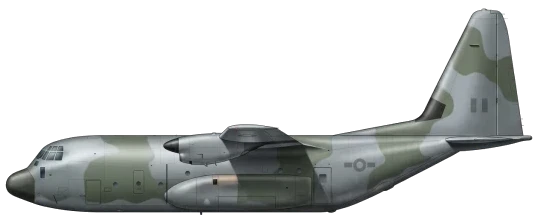
The Alenia C-27J Spartan is a tactical transport aircraft developed by Leonardo’s Aircraft Division (formerly Alenia Aermacchi). Designed as a derivative of the Alenia G.222, the C-27J incorporates engines and systems from the Lockheed Martin C-130J Super Hercules. Joint development by Alenia and Lockheed Martin under the LMATTS joint venture began in 1997. The aircraft completed its first flight on 24 September 1999 and achieved Italian civil certification in June 2001, followed by military certification in December 2001. In 2007, the U.S. military selected the C-27J for the Joint Cargo Aircraft program under a prime contract with L-3 Communications. Leonardo launched the C-27J Next Generation program in November 2020.
Design
The aircraft is powered by two Rolls-Royce AE2100-D2A turboprops driving six-bladed Dowty propellers. It features a digital MIL-STD-1553 avionics architecture and a glass cockpit. Next Generation variants incorporate winglets that increase maximum takeoff weight (MTOW) by up to 1,000 kg and improve climb performance, alongside upgraded avionics compliant with Performance Based Navigation standards. The C-27J has an empty weight of 17,500 kg, an MTOW of 32,500 kg, and a maximum payload of 11,300 kg. It can transport 60 troops or 46 paratroopers, with a range of 1,759 km at MTOW and a cruise speed of 583 km/h.
Operational History
Operational users include Italy, Australia, Romania, Mexico, and the United States. The Italian Air Force deployed the type to Afghanistan from 2008 to 2009 and to the Philippines in 2013. The U.S. Air Force deployed the C-27J to Kandahar, Afghanistan, in 2011, executing over 3,200 missions before retiring the type in 2013 due to budget cuts. The retired U.S. aircraft were transferred to the U.S. Coast Guard and U.S. Special Operations Command. Export customers also include Bulgaria, Greece, Lithuania, Peru, Slovakia, Kenya, Slovenia, Chad, Zambia, Azerbaijan, Saudi Arabia, Tanzania, and Turkmenistan. For combat operations, the specialized MC-27J variant carries one hardpoint under each wing for precision-guided munitions and a palletized fire-support system with a gun firing through the left rear door.
Variants
- AC-27J Stinger II: A proposed gunship for the U.S. Air Force designed to carry 30 mm or 40 mm guns and precision-guided munitions, which was put on hold in 2009.
- HC-27J: A maritime patrol and search-and-rescue surveillance variant modified for the U.S. Coast Guard from former U.S. Air Force airframes.
- MC-27J: A multi-mission and combat support variant equipped with roll-on/roll-off systems, sensors, wing hardpoints, and a palletized gun.
- EC-27 "Jedi": An electronic warfare variant developed for the Italian Air Force to disrupt radio communications and remote detonators.
Frequently Asked Questions
What type of aircraft is the C-27J Spartan?
What is the maximum speed of the C-27J Spartan?
What is the range of the C-27J Spartan?
When did the C-27J Spartan first fly?
How many C-27J Spartan have been built?
Which countries operate the C-27J Spartan?
How much does a C-27J Spartan cost?
What is the service ceiling of the C-27J Spartan?
- JUL 232026 Updated Sources and cross-references refreshed
- JUN 302026 Created Page created: C-27J Spartan; then built added