AW101 vs NH90 / Caiman
AW101 vs NH90 / Caiman at a glance — top speed 309 vs 300 km/h, range 1,389 vs 880 km, max takeoff weight 12,900 vs 10,600 kg, built 137 vs 471 units.
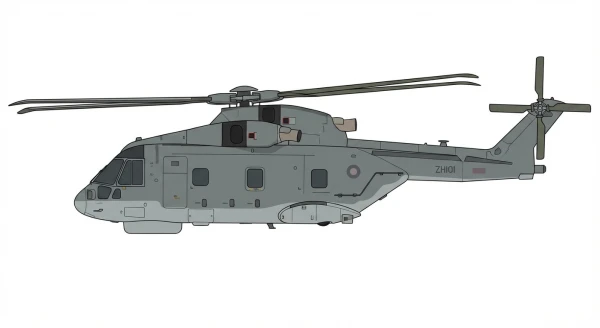
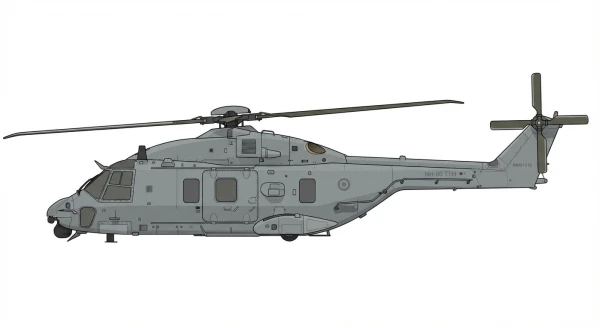
| AW101 | NH90 / Caiman | |
|---|---|---|
| Origin country | 🇬🇧 United Kingdom🇮🇹 Italy | 🇩🇪 Germany🇫🇷 France🇮🇹 Italy🇳🇱 Netherlands |
| Category | Military Helicopters | Military Helicopters |
| Manufacturer | AgustaWestland | NHIndustries |
| First flight | 19 October 1964 | 18 December 1995 |
| Year introduced | 1999 | 2004 |
| Number produced | 137 units | 471 units |
| Average unit price | $70 million | $42 million |
| Wingspan | 18.6 m | 16.3 m |
| Height | 6.6 m | 5.3 m |
| Length | 20.4 m | 19.6 m |
| Maximum speed | 309 km/h | 300 km/h |
| Operational range | 1,389 km | 880 km |
| Service ceiling | 2,600 m | 6,000 m |
| Max. takeoff weight | 12,900 kg | 10,600 kg |
| Empty weight | 6,850 kg | 6,400 kg |
| Total thrust | 3 x 1,044 kW | 2 x 1,693 kW |
Detailed Comparison
The AgustaWestland AW101 and the NHIndustries NH90 occupy adjacent weight classes in European military rotary fleets but diverge sharply in architectural execution and operational reality. The AW101 is a 12.9-tonne, three-engine heavy-medium platform born from Cold War anti-submarine warfare requirements, whereas the NH90 is a 10.6-tonne, twin-engine medium utility and naval helicopter driven by a multinational NATO mandate to standardize procurement.
Development and Design
The AW101's development, initiated in 1977 to replace the Sea King, relies on redundancy and payload over radical technological leaps. Its tri-engine configuration dictates a larger aluminum-lithium fuselage but provides the engine-out safety margins required for extended maritime patrols. Conversely, the NH90, conceived in the 1990s by a four-nation consortium, utilized an entirely composite airframe to lower its radar cross-section and became the first production helicopter to integrate full fly-by-wire controls. This reliance on advanced software aimed to reduce weight and pilot workload, but the fragmented consortium structure resulted in a highly complex supply chain and 23 disparate national configurations.
Specifications and Performances
The AW101’s physical dimensions allow for greater internal volume. With a maximum takeoff weight of 12,900 kg against the NH90’s 10,600 kg, the AW101 functions as a heavier lift asset. Its three engines provide a combined thrust footprint that translates to a 1,389 km range, outdistancing the NH90’s 880 km radius. The NH90 lists a higher service ceiling of 6,000 m compared to the AW101’s 2,600 m rating, achieved through weight savings in its composite structure and twin RTM322 engines generating 1,693 kW of thrust. The AW101 carries a heavier empty weight (6,850 kg) due to its armored crew seating and active vibration reduction systems.
Deployment and usage
In operational theaters, the AW101 functions as a consistent transport and ASW platform. British Merlin HC3s operated continuously in Iraq and Afghanistan, absorbing small-arms fire and maintaining high sortie generation rates. The NH90 achieved a much higher production volume with 471 units built, but its operational record is technically compromised. Early adopters of the NH90 reported systemic faults, including airframe corrosion in maritime environments and prohibitive maintenance hours per flight hour.
- Norway terminated its NH90 contract entirely in 2022, demanding a refund after receiving only 8 fully operational helicopters over 20 years.
- Australia and Sweden opted for early retirement of their NH90 fleets in favor of off-the-shelf UH-60M Black Hawks.
Conclusion
The AW101 has the definitive edge in maritime patrol, long-range search and rescue, and heavy-medium transport. The NH90 attempted to alter the medium helicopter market with fly-by-wire controls and a composite airframe, but its procurement model and fragile supply chain crippled fleet availability. The AW101’s traditional, tri-engine architecture requires a higher initial outlay ($70 million versus the NH90's base $42 million), but it generated a mature, combat-ready platform. Defense ministries prioritizing high availability and over-water redundancy must accept the AW101’s acquisition cost over the NH90’s theoretical advancements and documented operational liabilities.