B-1B Lancer vs B-2 Spirit
B-1B Lancer vs B-2 Spirit at a glance — top speed 1,448 vs 972 km/h, range 9,400 vs 11,000 km, max takeoff weight 216,400 vs 170,200 kg, built 104 vs 21 units.
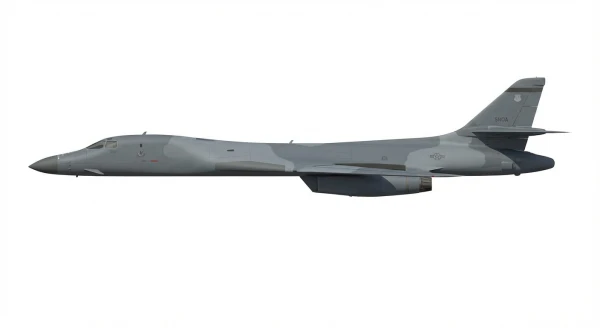
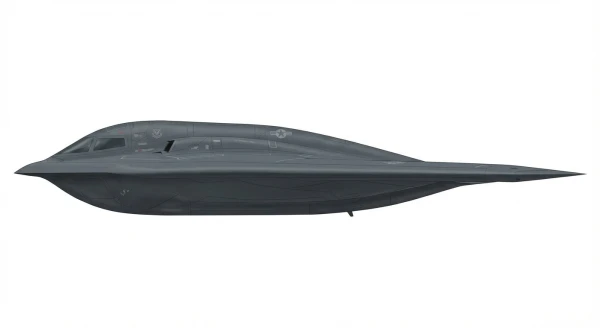
| B-1B Lancer | B-2 Spirit | |
|---|---|---|
| Origin country | 🇺🇸 United States | 🇺🇸 United States |
| Category | Bombers | Bombers |
| Manufacturer | Rockwell | Northrop |
| First flight | 23 March 1983 | 17 July 1989 |
| Year introduced | 1986 | 1993 |
| Number produced | 104 units | 21 units |
| Average unit price | $283 million | $750 million |
| Wing area | 181.2 m² | 478.0 m² |
| Wingspan | 41.8 m | 52.0 m |
| Height | 10.4 m | 5.0 m |
| Length | 44.5 m | 21.0 m |
| Maximum speed | 1448 km/h | 972 km/h |
| Operational range | 9,400 km | 11,000 km |
| Service ceiling | 18,000 m | 15,240 m |
| Max. takeoff weight | 216,400 kg | 170,200 kg |
| Empty weight | 87,100 kg | 71,668 kg |
| Total thrust | 4 x 13,961 kgf | 4 x 7,847 kgf |
Detailed Comparison
The B-2 Spirit and B-1B Lancer, while both long-range strategic bombers, originate from divergent operational requirements. The B-2 is a low-observable "flying wing" designed for penetrating heavily defended airspace, a mission reflected in its subsonic speed and focus on stealth. In contrast, the B-1B is a supersonic, variable-sweep wing bomber optimized for high-speed, low-altitude flight, relying on speed and a reduced radar cross-section rather than true stealth. This fundamental difference dictates their cost, payload, and tactical employment.
Development and Design
The B-2 Spirit was the product of the "Advanced Technology Bomber" project, a secretive effort to create an aircraft capable of evading advanced Soviet air defenses. Its design is a radical departure from conventional aircraft, eliminating the fuselage and tail to create a platform with an exceptionally low radar, infrared, and acoustic signature. This reliance on low-observability required pioneering computer-aided design and manufacturing. Its primary innovation is its ability to operate in contested airspace with minimal support.
The B-1B Lancer has a more complex lineage, born from the cancelled Mach 2.2 B-1A program. Revived as an interim bomber pending the B-2's development, the B-1B was re-engineered for low-level penetration at high subsonic speeds (Mach 0.92). Key design features include variable-sweep wings for optimized performance across different flight regimes and serpentine air intakes to shield engine blades from radar. While not a stealth aircraft, its design incorporates signature reduction techniques, making it a more survivable platform than its B-52 predecessor.
Specifications and Performances
A critical distinction lies in payload and speed. The B-1B offers superior payload capacity, carrying up to 75,000 lb (34,000 kg) internally and an additional 50,000 lb on external hardpoints. The B-2 is limited to an internal-only payload of 40,000 lb (18,000 kg). This allows the B-1B to function as a high-volume "bomb truck." In terms of performance, the B-1B is significantly faster, capable of Mach 1.25 (1340 km/h), while the B-2 is a high-subsonic aircraft with a maximum speed of 972 km/h. The B-2 trades speed for stealth, a capability that allows it to hold any target on the globe at risk. Both aircraft possess a comparable intercontinental range of 12,000 km.
Deployment and usage
Operational roles reflect their design philosophies. The B-2 is a strategic, day-one asset used to strike high-value, heavily defended targets. Its missions, such as the 30-hour round trips from Missouri during the Kosovo War, demonstrate its unique capability for global strikes from secure bases. Its employment is limited by the small fleet size (21 built) and the intensive maintenance required for its low-observable coatings.
The B-1B transitioned from a nuclear to a conventional role and has been a workhorse in conflicts like Afghanistan and Iraq. Its larger payload and ability to carry a diverse munitions mix, including standoff weapons like JASSM and LRASM, make it a versatile platform for sustained campaigns in more permissive airspace. With 104 units built, it has been a more frequently deployed asset than the B-2.
Conclusion
The B-2 Spirit and B-1B Lancer are not competitors but complementary assets. The B-2 provides an unparalleled deep-penetration capability against peer adversaries, a role no other aircraft can fulfill. The B-1B serves as a flexible, high-capacity standoff and conventional bomber. The B-2's immense unit cost ($750 million) and specialized mission contrast with the B-1B's lower cost ($283 million) and broader utility. As the USAF moves toward the B-21 Raider, which combines attributes of both platforms, the B-1B is scheduled for retirement, while the B-2 is expected to operate alongside its successor, leveraging its still-relevant strategic reach and stealth.