C-141 Starlifter vs C-17 Globemaster III
C-141 Starlifter vs C-17 Globemaster III at a glance — top speed 805 vs 930 km/h, range 4,723 vs 4,480 km, max takeoff weight 146,556 vs 259,460 kg, built 285 vs 279 units.
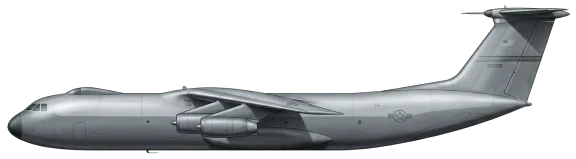
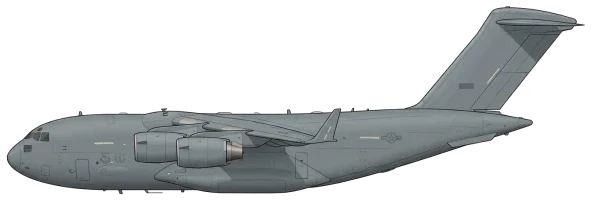
| C-141 Starlifter | C-17 Globemaster III | |
|---|---|---|
| Origin country | 🇺🇸 United States | 🇺🇸 United States |
| Category | Military Transport Aircraft | Military Transport Aircraft |
| Manufacturer | Lockheed | McDonnell Douglas |
| First flight | 17 December 1963 | 15 September 1991 |
| Year introduced | 1965 | 1993 |
| Number produced | 285 units | 279 units |
| Average unit price | $40 million | $340 million |
| Wing area | 300.0 m² | 353.0 m² |
| Wingspan | 49.0 m | 51.8 m |
| Height | 12.0 m | 16.8 m |
| Length | 51.3 m | 53.0 m |
| Maximum speed | 805 km/h | 930 km/h |
| Operational range | 4,723 km | 4,480 km |
| Service ceiling | 12,497 m | 13,715 m |
| Max. takeoff weight | 146,556 kg | 259,460 kg |
| Empty weight | 65,540 kg | 122,000 kg |
| Total thrust | 4 x 9,185 kgf | 4 x 18,909 kgf |
Detailed Comparison
The transition from the Lockheed C-141 Starlifter to the McDonnell Douglas (now Boeing) C-17 Globemaster III marked a doctrinal shift in USAF logistics from pure hub-and-spoke transport to direct-delivery capability. While the Starlifter introduced jet speeds to strategic airlift, replacing propeller-driven fleets like the C-124, the Globemaster III integrated the payload capacity of a heavy lifter with the austere field performance of a tactical transport, effectively collapsing the distinction between strategic and intra-theater airlift.
Development and Design
Lockheed designed the C-141 to meet Specific Operational Requirement 182, prioritizing range and speed over tactical flexibility. Its T-tail and swept-wing configuration set the standard for jet transports, but the fuselage cross-section was its primary limiting factor. At 10 feet wide, the C-141 effectively "cubed out" before it "weighted out," leading to the C-141B modification which stretched the fuselage by 23 feet (7 meters) to utilize excess lift capacity.
The C-17 was born from the C-X program to address these specific shortcomings. McDonnell Douglas incorporated a supercritical wing and, critically, externally blown flaps—directing engine exhaust over the flaps to generate lift at low speeds. This allows steep approach angles and landings on 3,500-foot unprepared strips, a regime previously restricted to the C-130 Hercules. Furthermore, the C-17 reduced the cockpit crew to two pilots and a loadmaster, eliminating the flight engineer and navigator stations required on the C-141.
Specifications and Performance
The performance gap between the two airframes illustrates the evolution of engine technology and structural engineering.
- Payload: The C-17 carries a maximum payload of roughly 77,500 kg, nearly double the C-141B’s 42,000 kg capacity. More importantly, the C-17’s 18-foot wide cargo floor accommodates outsized combat equipment, including the M1 Abrams tank, which the C-141 could never transport.
- Propulsion: The C-141 relied on four TF33-P-7 turbojets producing 21,000 lbf each. The C-17 utilizes four F117-PW-100 turbofans generating 40,440 lbf each. This thrust surplus supports the C-17's short takeoff and landing (STOL) performance and allows it to reverse fully loaded up a 2% slope—a maneuver impossible for the Starlifter.
- Range: While the unrefueled range is comparable (approx. 4,500–4,700 km with max payload), the C-17's reliance on in-flight refueling is integrated into its standard operational profile, whereas the C-141A lacked this capability entirely until the B-model upgrade.
Deployment and usage
The C-141 served as the backbone of strategic mobility from Vietnam through Operation Desert Storm. During the 1973 Operation Nickel Grass airlift to Israel, the C-141 flew the bulk of missions but was forced to rely on C-5s for heavy armor. By Desert Storm, the fleet showed signs of structural fatigue, specifically wing box corrosion and cracking, which accelerated its retirement.
The C-17’s combat debut shifted logistics forward. In Operation Enduring Freedom (2001) and Operation Iraqi Freedom (2003), C-17s bypassed intermediate staging bases like Ramstein, flying directly from the U.S. to austere airfields in Afghanistan and Northern Iraq (Bashur). This "direct delivery" concept reduced transload times and exposed the aircraft to ground threats, necessitating the advanced countermeasures and armored cockpit flooring standard on the Globemaster.
Conclusion
The C-17 Globemaster III is the superior platform, not merely due to technological generational gaps, but because it corrected the fundamental design flaw of the C-141: fuselage width. The Starlifter was an efficient pallet hauler that required long, paved runways, forcing the Army to disassemble equipment for transport. The C-17 delivers combat-ready armor directly to the frontline. While the C-141 normalized jet-powered logistics, the C-17 perfected the delivery mechanism, offering a versatile capability that renders the rigid strategic/tactical divide irrelevant.