CM 170 Magister vs L-39 Albatros
CM 170 Magister vs L-39 Albatros at a glance — top speed 715 vs 750 km/h, range 1,200 vs 1,100 km, max takeoff weight 3,450 vs 4,700 kg, built 929 vs 2,900 units.
| CM 170 Magister | L-39 Albatros | |
|---|---|---|
| Origin country | 🇫🇷 France | 🇨🇿 Czechia |
| Category | Military Training Aircraft | Military Training Aircraft |
| Manufacturer | Fouga | Aero |
| First flight | 23 July 1952 | 4 November 1968 |
| Year introduced | 1956 | 1972 |
| Number produced | 929 units | 2900 units |
| Average unit price | $800K | $1 million |
| Wing area | 17.3 m² | 18.8 m² |
| Wingspan | 11.3 m | 9.5 m |
| Height | 2.9 m | 4.8 m |
| Length | 10.2 m | 12.1 m |
| Maximum speed | 715 km/h | 750 km/h |
| Operational range | 1,200 km | 1,100 km |
| Service ceiling | 9,144 m | 11,500 m |
| Max. takeoff weight | 3,450 kg | 4,700 kg |
| Empty weight | 2,540 kg | 3,459 kg |
| Total thrust | 2 x 440 kgf | 1 x 1,720 kgf |
Detailed Comparison
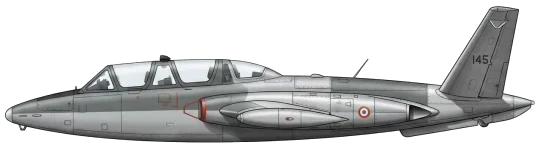
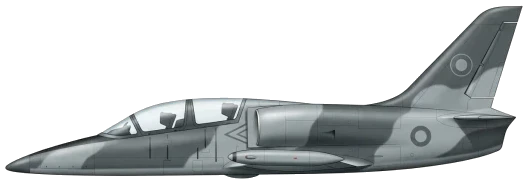
The Fouga CM 170 Magister and Aero L-39 Albatros represent two distinct generations of jet trainers, defined by their Cold War origins and divergent design philosophies. The Magister, an early French design from the 1950s, is powered by two small turbojets, a configuration intended to provide "twin-engine safety." In contrast, the L-39, a Czechoslovakian product of the late 1960s, utilizes a single, more powerful turbofan, reflecting advancements in engine reliability and a focus on production efficiency for the Warsaw Pact. This fundamental difference in propulsion underpins their contrasting capabilities and operational histories.
Development and Design
The Magister's design originated from a 1948 French Air Force requirement, evolving from a glider design, which is evident in its distinctive V-tail (or "butterfly tail"). Its development focused on creating a jet-powered primary and intermediate trainer with simple maintenance procedures. The L-39 was developed two decades later to be the standard trainer for the Soviet bloc, replacing the L-29 Delfin. Its design is more conventional and robust, featuring a straight, mid-mounted wing, rugged landing gear for unprepared airstrips, and a single-piece canopy offering superior tandem visibility. The L-39's modular construction and single-engine layout were optimized for mass production and simplified field logistics, a key requirement for its intended users.
Specifications and Performances
A performance comparison reveals the L-39's generational advantage. Its single Ivchenko AI-25TL engine provides 1720 kgf of thrust, nearly double the 880 kgf total thrust from the Magister’s two Turbomeca Marboré II engines. This power disparity results in superior performance metrics for the Albatros:
- Speed: The L-39 has a higher maximum speed of 750 km/h compared to the Magister's 639 km/h.
- Ceiling: The L-39 can operate at a higher altitude, with a service ceiling of 11,500 m versus the Magister's 9,144 m.
- Takeoff: The L-39 requires significantly less runway, with a takeoff distance of 480 m, while the Magister needs 720 m. The Magister is lighter, but the L-39's aerodynamic design and superior thrust-to-weight ratio give it a decisive performance edge.
Deployment and usage
Both aircraft were pressed into combat, but their effectiveness varied. The Magister served as a light attack aircraft in several conflicts, including the Six-Day War and the Congo Crisis. However, its extremely limited weapon load of 140 kg and lack of armor resulted in significant losses when deployed against defended targets. The L-39 was designed from the outset with a more credible secondary light attack role. Its four hardpoints can carry a much larger payload of approximately 1,000 kg, and dedicated variants like the L-39ZA feature an internal 23mm cannon. It has been widely used in this capacity in numerous post-Cold War conflicts, from the former Yugoslavia to Syria and Ukraine.
Conclusion
The Fouga Magister was a successful and historically significant first-generation jet trainer, introducing many air forces to jet-powered flight. However, the L-39 Albatros stands as a more mature and capable aircraft. Its superior performance, greater weapon-carrying capacity, and robust design tailored for large-scale, cost-effective operation allowed it to become one of the most widely produced jet trainers in history. While the Magister was a pioneering effort, the L-39's blend of performance and practicality established it as a more enduring and versatile platform.


