L-39 Albatros vs Yak-130 Mitten
L-39 Albatros vs Yak-130 Mitten at a glance — top speed 750 vs 1,060 km/h, range 1,100 vs 2,100 km, max takeoff weight 4,700 vs 10,290 kg, built 2,900 vs 186 units.
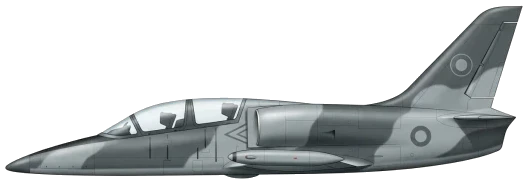
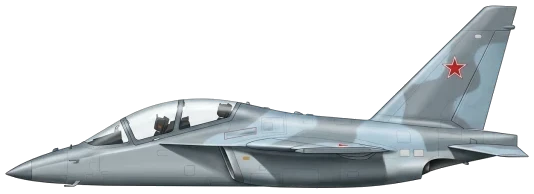
| L-39 Albatros | Yak-130 Mitten | |
|---|---|---|
| Origin country | 🇨🇿 Czechia | 🇷🇺 Russia |
| Category | Military Training Aircraft | Military Training Aircraft |
| Manufacturer | Aero | Yakovlev |
| First flight | 4 November 1968 | 26 May 1996 |
| Year introduced | 1972 | 2010 |
| Number produced | 2900 units | 186 units |
| Average unit price | $1 million | $18 million |
| Wing area | 18.8 m² | 23.5 m² |
| Wingspan | 9.5 m | 9.8 m |
| Height | 4.8 m | 4.8 m |
| Length | 12.1 m | 11.5 m |
| Maximum speed | 750 km/h | 1060 km/h |
| Operational range | 1,100 km | 2,100 km |
| Service ceiling | 11,500 m | 12,500 m |
| Max. takeoff weight | 4,700 kg | 10,290 kg |
| Empty weight | 3,459 kg | 4,600 kg |
| Total thrust | 1 x 1,720 kgf | 2 x 2,500 kgf |
Detailed Comparison
The L-39 Albatros is a prolific Cold War-era jet trainer valued for its simplicity and reliability, whereas the Yak-130 Mitten is a modern, twin-engine advanced trainer and light combat aircraft designed to prepare pilots for 4th and 5th-generation fighters. The L-39’s single-engine design and low operating cost reflect its initial role as a basic trainer for Warsaw Pact nations, while the Yak-130’s advanced avionics and superior performance represent a significant leap in capability, albeit at a much higher price point of $18.0 million versus the L-39's estimated $1.0 million.
Development and Design
The L-39 Albatros was developed in Czechoslovakia in the late 1960s with a design philosophy centered on mass production, ease of maintenance, and operational robustness. Its straightforward design features a single Ivchenko AI-25TL turbofan, mid-mounted straight wings for subsonic stability, and rugged landing gear suitable for unprepared airfields. Its development was a direct successor to the L-29 Delfin, providing a stable platform for fundamental flight training. In contrast, the Yak-130 was developed in post-Soviet Russia as a lead-in fighter trainer (LIFT). Its most significant innovation is a programmable, open-architecture avionics suite and fly-by-wire flight control system that can replicate the handling characteristics of various modern combat aircraft, from the Su-30 to the F-16. Its twin-engine configuration provides enhanced safety and combat survivability.
Specifications and Performances
The performance gap between the two aircraft is substantial. The Yak-130’s twin AI-222-25 engines produce a combined thrust of 5,000 kgf, enabling a maximum speed of 1,050 km/h and a climb rate of 65.0 m/s. The L-39’s single AI-25TL engine, with 1,720 kgf of thrust, limits it to 750 km/h and a 22.0 m/s climb rate. This performance differential is reflected in their combat potential. The Yak-130 has a maximum takeoff weight of 10,290 kg, more than double the L-39's 4,700 kg, allowing it to carry a far more extensive and sophisticated payload. The Yak-130’s superior thrust-to-weight ratio and more advanced aerodynamics also give it a shorter takeoff distance (335 m vs. 480 m) despite its greater mass.
Deployment and usage
With over 2,900 units built, the L-39 became the standard trainer for dozens of air forces and has seen combat in low-intensity conflicts, primarily for unguided ground attack. Its armament is limited to gun pods, unguided rockets, and bombs. While effective in permissive environments, its lack of modern avionics and countermeasures makes it vulnerable. The Yak-130, while built in smaller numbers (around 186), serves a more specialized role. It is used by Russia and several other nations to train pilots for advanced fighters. Crucially, it is a credible light attack platform capable of deploying a wide range of munitions, including:
- Guided bombs like the KAB-500
- Air-to-surface missiles like the Kh-25 and Vikhr
- Short-range air-to-air missiles such as the R-73 (AA-11 Archer)
This gives the Yak-130 a genuine multi-role capability far beyond that of the standard L-39 variants.
Conclusion
The L-39 Albatros remains a relevant and cost-effective platform for basic and intermediate jet training, particularly for air forces with limited budgets. Its simplicity is a key attribute. The Yak-130, however, operates in a different class. It is a sophisticated and highly capable system designed as a bridge to modern, high-performance combat aircraft. Its primary value lies in its advanced training systems and its capacity as a potent light combat aircraft, reflecting the evolving requirements of 21st-century air power. While the modernized L-39NG variant closes some of the technological gap, the Yak-130's core design provides a fundamentally more advanced and versatile platform.


