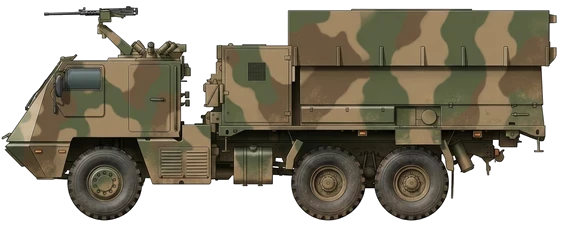
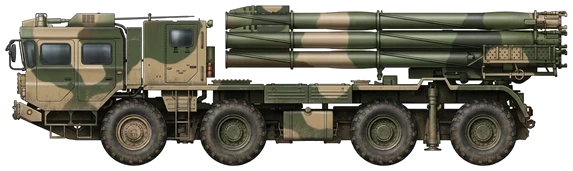
Astros II vs PHL-03
Astros II vs PHL-03 at a glance — range 300 vs 650 km, crew 3 vs 4.
Astros II PHL-03
Origin country
🇧🇷 Brazil 🇨🇳 China
Category
Multiple Launch Rocket System Multiple Launch Rocket System
Type
Self-propelled multiple rocket launcher
Self-propelled multiple rocket launcher
Manufacturer
Avibras
Norinco
Number produced
270 units
-- units
Estimated unit price
$-- million
$-- million
Combat weight
0.0 tons 43.0 tons
Maximum speed
-- km/h 60 km/h
Operational range
300 km 650 km
Length
-- m 12.00 m
Width
-- m 3.00 m
Height
-- m 3.00 m
Crew
3
4
Astros II PHL-03
Main armament
SS-AV-40G 180 mm GPS-guided rocket
12x 300 mm rocket tubes (BRC4, BRE2, Fire Dragon 140A guided rockets)
Secondary weapon
SS-150 450 mm rockets
--
Engine
--
Diesel engine, 500 hp
Detailed Comparison
Loading analysis...
Generating comparison analysis...
Unable to generate comparison at this time.
Largest operators · in service
Largest operators · in service
Change comparison
-- Select a vehicle --
2A18 (D-30)
2A36 Giatsint-B
2A65 Msta-B
2S1 Gvozdika
2S25 Sprut
2S3 Akatsiya
2S5 Giatsint-S
AAV-7A1
ACV-15
AML-90 / Eland
AMX-10 RC
AMX-13
AMX-30
AMX-32
AMX-VCI
ASCOD
ATF Dingo
ATMOS 2000
Al Khalid
Altay
Archer
Ariete 1
Ariete 2
Arjun
Astros II
BM-21 Grad
BM-27 Uragan
BM-30 Smerch
BMP-1
BMP-2
BMP-3
BMPT Terminator
BRDM-2
BTR-152
BTR-50
BTR-60
BTR-70
BTR-80
BTR-82A
BTR-90
Bandvagn 206
Bani Hashim Karrar
Bionix
Bronco ATTC
CAESAR
CM11 Brave Tiger
CM12
CV-90
Cadillac Gage Stingray
Casspir
Centauro
Challenger 2
Cobra
Cobra II
Cougar
D-20 Howitzer
D-44
D-74
DAF YP-408
EBRC Jaguar
EE-9 Cascavel
EE-T1 Osório
ERC-90 Sagaie
Eitan
Ejder Yalcin
Expeditionary Fighting Vehicle (EFV)
FH-2000
FH70
FV101 Scorpion
FV214 Conqueror
FV432
FV510 Warrior
Foxhound
GTK Boxer
General Dynamics Ajax
HMMWV (Humvee)
Hunter AFV
IAV Stryker
IKV-91
Iveco Freccia
JLTV
Jackal
K151 Raycolt
K1A1 Rokit
K2 Black Panther
K200
K21
K239 Chunmoo
K9 Thunder
KMW Fennek
KNDS Serval
KV-1
KV-85
Kirpi
Komatsu LAV
L118 Light Gun
LAV-150
LMV
Leclerc
Leopard 1
Leopard 2
Light Strike Vehicle
Luchs 2
M-30
M-46 Field Gun
M-56
M-80
M-84
M-ATV
M1 Abrams
M10 Booker
M10 Wolverine
M101 Howitzer
M103
M109 Paladin
M110 Howitzer
M1117 ASV
M113
M114 Howitzer
M142 HIMARS
M18 Hellcat
M198 Howitzer
M1A1 Abrams
M2 Bradley
M24 Chaffee
M26 Pershing
M270 MLRS
M36 Jackson
M4 Sherman
M41 Walker Bulldog
M46 Patton
M47 Patton
M48A5 Patton
M50 Ontos
M551 Sheridan
M6 Heavy Tank
M60A3 TTS Patton
M777 Howitzer
M8 Greyhound
MB-3 Tamoyo
MT-LB
Magach 7
Marder
MaxxPro
Merkava
Merkava 3
Merkava 4
Mitsubishi Type 90
Mowag Eagle
Namer
Nexter Griffon
Nimr II
Nora B-52
Norinco Type 90
OF-40
OTO Melara Mod 56
Olifant 1
PHL-03
PLZ-45
PT-76
PT-91 Twardy
PULS
Patria 6×6
Patria AMV
Puma IFV
Pz.68
PzH 2000
RCH 155
RG-31 Nyala
RM-70
Rooikat
Royal Ordnance Centurion
Royal Ordnance Chieftain
SLWH Pegasus
SSPH-1 Primus
STRV-103 "S"
Sabra
Safir 74
T-10
T-14 Armata
T-54 / T-55 / TM-800
T-62 / TR-580 / Tiran
T-64
T-72
T-80
T-84 Oplot
T-90
T28 Heavy Tank Destroyer
T29 Super Heavy Tank
T30 Super Heavy Tank
TAM
TPz Fuchs
Terrex
Tigr
Type 10
Type 100
Type 16 MCV
Type 59MII
Type 61
Type 63 MRL
Type 69
Type 74
Type 79
Type 80 / 88
Type 85
Type 96
Type 98
Type 99
UR-416
URO VAMTAC
VAB
VBCI
VBL
VT-4
Vextra
Vickers Challenger
Vickers Mk.3
WZ-551
Wiesel
YPR-765
ZBD-04
ZBL-08
ZSD-89
ZSU-23-4 "Shilka"
vs
-- Select a vehicle --
2A18 (D-30)
2A36 Giatsint-B
2A65 Msta-B
2S1 Gvozdika
2S25 Sprut
2S3 Akatsiya
2S5 Giatsint-S
AAV-7A1
ACV-15
AML-90 / Eland
AMX-10 RC
AMX-13
AMX-30
AMX-32
AMX-VCI
ASCOD
ATF Dingo
ATMOS 2000
Al Khalid
Altay
Archer
Ariete 1
Ariete 2
Arjun
Astros II
BM-21 Grad
BM-27 Uragan
BM-30 Smerch
BMP-1
BMP-2
BMP-3
BMPT Terminator
BRDM-2
BTR-152
BTR-50
BTR-60
BTR-70
BTR-80
BTR-82A
BTR-90
Bandvagn 206
Bani Hashim Karrar
Bionix
Bronco ATTC
CAESAR
CM11 Brave Tiger
CM12
CV-90
Cadillac Gage Stingray
Casspir
Centauro
Challenger 2
Cobra
Cobra II
Cougar
D-20 Howitzer
D-44
D-74
DAF YP-408
EBRC Jaguar
EE-9 Cascavel
EE-T1 Osório
ERC-90 Sagaie
Eitan
Ejder Yalcin
Expeditionary Fighting Vehicle (EFV)
FH-2000
FH70
FV101 Scorpion
FV214 Conqueror
FV432
FV510 Warrior
Foxhound
GTK Boxer
General Dynamics Ajax
HMMWV (Humvee)
Hunter AFV
IAV Stryker
IKV-91
Iveco Freccia
JLTV
Jackal
K151 Raycolt
K1A1 Rokit
K2 Black Panther
K200
K21
K239 Chunmoo
K9 Thunder
KMW Fennek
KNDS Serval
KV-1
KV-85
Kirpi
Komatsu LAV
L118 Light Gun
LAV-150
LMV
Leclerc
Leopard 1
Leopard 2
Light Strike Vehicle
Luchs 2
M-30
M-46 Field Gun
M-56
M-80
M-84
M-ATV
M1 Abrams
M10 Booker
M10 Wolverine
M101 Howitzer
M103
M109 Paladin
M110 Howitzer
M1117 ASV
M113
M114 Howitzer
M142 HIMARS
M18 Hellcat
M198 Howitzer
M1A1 Abrams
M2 Bradley
M24 Chaffee
M26 Pershing
M270 MLRS
M36 Jackson
M4 Sherman
M41 Walker Bulldog
M46 Patton
M47 Patton
M48A5 Patton
M50 Ontos
M551 Sheridan
M6 Heavy Tank
M60A3 TTS Patton
M777 Howitzer
M8 Greyhound
MB-3 Tamoyo
MT-LB
Magach 7
Marder
MaxxPro
Merkava
Merkava 3
Merkava 4
Mitsubishi Type 90
Mowag Eagle
Namer
Nexter Griffon
Nimr II
Nora B-52
Norinco Type 90
OF-40
OTO Melara Mod 56
Olifant 1
PHL-03
PLZ-45
PT-76
PT-91 Twardy
PULS
Patria 6×6
Patria AMV
Puma IFV
Pz.68
PzH 2000
RCH 155
RG-31 Nyala
RM-70
Rooikat
Royal Ordnance Centurion
Royal Ordnance Chieftain
SLWH Pegasus
SSPH-1 Primus
STRV-103 "S"
Sabra
Safir 74
T-10
T-14 Armata
T-54 / T-55 / TM-800
T-62 / TR-580 / Tiran
T-64
T-72
T-80
T-84 Oplot
T-90
T28 Heavy Tank Destroyer
T29 Super Heavy Tank
T30 Super Heavy Tank
TAM
TPz Fuchs
Terrex
Tigr
Type 10
Type 100
Type 16 MCV
Type 59MII
Type 61
Type 63 MRL
Type 69
Type 74
Type 79
Type 80 / 88
Type 85
Type 96
Type 98
Type 99
UR-416
URO VAMTAC
VAB
VBCI
VBL
VT-4
Vextra
Vickers Challenger
Vickers Mk.3
WZ-551
Wiesel
YPR-765
ZBD-04
ZBL-08
ZSD-89
ZSU-23-4 "Shilka"
Which has longer operational range, the Astros II or PHL-03?
The PHL-03 has a longer operational range at 650 km compared to the Astros II's 300 km.
How many crew members do the Astros II and PHL-03 require?
The PHL-03 requires a larger crew of 4, against 3 for the Astros II.
What are the main armaments of the Astros II and PHL-03?
The Astros II is armed with SS-AV-40G 180 mm GPS-guided rocket while the PHL-03 carries 12x 300 mm rocket tubes (BRC4, BRE2, Fire Dragon 140A guided rockets) as its main armament.