GTK Boxer vs VBCI
GTK Boxer vs VBCI at a glance — weight 36,500 vs 32,000 kg, top speed 103 vs 100 km/h, range 1,050 vs 750 km, crew 2 vs 2 + 9-man combat group.
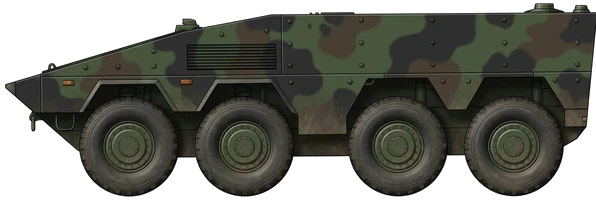
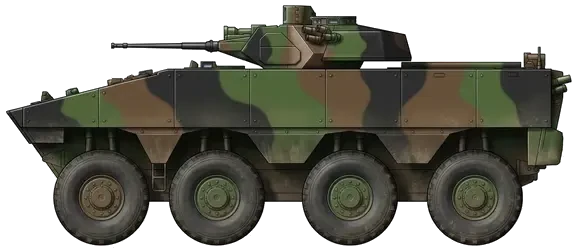
| GTK Boxer | VBCI | |
|---|---|---|
| Origin country | 🇩🇪 Germany | 🇫🇷 France |
| Category | Armored Personnel Carrier | Infantry Fighting Vehicle |
| Type | 8x8 Armored Personnel Carrier | Infantry fighting vehicle |
| Manufacturer | ARTEC | Nexter Systems |
| Number produced | 472 units | 640 units |
| Estimated unit price | $5 million | $4.8 million |
| Combat weight | 36.5 tons | 32.0 tons |
| Maximum speed | 103 km/h | 100 km/h |
| Operational range | 1,050 km | 750 km |
| Length | 7.93 m | 7.60 m |
| Width | 3.00 m | 2.98 m |
| Height | 2.37 m | 3.00 m |
| Crew | 2 | 2 + 9-man combat group |
Detailed Comparison
Originating from the fractured European cooperation efforts of the 1990s, the German-Dutch GTK Boxer and French VBCI emerged as parallel solutions for high-mobility heavy wheeled armor. While both platforms utilize an 8x8 chassis to prioritize strategic mobility and lower lifecycle costs compared to tracked equivalents, they diverge significantly in architectural flexibility. The Boxer prioritizes a unique modular "mission pod" concept, whereas the VBCI follows a more conventional unitary hull design focused on specific infantry fighting vehicle (IFV) requirements.
Development and Design
The defining characteristic of the ARTEC GTK Boxer is its composite philosophy, separating the vehicle into a standardized Drive Module and interchangeable Mission Modules. This allows reconfiguration for roles ranging from APC to ambulance or command post in under one hour. Conversely, the Nexter VBCI employs a welded aluminum hull fitted with modular add-on armor. While less radically adaptable than the Boxer, the VBCI design focuses on optimizing the infantry squad carrier role to replace the AMX-10P. Both vehicles share a development lineage dating back to the aborted VBM/GTK joint venture, illustrating different national conclusions to the same operational requirement.
Protection and Firepower
The VBCI utilizes a mix of aluminum, THD steel, and titanium to achieve protection against 14.5 mm API threats, with later 32T variants reinforcing IED survivability. Its primary French Army configuration mounts a stabilized 25mm M811 autocannon (400 rpm), offering superior direct fire support compared to the standard APC Boxer, which typically relies on remote weapon stations armed with a Mk-19 AGL or machine guns. However, the Boxer’s modularity allows for heavy armament upgrades, such as the Lance 30mm turret (Vilkas variant) or the RCH 155 mobile artillery system. The Boxer's survivability relies on a triple-layered v-shaped floor and decoupled seating to mitigate blast shock, utilizing rolled steel with AMAP appliqué armor.
Mobility and Logistics
Both platforms operate in the 32-ton combat weight class, pushing the upper limits of wheeled mobility. The Boxer holds a kinetic advantage with a 710 hp MTU diesel engine, surpassing the VBCI’s 600 hp Volvo powerplant. This results in a higher power-to-weight ratio for the German platform. Logistically, the Boxer boasts a superior operational range of 1050 km compared to the VBCI's 750 km. The VBCI was specifically designed for air transportability via the Airbus A400M, a critical requirement for French expeditionary doctrine. The Boxer’s drive module approach simplifies powertrain maintenance but adds logistical complexity regarding module storage and swapping infrastructure.
Deployment and Combat Record
Both vehicles have validated their designs in asymmetric warfare environments. The VBCI saw extensive service with French forces in Afghanistan and Operation Serval (Mali), proving effective in rapid intervention roles across difficult terrain. The Boxer was similarly deployed to Afghanistan by German forces. More recently, the Boxer has seen high-intensity combat use in the Russo-Ukrainian War, subjecting the platform to conventional artillery and drone threats absent in previous counter-insurgency deployments. The VBCI remains the backbone of French mechanized infantry, while the Boxer has achieved broader export success within NATO, including the UK and Australia.
Conclusion
The VBCI represents a dedicated, combat-proven Infantry Fighting Vehicle optimized for expeditionary maneuver warfare and air transportability. It excels as a direct fire asset integrated into squad tactics. The GTK Boxer, however, offers superior strategic versatility and raw automotive performance. Its modular architecture makes it a preferable choice for armies seeking a single chassis to fulfill diverse support and combat roles, provided the logistical footprint for module management is sustainable.