M-84 vs T-72
M-84 vs T-72 at a glance — weight 41,500 vs 44,500 kg, top speed 70 vs 60 km/h, range 450 vs 500 km, crew 3 vs 3 (commander, gunner, driver).
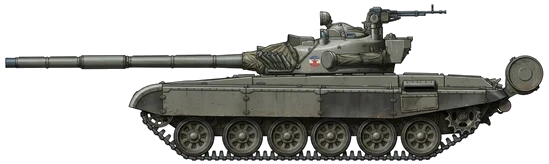
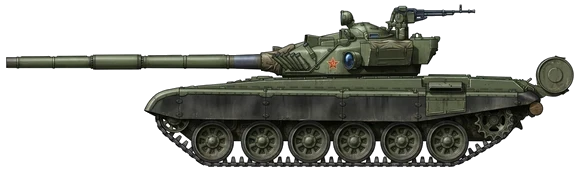
| M-84 | T-72 | |
|---|---|---|
| Origin country | 🇷🇸 Ex-Yugoslavia | 🇷🇺 Ex-USSR |
| Category | Main Battle Tank | Main Battle Tank |
| Type | Medium Main Battle Tank | Medium Main Battle Tank |
| Manufacturer | Đuro Đaković | Malyshev HMB Plant |
| Number produced | 452 units | 25,000 units |
| Estimated unit price | $-- million | $2 million |
| Combat weight | 41.5 tons | 44.5 tons |
| Maximum speed | 70 km/h | 60 km/h |
| Operational range | 450 km | 500 km |
| Length | 9.50 m | 9.73 m |
| Width | 3.60 m | 3.59 m |
| Height | 2.20 m | 2.23 m |
| Crew | 3 | 3 (commander, gunner, driver) |
Detailed Comparison
The Yugoslav M-84 is a direct evolutionary branch of the Soviet T-72, specifically the T-72M export variant. While Uralvagonzavod engineered the T-72 in the early 1970s as a high-volume mobilization tank to complement the more complex T-64, Yugoslavia acquired the production license and utilized its domestic industrial base to rectify specific Soviet design limitations. The resulting M-84 integrated independent fire control systems and localized engine upgrades, diverging from the subsequent evolutionary path of Russian T-72 models.
Development and Design
The T-72 emerged from Object 172 as a cost-effective alternative to the mechanically troubled T-64. Entering service in 1973, it achieved a production run of 25,000 units. Yugoslavia initiated the M-84 project in 1979 to establish independent armored production, manufacturing 452 units at the Đuro Đaković plant. Yugoslav engineers replaced the Soviet optics with the SUV-M-84 computerized fire control system, giving the baseline M-84 a higher first-round hit probability than contemporary Soviet T-72A variants.
Protection and Firepower
Both vehicles center on a 125mm smoothbore gun fed by a carousel autoloader, reducing the crew to three. This shared architecture retains a fatal vulnerability: ammunition storage inside the crew compartment, leading to catastrophic secondary detonations upon hull penetration. For protection, early T-72s relied on cast steel, while later Russian variants like the T-72B3 integrated explosive reactive armor (ERA) such as Kontakt-5 and Relikt. The baseline M-84A introduced a non-metal layer within the steel turret and additional glacis plating. Modern Serbian M-84AS2 packages match current T-72 standards by adding soft-kill active protection, ERA, and stabilized panoramic sights for hunter-killer operations.
Mobility and Logistics
The M-84 possesses a mobility advantage due to its power-to-weight ratio. Weighing 41.5 tons compared to the modernized T-72's 44.5 tons, the M-84 achieves 70 km/h against the T-72's 60 km/h top speed. Key logistical metrics include:
- Early T-72s utilized the 780 hp V-46 engine, while modern Russian T-72B3s install the 1,130 hp V-92S2F.
- Yugoslav engineers integrated higher-output V-12 diesels reaching 1,200 hp in the M-84A.
- Both vehicles maintain a sub-45-ton weight, allowing passage over light municipal bridges that restrict heavier Western main battle tanks.
Both platforms utilize torsion bar suspensions and require identical recovery vehicle parameters.
Deployment and Combat Record
The T-72's combat record spans the 1982 Lebanon War, the Iran-Iraq War, Chechnya, Syria, and Ukraine. In urban combat and against modern top-attack munitions, its roof and flank vulnerabilities result in high attrition rates. The M-84 saw combat with the Kuwaiti 35th Armored Brigade during the 1991 Gulf War, where its fire control outperformed Iraqi T-72M1s. During the Yugoslav Wars, M-84s suffered from poor infantry coordination, taking losses from man-portable anti-tank weapons. Recently, Croatia transferred M-84s to Ukrainian mechanized brigades, deploying them directly alongside T-72 models.
Conclusion
The modernized Russian T-72B3 holds a survivability edge in peer conflicts due to its integration of heavy Relikt ERA, which mitigates the platform's base armor limitations. However, the M-84 is the superior automotive and gunnery platform. Yugoslavia's integration of a 1,200 hp engine and independent fire control corrected the Soviet T-72's sluggish mobility and optic constraints. The T-72 wins in attritional environments where raw frontal protection is required, but the M-84 is the better platform for maneuver warfare.