Strategic Position
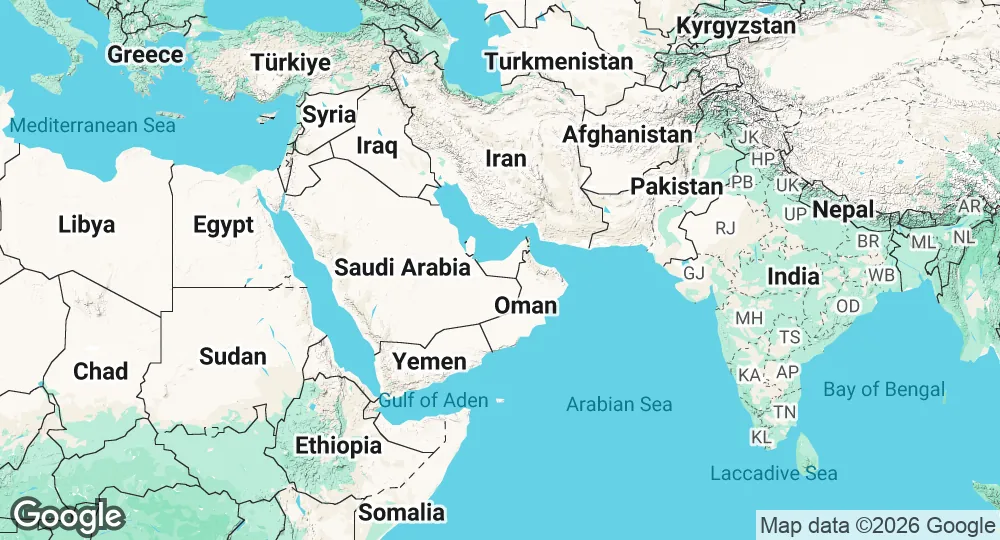
The United Arab Emirates (UAE) maintains a defense posture centered on maritime security, counter-terrorism, and regional stability. Situated along the Strait of Hormuz, the UAE focuses on protecting energy transit corridors and its territorial integrity. A primary security concern involves a long-standing territorial dispute with Iran over the islands of Abu Musa and the Greater and Lesser Tunbs.
The UAE is a founding member of the Gulf Cooperation Council (GCC) and participates in the Peninsula Shield Force. Bilateral defense cooperation agreements exist with the United States, France, and the United Kingdom. These agreements include hosting foreign military installations, such as Al Dhafra Air Base (United States) and a permanent naval and air base (France). Following the 2020 Abraham Accords, the UAE established formal defense ties with Israel, focusing on air defense, intelligence sharing, and cyber security.
Military doctrine emphasizes "forward defense" and expeditionary capability, evidenced by past deployments in Yemen, Libya, and Afghanistan. The state prioritizes the containment of non-state actors and the prevention of maritime interdiction in the Persian Gulf and the Gulf of Oman.
Military Forces
The UAE Armed Forces are organized into the Army, Navy, Air Force and Air Defense, and the Presidential Guard. The Ministry of Defense exercises administrative control, while operational command is centralized under the General Headquarters (GHQ). Active personnel total approximately 65,000, supplemented by a national service program for Emirati citizens.
Army: The ground forces are equipped for mechanized warfare and coastal defense. Primary equipment includes Leclerc main battle tanks and BMP-3 infantry fighting vehicles. The army utilizes G6 self-propelled howitzers and M142 HIMARS for long-range artillery support.
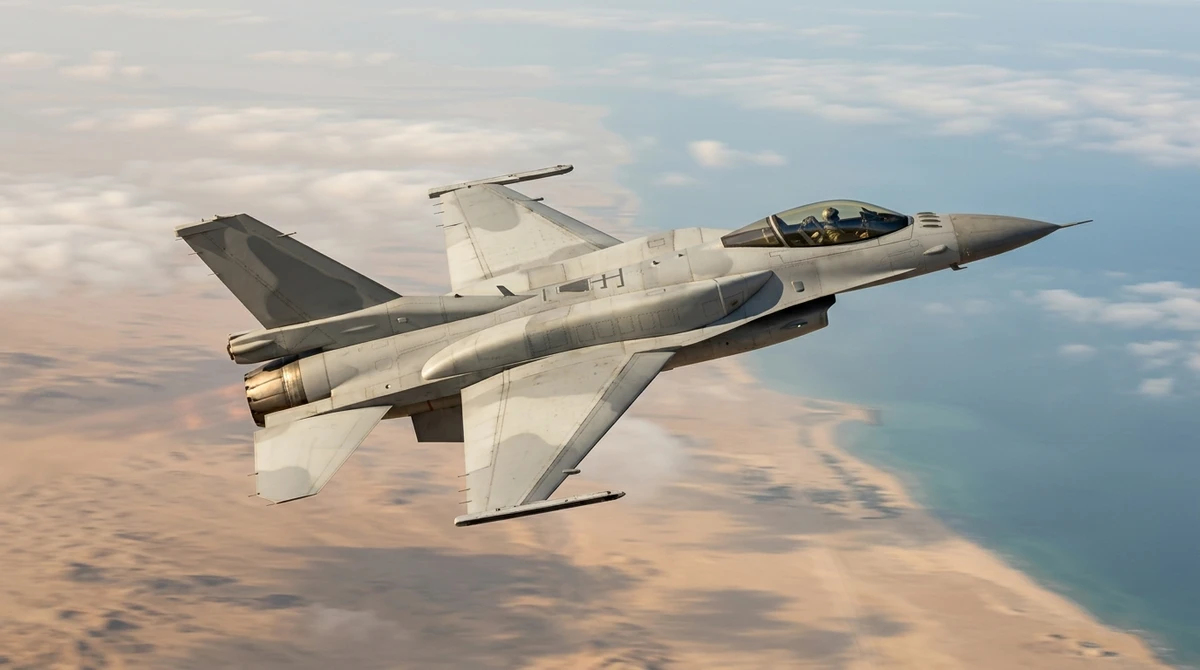
Air Force and Air Defense: This branch operates a fleet of F-16E/F Block 60 Desert Falcon fighters and Mirage 2000-9 multirole aircraft. In 2025, the transition to Rafale F4 fighters reached operational status following a multi-year induction program. Strategic airlift is provided by C-17 Globemaster III and C-130J Super Hercules aircraft. The air defense network is dense, utilizing the Terminal High Altitude Area Defense (THAAD) system and Patriot PAC-3 batteries for ballistic missile defense.
Navy: The naval force focuses on littoral warfare and maritime patrol. It operates Baynunah-class corvettes and Gowind-class frigates. Specialized assets include amphibious transport docks and a fleet of fast attack craft.
Presidential Guard: This branch functions as an autonomous command within the armed forces. It includes specialized units for counter-terrorism, special operations, and amphibious warfare. It is the primary force for overseas deployments and maintains high readiness standards through integrated training with international partners.
Defense Industry
The UAE has established a domestic defense industrial base through the consolidation of over 25 entities into the EDGE Group. This state-owned conglomerate focuses on autonomous systems, precision-guided munitions, and electronic warfare.
Key domestic products include:
- NIMR: A range of tactical armored vehicles, including the Ajban and Hafit series.
- AL TARIQ: A family of modular precision-guided munitions.
- HALCON: Loitering munitions and tactical missile systems.
- ADASI: Unmanned aerial vehicles (UAVs) and autonomous ground systems.
While the UAE remains a major importer of high-end platforms like fighter aircraft and air defense systems, it has moved toward co-production and technology transfer agreements. Domestic manufacturers now export tactical vehicles and small arms to markets in the Middle East, Africa, and Eastern Europe.
Strategic Trends
Defense modernization in 2025 and 2026 focuses on the integration of artificial intelligence and autonomous systems across all branches. Procurement priorities emphasize counter-UAV (C-UAS) technology and long-range precision strike capabilities to address regional missile threats.
The defense budget remains high as a percentage of GDP, reflecting continued investment in the "Shield of the Nation" initiative. A shift in force structure involves the expansion of the naval infantry and the enhancement of cyber defense units to protect critical infrastructure.
The military faces constraints related to a small domestic manpower pool, necessitating the use of conscription and foreign technical expertise for maintenance and specialized training. Strategically, the UAE is diversifying its suppliers, incorporating equipment from Turkey, China, and Israel alongside traditional Western providers to increase supply chain resilience.