China's Antelope Reef Reaches 1,500 Acres in Ten Months as Runway Grading Begins
Satellite imagery dated 11 August 2026 shows the Paracel Islands feature turned into a 3.7-mile landmass with a deep-water quay and a 10,000-foot runway under grading, ten months after dredging began.
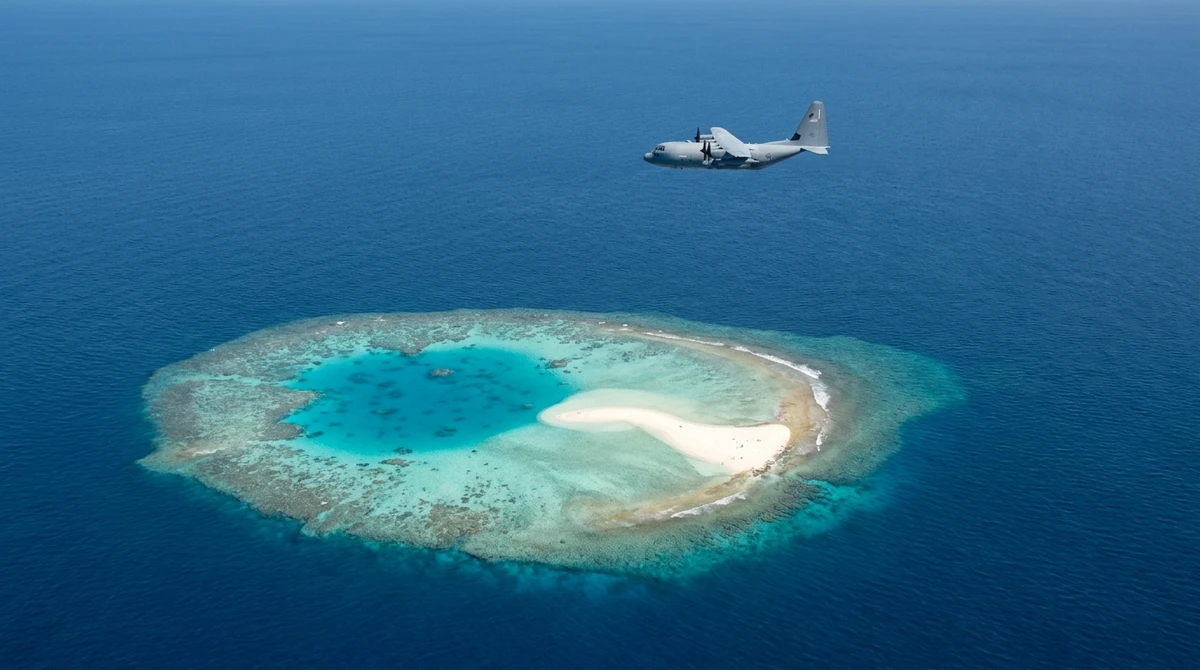
Antelope Reef, a largely submerged feature in the western Paracel Islands, has been dredged into an artificial island of roughly 1,500 acres in about ten months, according to commercial satellite imagery dated 11 August 2026 and analysis published by The War Zone and the CSIS Asia Maritime Transparency Initiative. The dredger fleet that built it has now departed, marking the end of the reclamation phase.
The new landmass runs about 3.7 miles end to end and carries the infrastructure of a forward operating base rather than an outpost: a deep-water port with a quay of roughly 680 meters, a helipad, and a 200-by-200-foot structure whose dimensions match the aircraft hangars at China's other island bases, part of a network of Chinese military airfields spanning the mainland coast and both island groups. A runway 10,000 feet long and 180 feet wide has been laid out, but AMTI's reading of the imagery is that only some 4,300 feet has been graded and that no concrete has been poured.
Several outlets have described the runway in superlative terms. On the numbers, that framing does not hold. A finished 10,000-foot strip would measure about 3,048 meters — shorter than the 3,300-meter runway at Fiery Cross Reef and essentially level with the 3,000 meters at Subi Reef, the two Spratly airfields China completed in 2016. AMTI itself frames Antelope as getting a runway "like those at China's other outposts" — parity, not escalation. The genuine superlative concerns area: at around 1,490 acres the island is within a few dozen acres of Mischief Reef's 1,504, which would make it the largest man-made feature in the South China Sea, though that remains a near-tie rather than a settled record.
What is not in dispute is the pace. The Spratly island-building programme of 2013 to 2016 took years per feature. Antelope Reef went from reef to 1,500 acres between late 2025 and August 2026. Greg Poling of AMTI, quoted by The War Zone, was measured about what it buys: "I have no doubt that this marginally benefits China in that it'll be able to forward deploy more Coast Guard and more militia in the Paracels persistently."
That assessment reflects where the feature sits. Antelope Reef lies about 160 nautical miles south of Hainan, home to the mainland airfields at Lingshui and Sanya, and roughly 200 nautical miles east of Da Nang. Unlike the Spratly bases, which project power into contested waters far from Chinese territory, the Paracels are already under uncontested Chinese administrative control and within reach of mainland air cover. The value of a runway there is persistence and sortie generation for coast guard and maritime militia operations, not reach.
Vietnam, which claims the Paracels and lost control of them to China in 1974, has objected. Foreign ministry spokeswoman Pham Thu Hang said Hanoi "resolutely opposes such activities, makes representations and affirms its position on this matter." No statement from the Philippine government or the United States had been issued as of 22 August 2026.
The next observable milestone is paving. Grading a runway bed is reversible and comparatively cheap; pouring 3,000 meters of concrete and building the fuel, radar and hangar infrastructure around it is the commitment that turned Fiery Cross and Subi into permanent military airfields. Until that starts, the strip at Antelope Reef is an intention rather than a capability — and how quickly it appears will say more about Chinese plans for the Paracels than the island's acreage does.
More News
All news →
Royal Navy Trident Submarine Returns to Faslane After 217-Day Patrol, a Reported Record
A Royal Navy ballistic missile submarine returned to HM Naval Base Clyde on November 15 after a deterrent patrol that Navy Lookout put at 217 days, a length the Ministry of Defence has not confirmed.
Former USS Enterprise, First Nuclear Aircraft Carrier, Arrives in Mobile for Dismantling
The former USS Enterprise (CVN-65), the world's first nuclear-powered aircraft carrier, was escorted by tugboats into Mobile Harbor, Alabama, on November 13, 2026, to be dismantled, the US Army Corps of Engineers said.
How Hot-Launch Mk 41 Cells and Cold-Launch Bulava Tubes Get a Missile Out of a Hull
The Mk 41 lights a missile's motor inside the ship and vents the blast through a plenum, while Bulava, Trident II and the S-300F are ejected before their motors ignite; DSIAC, Lockheed Martin and the US Navy spell out what each choice costs.
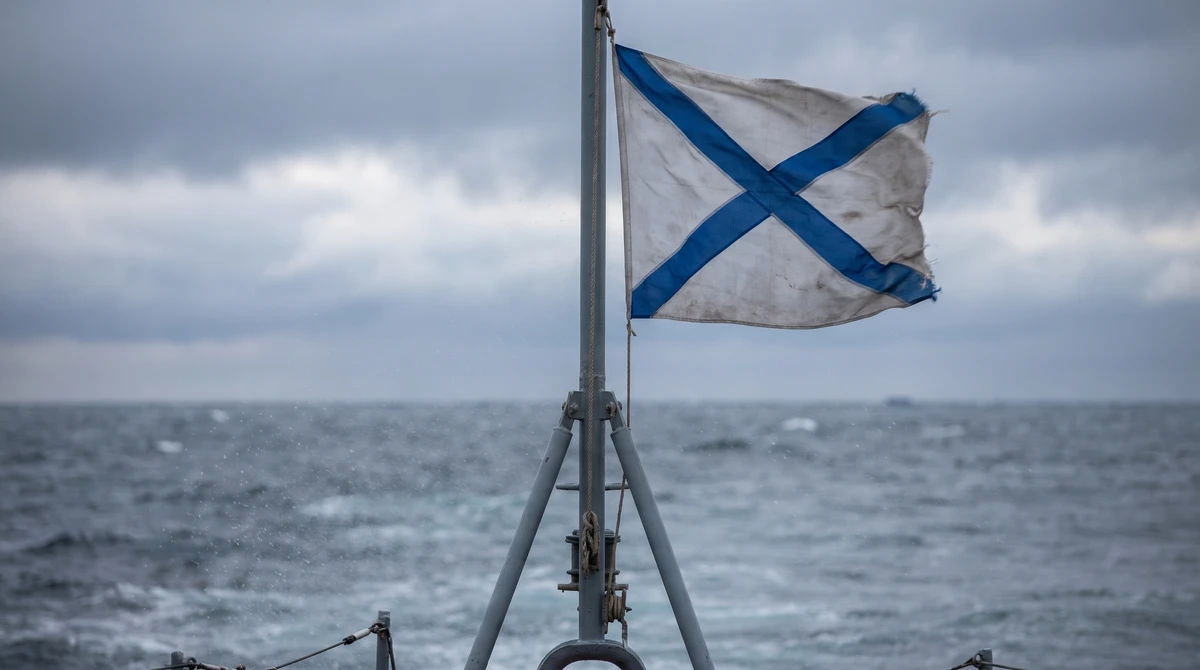
Russia Says Pacific Fleet Submarine Generalissimus Suvorov Fired Bulava Missile From Sea of Okhotsk
The Borey-class submarine Generalissimus Suvorov launched a Bulava intercontinental ballistic missile from a submerged position in the Sea of Okhotsk on October 28, the Russian Ministry of Defence said, in what the Russian Strategic Nuclear Forces project calls a rare Pacific Fleet firing.
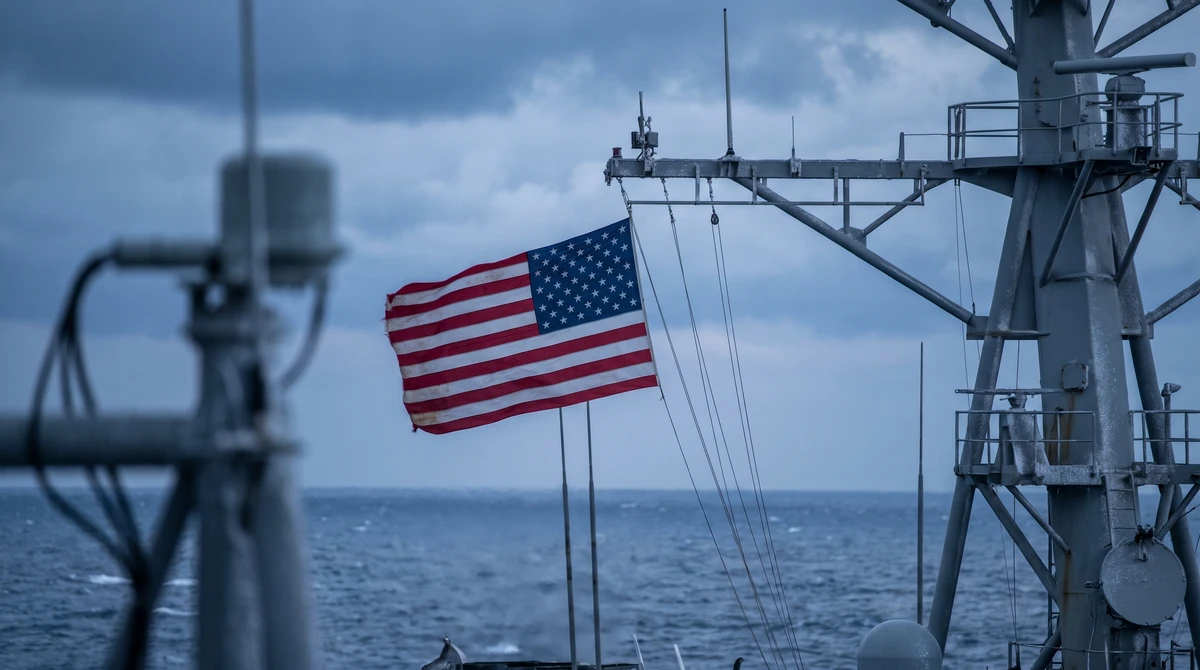
US Navy Has No Frigates in Service While 50 Other Navies Field 407 as Washington Weighs Foreign Designs
GlobalMilitary.net data shows the US Navy with no frigates in commission against 407 in 50 other fleets, as a White House-ordered plan for new surface combatants falls due in mid-November and foreign designs are offered.
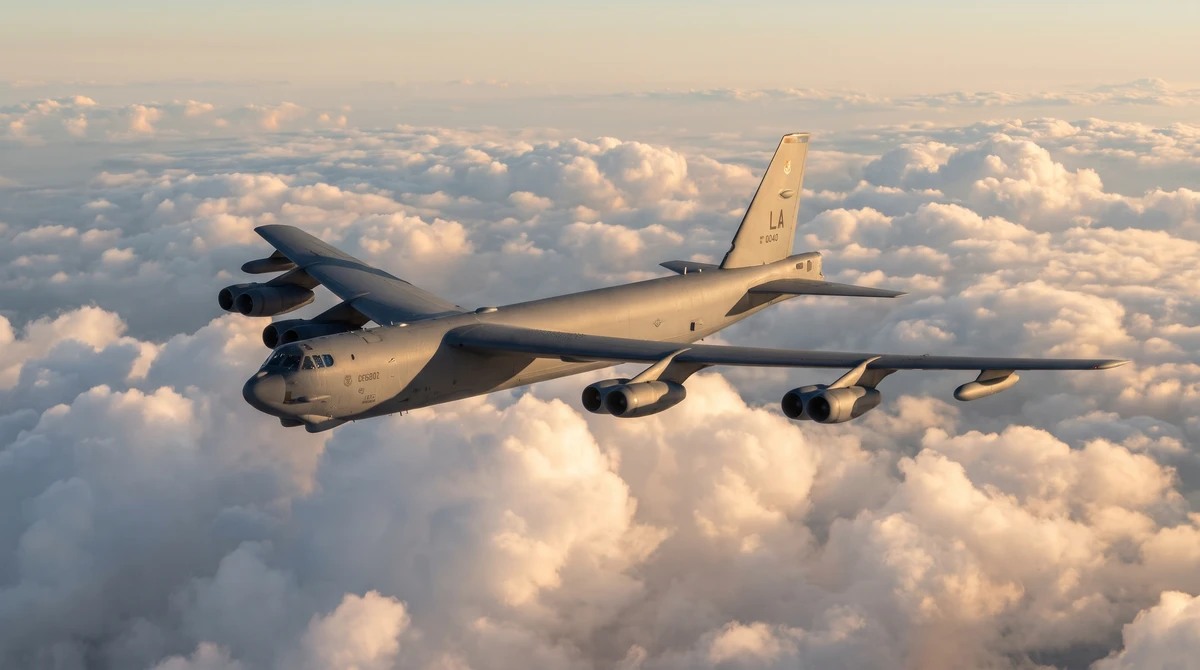
ARRW Hypersonic Missile Enters Production as U.S. Fields 140 Bombers, Russia 116 and China 219 H-6s
The Department of the Air Force has moved the AGM-183A hypersonic missile into production for a U.S. bomber force of 140 aircraft, which GlobalMilitary.net's inventory sets against Russia's 116 bombers and China's 219 H-6s.