How Hot-Launch Mk 41 Cells and Cold-Launch Bulava Tubes Get a Missile Out of a Hull
The Mk 41 lights a missile's motor inside the ship and vents the blast through a plenum, while Bulava, Trident II and the S-300F are ejected before their motors ignite; DSIAC, Lockheed Martin and the US Navy spell out what each choice costs.
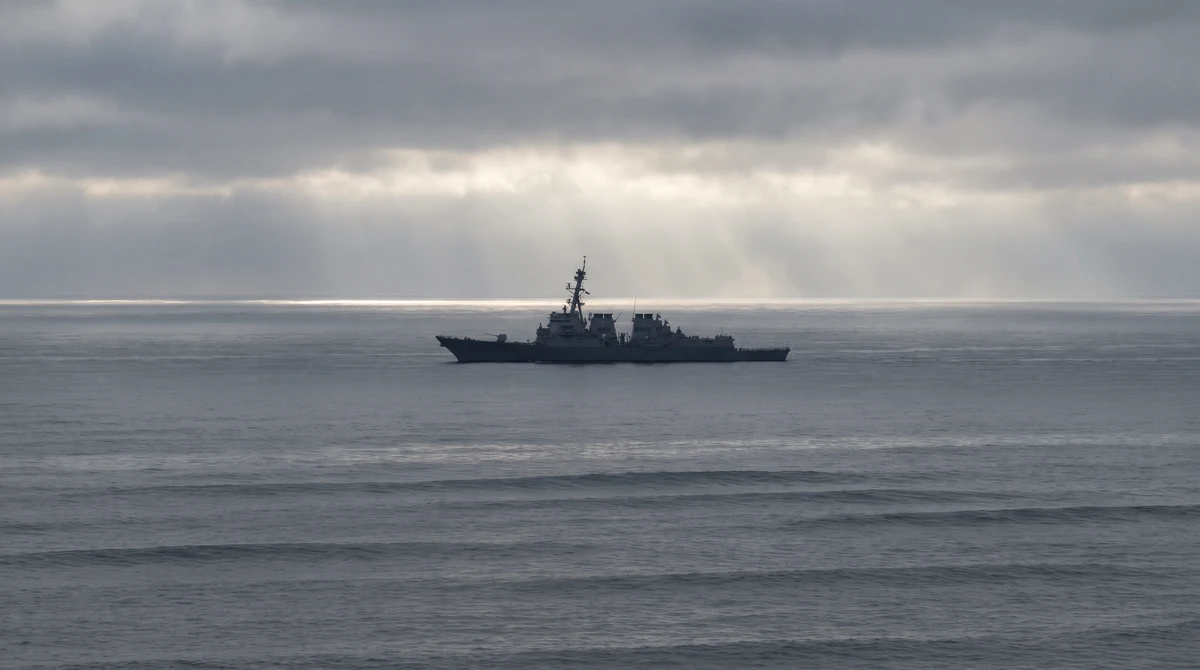
On 28 October 2026 the Russian Ministry of Defence said the Pacific Fleet ballistic-missile submarine Generalissimus Suvorov, a Project 955A Borey-class boat, had launched a Bulava missile from a submerged position in the Sea of Okhotsk, and that the warheads arrived in the designated range area at the estimated time. The statement, covered here at the time, said nothing about how the missile left its tube.
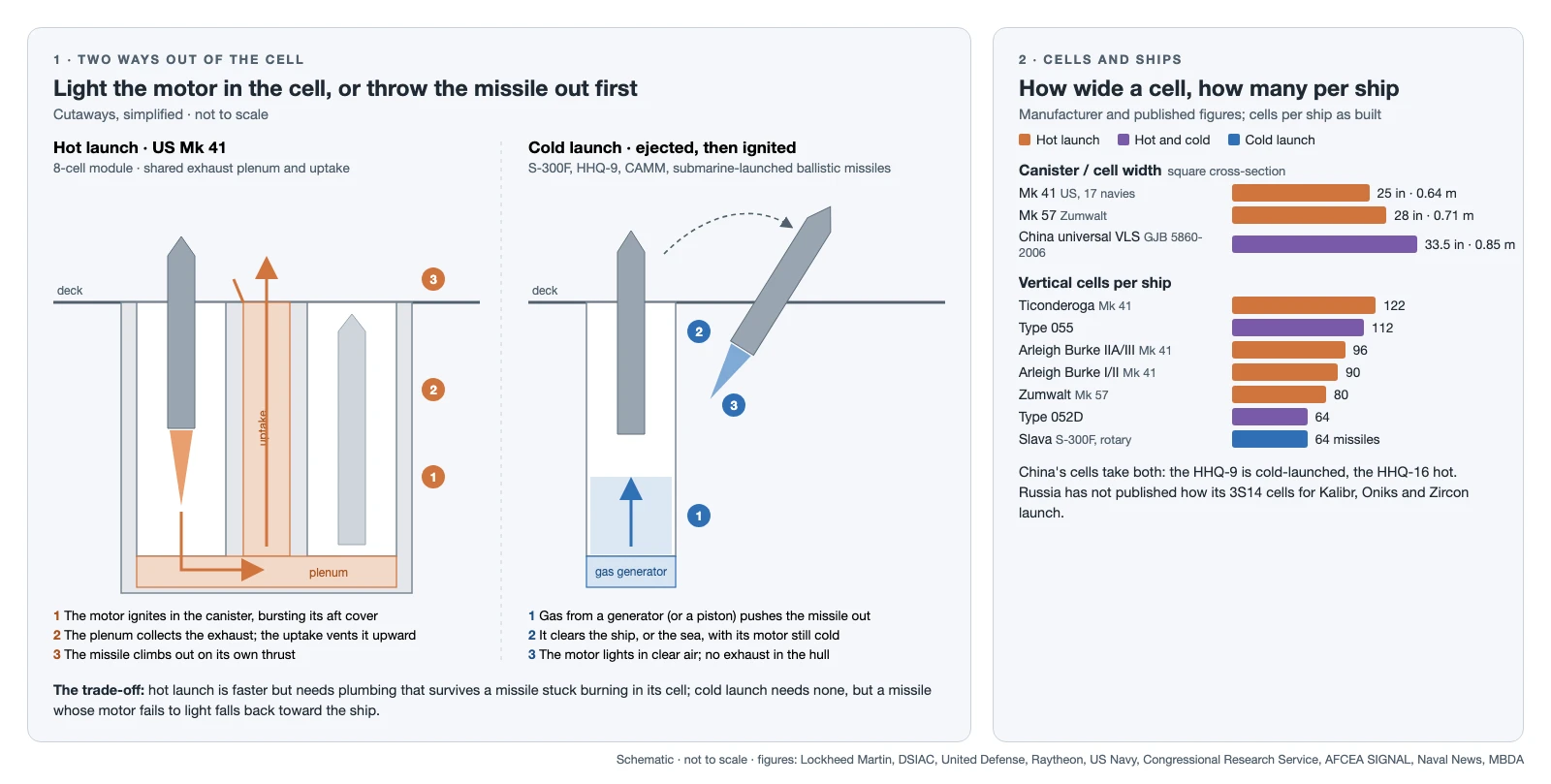
That is the basic problem of vertical launch: a missile stowed upright inside a hull has a rocket motor whose exhaust, once lit, has to go somewhere other than the magazine. There are two answers. In a hot launch the missile's own motor ignites inside the cell, and the launcher captures and vents the blast. In a cold launch the missile is expelled by gas from a generator that is not part of the missile, and its motor ignites only once it is clear. The US Defense Systems Information Analysis Center (DSIAC) wrote in 2019 that hot launch gives "much faster engagement times", since the missile leaves almost immediately after ignition, while a cold-launched missile must first be ejected, then ignited.
Hot launch in the Mk 41
The Mk 41 Vertical Launching System is the hot-launch reference, and two of the US Navy's largest missile contracts this year feed its cells. On 17 August 2026 the Navy awarded Raytheon a seven-year, $22.9 billion contract to raise Tomahawk production from about 60 missiles a year to more than 1,000; on 1 October 2026 it followed with a multiyear SM-6 contract worth up to $24.4 billion. Both missiles fire from Mk 41 cells. Lockheed Martin's 2024 product card counts 17 navies, more than 30 ship classes and more than 200 ships, with installations from a single 8-cell module to 16 modules and 122 cells.
The building block is an 8-cell module, two rows of four cells around a shared exhaust plenum. A US Navy description explains that the plenum and uptake capture the exhaust and vent it vertically through the module to the atmosphere via an uptake hatch, which opens between the two rows of cells. In DSIAC's description, motor ignition ruptures the canister's aft cover, the restraint bolts are blown and the missile leaves the canister. The Lockheed Martin card gives two module lengths: strike length, about 25 ft (7.6 m), for long-range strike missiles and ballistic-missile-defense interceptors such as SM-3, and tactical length, about 22 ft (6.7 m).
DSIAC notes that every canister shares a common 25-inch (0.635 m) square cross-section; ESSM is quad-packed, four missiles to a canister. The United Defense factsheet lists a Tomahawk canister at 2,010 lb empty and 6,010 lb loaded, and an SM-2 canister at 1,490 lb empty and 3,050 lb loaded. The early ships had a 5-cell module with a folding reload crane; a US Navy description says Tomahawk and SM-2 Block IV canisters are "several thousand pounds too heavy" for it, and later ships replaced the cranes with cells.
DSIAC names the price. A restrained firing, in which the motor lights but the missile stays in the cell, is "the primary hazard with hot launch systems"; an overtemperature sensor confirms it and triggers a water deluge of the canister. A factsheet from United Defense, now part of BAE Systems, says the launcher is built to survive a full motor burn of a restrained missile.
Ticonderoga-class cruisers carry 122 cells, according to the Congressional Research Service; Arleigh Burke-class destroyers carry 90 in Flights I and II and 96 in Flights IIA and III. GlobalMilitary.net lists 76 active Arleigh Burkes with 4 fitting out, and 5 active Ticonderogas; its ranking of destroyer fleets by country sets them against every other navy. The Zumwalt class applies the same principle in the Mk 57. A Raytheon datasheet describes a 4-cell module placed around the hull periphery rather than in central magazines, a canister 28 in wide and 283 in long at up to 9,020 lb loaded, a symmetric U-shaped gas path, motors with up to 45 percent greater mass flow rate than "current-generation rocket motors", and no missile deluge system. The class keeps 80 Mk 57 cells, according to The War Zone; GlobalMilitary.net counts 2 Zumwalts active and 1 fitting out.
Ejecting the missile first
Cold launch removes the plenum problem. DSIAC says such systems need no hot-exhaust management, but they do need a gas, piston or elevator ejection system, and they carry "the risk of ejecting the missile without subsequent rocket motor ignition", the missile then falling back onto the deck.
MBDA describes the sequence for its CAMM missile, also known as Sea Ceptor: a gas-powered piston in the canister ejects the missile into clear air, integral thrusters turn it toward the target, and only then does the motor fire; MBDA says this eliminates the need for exhaust management in the launch module. DSIAC notes that CAMM has been cold-launched from a Mk 41: a hot-launch cell can host a cold-launch canister.
Russia's older cruisers use cold launch. The S-300F, the naval version of the S-300 family, stores its missiles in below-deck 8-round rotary launchers, eight on the Slava class for 64 missiles and twelve on the Kirov class for 96, and the missiles are catapulted clear of their tubes before their motors fire. GlobalMilitary.net lists 2 Slavas active, and 1 Kirov in reserve with 1 fitting out.
The Russian Navy's newest surface combatants show the limits of the open record. The Admiral Gorshkov-class frigates carry 32 Redut air-defense cells and 16 3S14 cells, the launcher known as UKSK. The 3S14 fires the Kalibr family; the same cells take the Oniks anti-ship missile and the Zircon. Russia has not published how the 3S14 launches, so the UKSK cannot be classed as hot or cold. GlobalMilitary.net counts 3 Gorshkovs active and 2 fitting out.
China wrote both methods into one standard. AFCEA's SIGNAL magazine reported in 2013 that the universal launcher of the published GJB 5860-2006 standard "can cold launch missiles, such as the HHQ-9, but it also can hot launch missiles such as the HHQ-16"; it uses a concentric-canister approach with exhaust vent paths inside each cell, where the Mk 41 relies on a shared plenum, and its cells are 850 mm (33.45 in) square and up to 9 m long. The Type 052D destroyer carries 64 cells, Naval News reported, citing the US Department of Defense's 2021 China Military Power Report; the larger Type 055 carries 112. GlobalMilitary.net counts 35 Type 052D and 10 Type 055 active in the Chinese navy.
Submarines and the trade-offs
Submarine-launched ballistic missiles are cold-launched from their tubes. The US Navy's fact file for the Trident II D5 says: "Trident II is fired by the pressure of expanding gas in the launch tube. When the missile attains sufficient distance from the submarine, the first stage motor ignites." For Bulava, RussianSpaceWeb records a submerged throw test on 23 September 2004 in which a solid-propellant pressure generator pushed a Bulava mockup to around 30–40 m.
The sources support a short ledger.
- Hot launch gains: faster engagement, in DSIAC's assessment; a light canister; one cell section for many missile types, as the Mk 41's integrated list shows.
- Hot launch costs: plenum, uptake and deluge plumbing, and the restrained-firing hazard DSIAC describes.
- Cold launch gains: no exhaust management in the module, per DSIAC and MBDA, and a missile that can turn toward its target before its motor lights.
- Cold launch costs: an ejector to maintain, and the risk DSIAC names of a missile that falls back onto the ship.
None of the documents cited here puts a number on how much heavier a missile cold launch permits or how much propellant it saves. What they show is both answers in service at every scale: a vented module for the Mk 41's six integrated missile types, a piston for CAMM, a catapult in a rotary drum for the S-300F, expanding gas for Trident II and Bulava. As with carrier catapults, one problem has produced two machines.
More News
All news →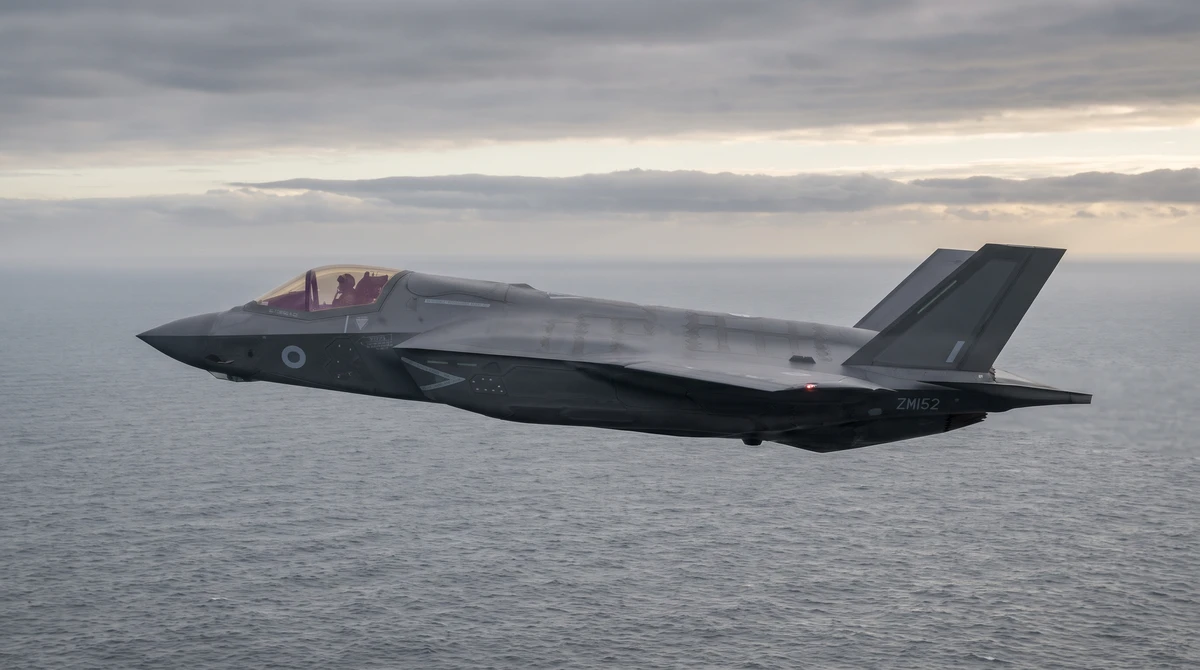
F-35B Completes First Meteor Missile Release From Its Internal Weapons Bay
An F-35B flown by a Royal Navy test pilot jettisoned an inert MBDA Meteor from its internal weapons bay at Naval Air Station Patuxent River, Maryland, on October 7, the F-35 Joint Program Office and MBDA said on November 5, the first of a series of trials ahead of live firings.
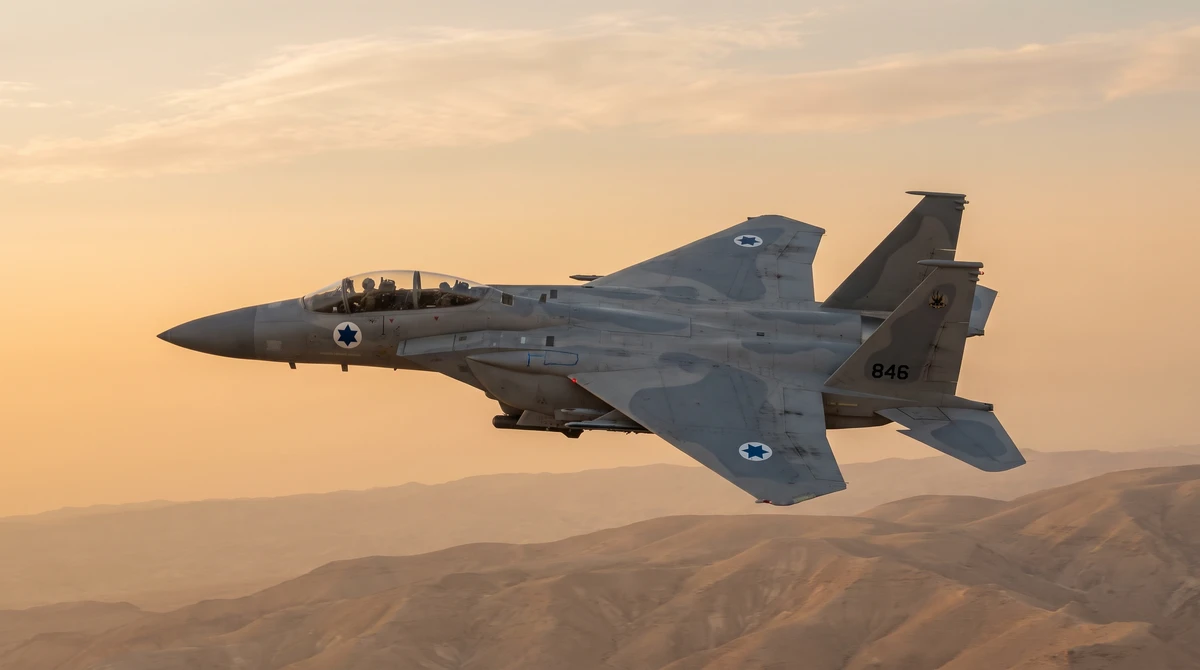
All 346 Israeli Air Force Combat Jets Are US-Built as Trump Says Aid Payments Will End This Year
President Trump said on November 3 that US payments to Israel of about $4 billion a year will end by year-end; GlobalMilitary.net data shows the Israeli Air Force, whose 346 combat aircraft are all US types, is the branch built on American equipment, while Israel's tanks are home-built.
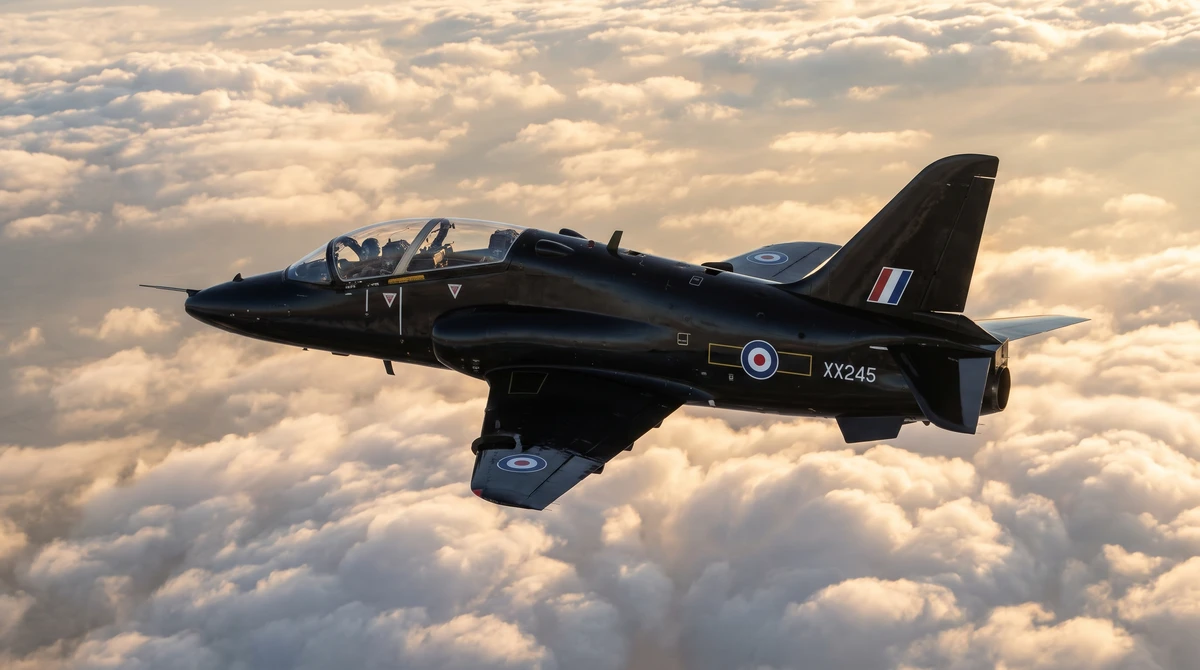
Hawk Jet Trainer at 50: RAF Launches Replacement Program as US Navy Moves to Replace T-45 Goshawk
Fifty years after the Hawk entered Royal Air Force service in late 1976, the UK Ministry of Defence has opened a Jet Training System program to replace it and the US Navy is in source selection for a successor to its Hawk-derived T-45 Goshawk, with an award intended for fiscal 2027.
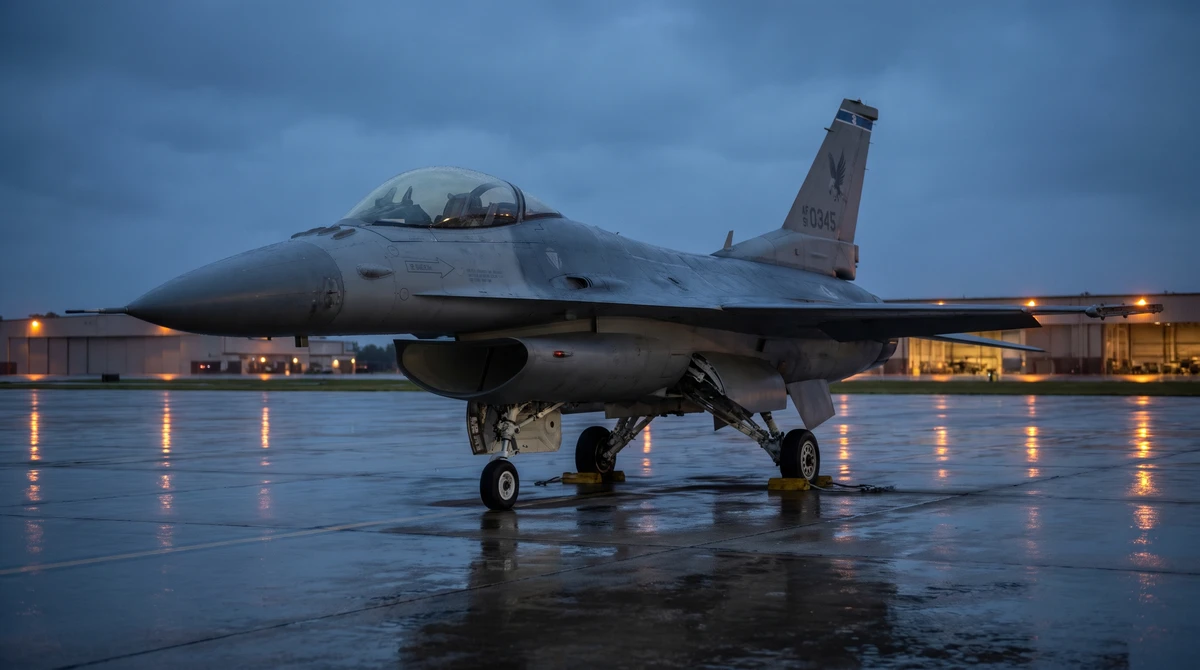
Military Aircraft Crashes in 2026 Reach 83 Logged Accidents Across 30 Countries
GlobalMilitary.net's log records 83 military aircraft crashes and 87 airframes lost in 30 countries between 1 January and 2 November 2026, after a run of fatal accidents in France, the Philippines and Bosnia in late October and a decade-high US Navy mishap count.
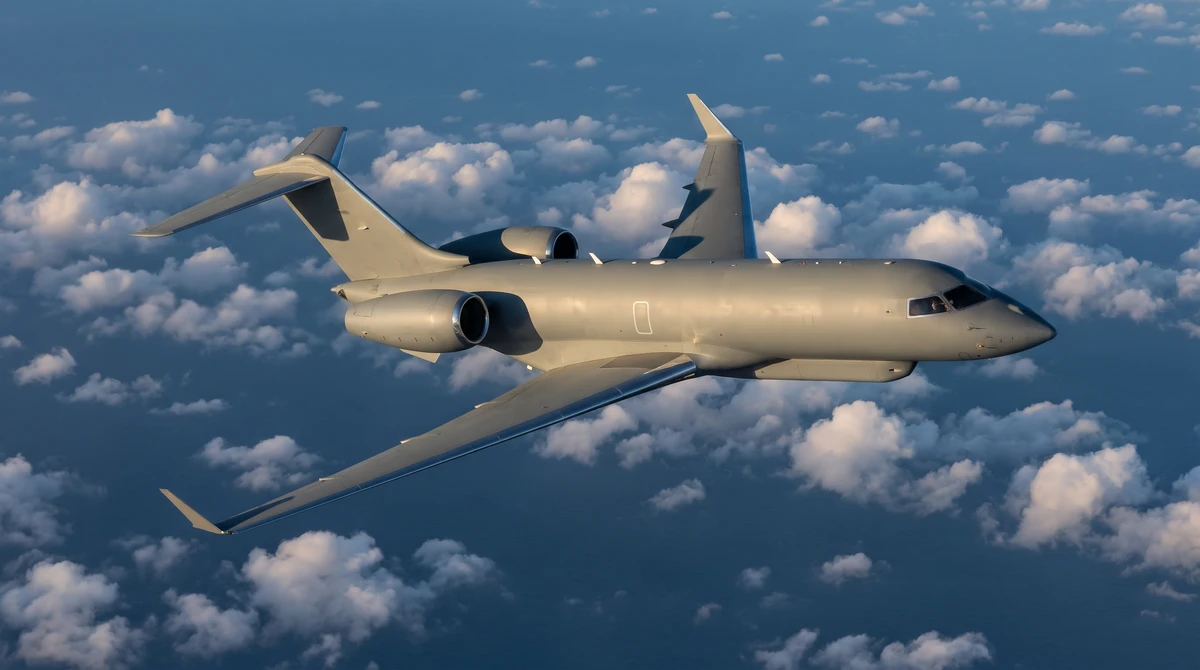
US Army's HADES Spy Jet Flies for the First Time, a Global 6500 Replacing Turboprop ISR
The US Army said on October 30 that HADES Prototype 1, an airborne intelligence aircraft built on a modified Bombardier Global 6500 business jet, made its first flight on September 11, moving the program into mission system integration and developmental flight testing.
Hanwha Philly Shipyard Selected to Build Its First US Navy Ship, a $269 Million Medium Landing Ship
Hanwha Defense USA said on Oct. 29 that TOTE Services had chosen its Philly Shipyard to build one Medium Landing Ship for the US Navy and Marine Corps under TOTE's $2.2 billion construction-management contract, with options for three more vessels.