China Military Forces ๐Ÿ‡จ๐Ÿ‡ณ

Military Strength Overview

๐Ÿ›ฉ๏ธ Air Force 3,440 active aircraft
๐Ÿ›ก๏ธ Ground forces 26,250 active vehicles
โš“๏ธ Naval forces 1023 ships in fleet
โ€“ incl. 61 submarines and 3 aircraft carriers
โ˜ข๏ธ Nuclear Arsenal 600 warheads
โ€“ incl. 24 deployed
๐Ÿช– Active Troops 2,035,000 personnels
โ›‘๏ธ Reserve Troops 510,000 personnels
๐Ÿ‘ฎโ€โ™€๏ธ Paramilitary 1,500,000 personnels
๐Ÿ—บ๏ธ Air bases 84 active air bases
๐ŸŽ–๏ธ Military ranks 57 ranks listed

Global Military Index

81.8
Global Rank: #3
The Global Military Index measures China's overall military capability on a 0-100 scale, based on verifiable data across six dimensions.
๐Ÿช– Manpower (15%) 92.0 Active, reserve & paramilitary: 2740000 effective
๐Ÿ›ก๏ธ Ground Firepower (20%) 85.2 Main battle tanks: 6800
โš“ Naval Power (20%) 78.7 Weighted by ship type: carriers, submarines, destroyers...
โœˆ๏ธ Air Power (25%) 79.4 Weighted by aircraft type: combat, bombers, helicopters...
โ˜ข๏ธ Nuclear Deterrent (10%) 69.5 Strategic arsenal: 600 warheads
๐Ÿ’ฐ Defense Budget (10%) 84.6 $313.7B annual military spending

Methodology: Log-scaled composite index using SIPRI, IISS, and GMNET data. Each pillar is normalized to 0-100, then weighted by strategic importance.

Geography

Map of China
Capital Beijing
Land Area 9,326,410 kmยฒ
Coastline Length 14,500 km

National Flag

Defense Statistics & Key Metrics

Population 1.4 billion (2023)
GDP $17.8 trillion (2023)
GDP per capita $12614 (2023)
Military Budget $313.7 billion (2024)
Share of GDP in Milex 1.7% (2024)
Share of Govt Expenditures 5.1% (2024)
Military spends per capita $221 (2024)
Inflation Rate 0.22% (2024)
Military Personnel 2,535,000 (2020)

Chinese Military Budget History

Population and Military Personnel Trends

GDP and Inflation Rate Trends

Strategic Overview in 2026

Strategic Position

Chinaโ€™s defense posture is defined by the objective of national rejuvenation and the preservation of territorial integrity. Primary security concerns center on the status of Taiwan, maritime disputes in the South China Sea and East China Sea, and the contested border with India. A 2025 defense white paper elevated maritime rights and interests to a strategic priority equivalent to sovereignty and regime security.

China is a founding member of the Shanghai Cooperation Organization (SCO) and maintains a "comprehensive strategic partnership of coordination" with Russia. It also maintains a formal mutual defense treaty with North Korea. Military doctrine emphasizes "active defense," which combines a defensive strategic posture with offensive operational and tactical capabilities. Current priorities focus on "intelligentized" warfareโ€”the integration of artificial intelligence, quantum computing, and big data into multi-domain operations.

Military Forces

The People's Liberation Army (PLA) is directed by the Central Military Commission (CMC). Following a structural reorganization, the PLA consists of four services and four independent arms. Total active-duty personnel is approximately 2 million.

  • PLA Army (PLAA): Comprises group armies organized into combined arms brigades. Key equipment includes Type 99A main battle tanks, Type 04A infantry fighting vehicles, and Z-20 utility helicopters. Artillery units operate PHL-16 long-range multiple rocket launcher systems.
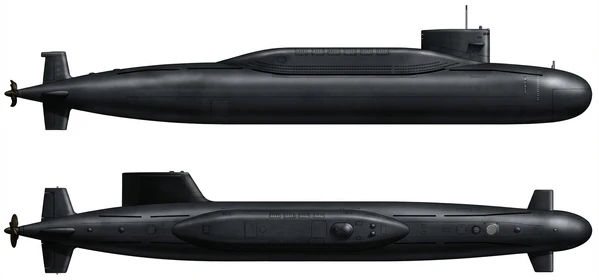
  • PLA Navy (PLAN): Operates a fleet of three aircraft carriers, including the Type 003 Fujian, which was commissioned in November 2025 and utilizes an electromagnetic aircraft launch system (EMALS). Surface combatants include Type 055 guided-missile destroyers and Type 052D destroyers. The submarine force includes Type 094 nuclear-powered ballistic missile submarines and Type 039C conventional attack submarines.
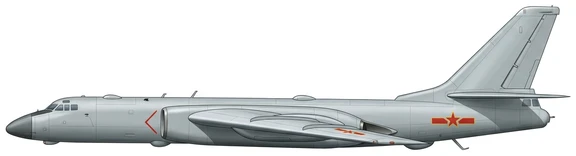
  • PLA Air Force (PLAAF): Operates a range of 4.5 and 5th-generation aircraft, including J-20 stealth fighters, J-16 multirole fighters, and J-10C fighters. Long-range strike capability is provided by H-6N bombers. The transport fleet utilizes Y-20 heavy-lift aircraft. For the carrier-based air wing, the PLAN is integrating J-35 stealth fighters and KJ-600 airborne early warning aircraft.
  • PLA Rocket Force (PLARF): Manages the land-based nuclear and conventional missile arsenal. It operates DF-41 intercontinental ballistic missiles (ICBMs), DF-17 hypersonic glide vehicles, and DF-26 intermediate-range ballistic missiles.
  • Specialized Arms: The Information Support Force (ISF) provides centralized network and communications support. The Aerospace Force manages military space operations and situational awareness, while the Cyberspace Force handles offensive and defensive network operations. The Joint Logistics Support Force (JLSF) provides theater-level logistics and medical services.

Defense Industry

China maintains an extensive domestic defense-industrial complex composed primarily of state-owned enterprises. Major entities include:

  • Aviation Industry Corporation of China (AVIC): Produces the full range of military aircraft, including the J-20 and Y-20.
  • China State Shipbuilding Corporation (CSSC): Responsible for the construction of all major naval vessels, including aircraft carriers and Type 055 destroyers.
  • China North Industries Group Corporation (NORINCO): Manufactures land systems, including armored vehicles, artillery, and small arms.
  • China Aerospace Science and Technology Corporation (CASC) and CASIC: Develop and produce the nationโ€™s missile systems, satellites, and launch vehicles.

Domestic production achieves high levels of self-sufficiency, though some reliance on advanced foreign semiconductors and specific aero-engine technologies persists. China is a major arms exporter, supplying J-10C fighters and Type 054A/P frigates to Pakistan and providing unmanned aerial vehicles (UAVs) and armored vehicles to various markets in the Middle East and Africa.

Strategic Trends

The 2026 national defense budget is 1.91 trillion yuan (approximately $275 billion), representing a 7% increase from 2025. Official figures place defense spending at approximately 1.3% to 1.4% of GDP.

Current modernization programs prioritize the "2027 Centenary Goal," which aims to accelerate the integrated development of mechanization, informatization, and intelligentization. Procurement focus is shifting toward autonomous systems, hypersonic weaponry, and the expansion of the nuclear triad. The PLAN is expected to expand its carrier force with the continued development of the Type 004 class. Doctrinally, the PLA is transitioning from theater-level defense to global power projection, supported by the establishment of overseas logistical facilities and expanded blue-water naval operations.

Chinese Aircraft Manufacturing

Model Manufacturer Year Number
CH-4 Rainbow CASC 2010 None
CH-5 Rainbow CASC 2015 None
J-10 Vigorous Dragon Chengdu 1998 602
J-11 Responsive Dragon Shenyang 1998 442
J-20 Mighty Dragon Chengdu 2011 300
J-7 Fishcan Chengdu 1966 2400
J-8 Finback Shenyang 1969 408
JF-17 Thunder CAC / PAC 2003 144
JH-7 Flounder Xian 1988 270
JL-10 AVIC 2006 20
JL-8 Hongdu 1990 500
JL-9 Guizhou 2003 13
Q-5 / A-5 Fantan Nanchang 1965 1300
SH-5 Harbin 1976 7
Wing Loong II CAIG / CASC 2017 100
Y-12 Harbin 1982 71
Y-20 Xian 2013 58
Z-10 Changhe 2003 109
Z-11 Changhe 1994 46
Z-18 Changhe 2010 133
Z-9 Haitun Harbin 1981 200
J-15 Flying Shark Shenyang 2009 76
J-16 Qianlong Shenyang 2011 365
GJ-11 Sharp Sword Hongdu 2013 None
Wing Loong I Chengdu 2009 60
CH-7 Rainbow CASC 2019 None
WZ-7 Soaring Dragon Guizhou 20

Chinese Missile Systems

Model Category
C-101 Anti-Ship
C-601 Anti-Ship
C-801 Anti-Ship
C-802 Anti-Ship
Dongfeng DF-2 Ballistic
Dongfeng DF-3 Ballistic
Dongfeng DF-4 Ballistic
Dongfeng DF-5 Ballistic
HQ-61 Surface-to-Air
HQ-7 Surface-to-Air
KS-1 Surface-to-Air
LY-60 Surface-to-Air
PL-10 Air-to-Air
PL-7 Air-to-Air
PL-9 Air-to-Air
QW-1 Surface-to-Air
V-75 Surface-to-Air
Dongfeng DF-41 Ballistic
Dongfeng DF-31 Ballistic
Dongfeng DF-21 Ballistic
Dongfeng DF-26 Ballistic
Dongfeng DF-15 Ballistic
PL-12 Air-to-Air
PL-17 Air-to-Air
HQ-9 Surface-to-Air
HQ-16 Surface-to-Air
HQ-17 Surface-to-Air
YJ-18 Anti-Ship
YJ-12 Anti-Ship
HJ-12 Anti-Tank
PL-15 Air-to-Air
CJ-10 Cruise
Dongfeng DF-17 Ballistic
Dongfeng DF-27 Ballistic

Chinese Naval Shipbuilding

Class Type
Type 094 Ballistic missile submarine
Type 035 Attack submarine
Type 037 Submarine chaser
Type 037I Submarine chaser
Type 037IG Submarine chaser
Type 037II Submarine chaser
Type 039 Diesel-electric submarine
Type 039A Diesel-electric submarine
Type 051 Guided missile destroyer
Type 051B Guided-missile destroyer
Type 051C Guided-missile destroyer
Type 052 Guided-missile destroyer
Type 052B Guided-missile destroyer
Type 052C Guided-missile destroyer
Type 052D Guided-missile destroyer
Type 053H Frigate
Type 053H1Q Frigate
Type 053H2 Frigate
Type 053H2G Multi-role frigate
Type 053H3 Frigate
Type 054 Multi-role frigate
Type 054A Frigate
Type 055 Guided-missile destroyer
Type 056 Corvette
Type 062 Gunboat
Type 071 Amphibious transport dock
Type 072A Landing Ship Tank
Type 073 / 073A / 073III Medium landing ship
Type 074 Landing ship medium
Type 079 Landing Ship Medium
Type 091 Nuclear-powered attack submarine
Type 092 Nuclear-powered ballistic missile submarine
Type 093 Nuclear-powered attack submarine
Type 003 Aircraft carrier
Type 002 STOBAR Aircraft carrier
Type 001 STOBAR aircraft carrier
Type 075 Amphibious assault ship
Type 054B Guided-missile frigate
Type 022 Missile boat
Type 095 Attack submarine
Hangor Attack submarine
Tughril Guided-missile frigate
Zulfiquar Guided missile frigate
Wochi Mine countermeasures vessel

Chinese Military Vehicles

Model Type
Type 59MII Medium Main Battle Tank
Type 69 Medium Main Battle Tank
Type 85 Medium Main Battle Tank
Type 79 Medium Main Battle Tank
Type 80 / 88 Medium Main Battle Tank
Type 90 Medium Main Battle Tank
Type 96 Medium Main Battle Tank
Type 98 Light Main Battle Tank
Type 99 Medium Main Battle Tank
VT-4 Main battle tank
ZBD-04 Infantry fighting vehicle
Type 63 MRL Multiple Launch Rocket System
Type 100 Main Battle Tank

Chinese Firearms Development

Model Category
AMR-2 Anti materiel sniper rifle
JS 05 Anti materiel sniper rifle
Type 81 Assault rifle
Type 63 / SKS Assault rifle
Type 03 / QBZ-03 Assault rifle
Type 95 / QBZ-95 Bullpup assault rifle
Type 67 Light machine gun
Type 80 Light machine gun
Type 77 / Type 85 Machine gun
Type 88 / QBU-88 Sniper rifle
Type 79 Submachine gun
Chang Feng Submachine gun
Type 05 / QBZ-05 Submachine gun
Type 64 Submachine gun

Frequently Asked Questions

How large is China's military?
China has 2,035,000 active military personnel with an additional 510,000 in reserve. This includes army, navy, and air force service members.
What is China's defense budget?
China's annual defense budget is approximately $313.7 billion. This covers personnel costs, equipment procurement, operations, and maintenance of military forces.
How does China rank militarily in the world?
China ranks #3 globally on the Global Military Index with a score of 81.8 out of 100. This composite index measures military capability across manpower, firepower, naval power, air power, nuclear deterrent, and defense budget.
Does China have nuclear weapons?
Yes, China is a nuclear-armed state with approximately 600 nuclear warheads. Of these, 24 are deployed and ready for use.
How many aircraft does China's air force have?
China operates 3,440 military aircraft including 1,986 combat aircraft. The fleet includes fighters, transport planes, helicopters, and training aircraft.
How large is China's navy?
China's navy operates 1023 vessels including 61 submarines and 3 aircraft carrier(s). The fleet includes surface combatants, support ships, and coastal patrol craft.
How many tanks does China have?
China operates approximately 6,800 main battle tanks. This figure includes both active inventory and reserve stocks available for mobilization.
What percentage of GDP does China spend on defense?
China spends approximately 1.7% of its GDP on defense. This is below the NATO target of 2% of GDP.
What is China's military personnel per capita?
China has approximately 1.4 active military personnel per 1,000 citizens. This ratio reflects the country's military manpower relative to its population of 1,410,710,000.
Does China have submarines?
Yes, China operates 61 submarines. The submarine fleet may include nuclear-powered attack submarines, ballistic missile submarines, and conventional diesel-electric boats depending on the country's naval doctrine.
Does China have aircraft carriers?
Yes, China operates 3 aircraft carrier(s). Aircraft carriers provide significant power projection capability and serve as mobile air bases for naval aviation operations worldwide.
Does China have paramilitary forces?
Yes, China maintains 1,500,000 paramilitary personnel. These forces typically include gendarmerie, border guards, coast guard, and internal security troops that supplement regular military capabilities.
Population, GDP, Inflation and Personnel: World Bank.
Military Expenditure: SIPRI Milex. Suggest a change