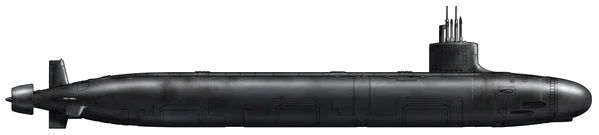
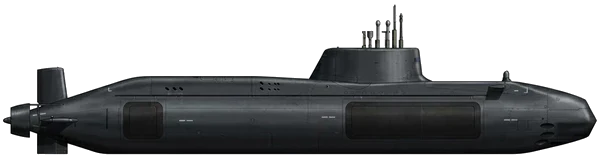
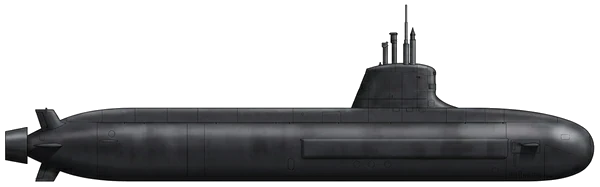
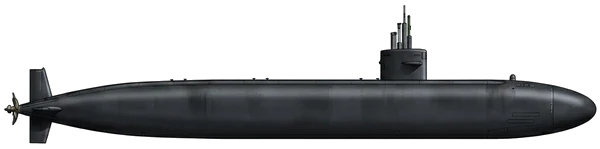
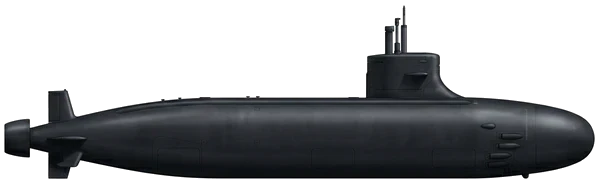
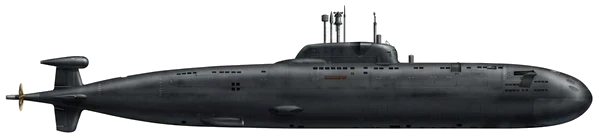
The Virginia class, designated SSN-774, is a series of nuclear-powered attack submarines developed for the United States Navy. Initiated in 1991 under the Centurion Study, the program was designed as a cost-effective alternative to the Seawolf class. It was the first US Navy warship class developed using 3D visualization technology and computer-aided engineering. Construction is distributed between General Dynamics Electric Boat and Huntington Ingalls Industries Newport News Shipbuilding through an industrial arrangement intended to maintain both production facilities.
The design utilizes modular construction and incorporates commercial off-the-shelf components in its data networks. Propulsion is provided by an S9G nuclear reactor and a pump-jet propulsor. The class replaces traditional optical periscopes with photonic masts equipped with high-resolution cameras and infrared sensors. Because these masts do not penetrate the pressure hull, the control room is located in a position independent of the sail. Electronic systems use an open-system architecture to facilitate hardware and software updates. Block III and subsequent vessels replaced individual launch tubes with large-diameter payload tubes, while Block V vessels from USS Arizona (SSN-803) onward include an additional mid-body section, the Virginia Payload Module, raising Tomahawk capacity from 12 to 40. In August 2026 the Navy announced that the 19 boats fitted with the module will be reclassified as guided-missile submarines (SSGN), succeeding the Ohio-class SSGNs that retire by the end of 2029. The class also features fly-by-wire ship control systems and an integral lock-out diving chamber for special operations.
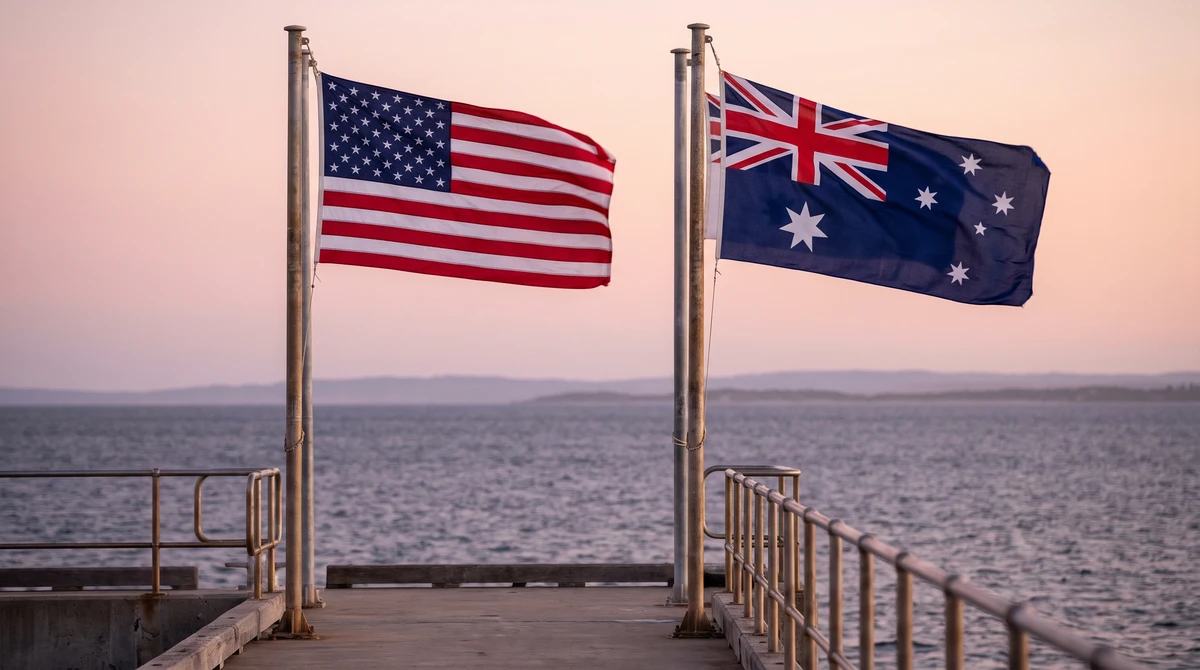
USS Virginia entered service in 2004. The class is scheduled to replace Los Angeles-class attack submarines and the cruise missile variants of the Ohio class. Following the decommissioning of USS Helena in 2025, the Virginia class became the most numerous active submarine class in service. The United States Navy plans to operate 66 vessels, with procurement expected to continue through 2043. In 2023, the AUKUS security pact established that the Royal Australian Navy will purchase three Virginia-class submarines beginning in the early 2030s to replace its Collins-class fleet. In July 2026 the Navy awarded General Dynamics Electric Boat and Newport News Shipbuilding 42.1 billion dollars for nine Block VI boats plus long-lead material for a tenth, with Newport News acting as delivery yard for six of the nine. Twenty-six boats had been delivered at that point. The Navy is targeting two deliveries a year against a current rate of roughly one, and the first ten Block V boats are running close to three years late. These vessels are projected to remain in service until at least 2060, with later units operating into the 2070s.