X-31 EFM Vector
German-American experimental jet aircraft, known for pioneering in thrust vectoring technology, principally tested during the 1990s. Key figures: top speed 1,448 km/h, service ceiling 12,192 m, max takeoff weight 7,303 kg, built 2.
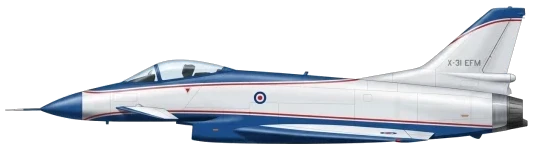
| Crew | 1 |
| Length | 13.2 m (43.3 ft) |
| Wingspan | 7.3 m (23.8 ft) |
| Height | 4.4 m (14.6 ft) |
| Wing area | 21.0 m² (226.3 sqft) |
| Empty weight | 5,175 kg (11,409 lbs) |
| Max. takeoff weight | 7,303 kg (16,100 lbs) |
| Powerplant | 1 × turbofan General Electric F404-GE-400 7,257 kgf each |
| Maximum speed | 1448 km/h (Mach 1.4) |
| Service ceiling | 12,192 m (40,000 ft) |
| Climb rate | 218.0 m/s (715.2 ft/s) |

Description
The X-31 Vector "Enhanced Fighter Maneuverability" was designed to study maneuverability in flight using thrust vectoring. The results of these tests will be utilized to improve the maneuverability of future fighters.
Design
Three jet deflectors, made of epoxy and carbon, were mounted at the aircraft's exhaust to control its trajectory vertically and horizontally. Additionally, the X-31 was equipped with movable canards.
The X-31 program allowed for a better understanding of the aerodynamics of agile aircraft, the effectiveness of flight controls and thrust vectoring engines, as well as airflow phenomena at high angles of attack. Rockwell constructed the X-31's fuselage, while the German company MBB built the wings and jet deflectors.
Operational History
Two units were produced, which completed 108 flights. The X-31 EFM program concluded in 1995.
Frequently Asked Questions
What type of aircraft is the X-31 EFM Vector?
What is the maximum speed of the X-31 EFM Vector?
When did the X-31 EFM Vector first fly?
How many X-31 EFM Vector have been built?
Which countries operate the X-31 EFM Vector?
What is the service ceiling of the X-31 EFM Vector?
- AUG 142026 Updated Per-engine thrust corrected against the engine variant the entry names
- AUG 12026 Updated Manufacturer updated
- APR 72026 Updated Sources and cross-references refreshed