YF-23 Black Widow II
American stealth fighter, developed in the late 1980s, untouched by combat, rival to the Lockheed Martin F-22 Raptor. Key figures: top speed 2,335 km/h, range 4,500 km, service ceiling 19,812 m, max takeoff weight 28,123 kg, unit price $70M, built 2.

| Crew | 1 |
| Length | 20.6 m (67.5 ft) |
| Wingspan | 13.3 m (43.7 ft) |
| Height | 4 m (13.1 ft) |
| Wing area | 84 m² (904.2 sqft) |
| Empty weight | 13,154 kg (29,000 lbs) |
| Max. takeoff weight | 28,123 kg (62,001 lbs) |
| Powerplant | 2 × turbojets General Electric YF120 |
| Ejection seat | McDonnell Douglas ACES II |
| Maximum speed | 2335 km/h (Mach 2.2) |
| Operational range | 4,500 km (2,796 mi) |
| Service ceiling | 19,812 m (65,000 ft) |

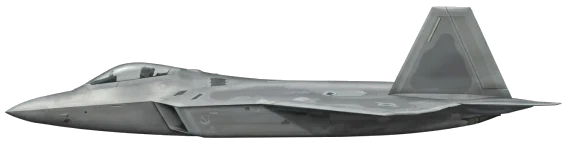
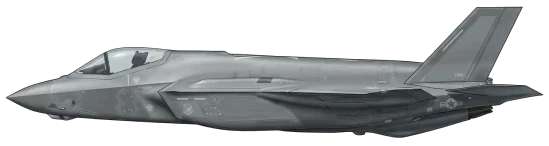
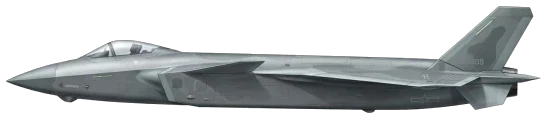
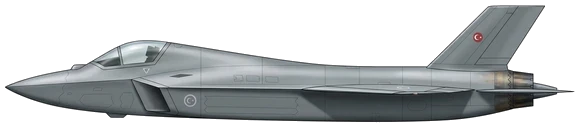

Description
During the 1980s, the US Air Force launched the Advanced Tactical Fighter (ATF) program with the goal of designing a combat aircraft capable of countering new Soviet fighters such as the Flanker and the MiG-29, which posed a threat to American fighters like the F-15E Strike Eagle.
Development
Two aircraft manufacturers were selected for this competition: Lockheed with its prototype YF-22, and Northrop McDonnell Douglas with the YF-23, featuring a revolutionary design. The YF-23's design was unlike any other existing aircraft, with a very streamlined fuselage, wide tail fins angled at 45°, and perfectly triangular wings. The cockpit, reminiscent of the SR-71 Blackbird, was carefully integrated into the rest of the fuselage, with an emphasis on stealth. However, unlike the recommendations made by the US Air Force, the YF-23 did not feature thrust vectoring due to excessive weight. Similar to the YF-22, the armament was carried internally in the fuselage, and a 20mm Vulcan M61 cannon was also mounted on the aircraft.
Northrop assembled two examples of the YF-23. The first, named PAV-1 (Prototype Air Vehicle), was equipped with two Pratt & Whitney YF-119 engines, while the PAV-2 was powered by General Electric YF-120 engines. The first YF-23 (PAV-1) was publicly presented at Edwards on June 22, 1990. Subsequent taxi tests revealed shimmy problems with the landing gear. On August 27, 1990, the YF-23 took off for its first 20-minute flight, which proceeded without major issues. From takeoff, the aircraft demonstrated the power of its new engines, prompting the accompanying F-15 and F-16 "chase planes" to engage their afterburners just to keep up. Three days later, the YF-23 embarked on a second flight, but it was interrupted by problems with the engines, which emitted black smoke. Nevertheless, the testing schedule was adhered to. On September 18, it achieved Mach 1.43 in supercruise. The PAV-2 made its maiden flight on October 27, 1990, with Jim Sandberg at the controls. Few differences were noted compared to the PAV-1 prototype.
The competition for the ATF was eventually won by the Lockheed YF-22, later renamed the F-22 Raptor. While the exact reasons for this decision remain confidential, it appears that the YF-23 was stealthier and faster than its competitor, but the YF-22 offered easier and less expensive production prospects as well as potential for future development. Different approaches were taken by the two aircraft manufacturers: Lockheed's main objective was the operational characteristics of its aircraft, aiming to produce a versatile combat aircraft. In contrast, Northrop prioritized the aircraft's stealth, sacrificing some versatility.
Operational History
The YF-23's final sortie took place on December 18. The two YF-23 prototypes accumulated 65 flight hours over 50 sorties. The YF-22, on the other hand, completed 74 sorties and logged 91 flight hours. The YF-23 did not receive an official name, but it was unofficially referred to as the "Black Widow II," in reference to Northrop's WWII night fighter, the P-61 Black Widow. PAV-1 was reportedly nicknamed the "Gray Ghost," while PAV-2 was called the "Spider." Its 34th and final flight occurred on November 30, 1990.
Frequently Asked Questions
What type of aircraft is the YF-23 Black Widow II?
What is the maximum speed of the YF-23 Black Widow II?
What is the range of the YF-23 Black Widow II?
When did the YF-23 Black Widow II first fly?
How many YF-23 Black Widow II have been built?
Which countries operate the YF-23 Black Widow II?
How much does a YF-23 Black Widow II cost?
What is the service ceiling of the YF-23 Black Widow II?
- AUG 142026 Updated Per-engine thrust cleared: the YF120 was only ever published as a thrust class
- AUG 142026 Updated Per-engine thrust corrected against the engine variant the entry names
- AUG 52026 Updated Thrust updated
- AUG 12026 Updated Manufacturer updated
- APR 72026 Updated Sources and cross-references refreshed
- JAN 242026 Updated Thrust and top speed updated
- JAN 122026 Updated Range updated in a site-wide editorial pass