EA-6B Prowler vs EF-111 Raven
EA-6B Prowler vs EF-111 Raven at a glance — top speed 1,048 vs 2,350 km/h, range 3,745 vs 3,220 km, max takeoff weight 27,896 vs 39,680 kg, built 170 vs 42 units.
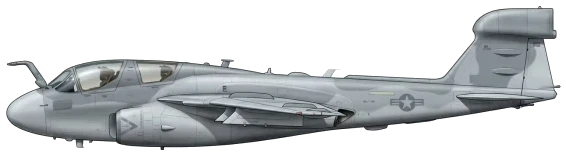
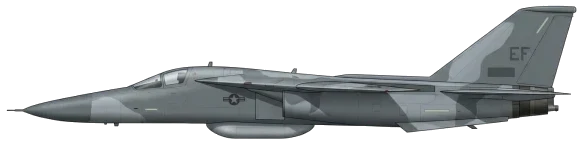
| EA-6B Prowler | EF-111 Raven | |
|---|---|---|
| Origin country | 🇺🇸 United States | 🇺🇸 United States |
| Category | Military Special Mission Aircraft | Military Special Mission Aircraft |
| Manufacturer | Grumman | Grumman |
| First flight | 25 May 1968 | 1 January 1977 |
| Year introduced | 1971 | 1981 |
| Number produced | 170 units | 42 units |
| Average unit price | $52 million | $65 million |
| Wing area | 49.2 m² | 48.8 m² |
| Wingspan | 16.0 m | 19.2 m |
| Height | 5.1 m | 5.0 m |
| Length | 18.0 m | 23.5 m |
| Maximum speed | 1048 km/h | 2350 km/h |
| Operational range | 3,745 km | 3,220 km |
| Service ceiling | 11,460 m | 17,000 m |
| Max. takeoff weight | 27,896 kg | 39,680 kg |
| Empty weight | 14,134 kg | 24,230 kg |
| Total thrust | 2 x 4,717 kgf | 2 x 8,390 kgf |
Detailed Comparison
The EA-6B Prowler and EF-111A Raven were the cornerstones of US airborne electronic attack for decades, yet they originated from different operational requirements. The Prowler was a carrier-based, subsonic aircraft optimized for standoff jamming and support missions, crewed by a pilot and three Electronic Countermeasures Officers (ECMOs). In contrast, the Raven was a land-based, supersonic penetrator converted from the F-111A strike aircraft, designed to escort fast-jet packages deep into hostile airspace with a crew of a pilot and one Electronic Warfare Officer (EWO).
Development and Design
The Prowler's design was an evolutionary, purpose-built development from the A-6 Intruder airframe, stretched to accommodate the four-person crew essential for managing its complex jamming suite. Its core was the AN/ALQ-99 Tactical Jamming System, carried in up to five external pods. This modular, pod-based approach allowed for mission-specific loadouts and easier system upgrades. Crucially, later Prowler variants could carry and fire AGM-88 HARM anti-radiation missiles, giving it a lethal Suppression/Destruction of Enemy Air Defenses (SEAD/DEAD) capability.
The EF-111A Raven was a conversion, adapting 42 existing F-111A airframes for the electronic warfare role. The USAF required a platform that could match the speed of its frontline fighters. The Raven integrated its version of the jamming system, the AN/ALQ-99E, internally within the weapons bay and a prominent ventral "canoe" radome. This design preserved the aircraft's aerodynamic performance but precluded the carriage of any offensive ordnance. The Raven was entirely unarmed, relying on its Mach 2+ speed, acceleration, and terrain-following radar for survival.
Specifications and Performances
Performance metrics starkly reflect their differing roles. The Raven’s top speed of 2,414 km/h and service ceiling of 17,000 m enabled it to keep pace with and protect strike aircraft like the F-15E and F-16. The Prowler's high-subsonic speed (1,048 km/h) and lower ceiling (11,460 m) were sufficient for its carrier group support and standoff jamming missions. The Prowler’s five hardpoints provided significant mission flexibility, allowing a mix of jamming pods, fuel tanks, and HARM missiles. The Raven's design dedicated its payload capacity entirely to its internal jamming system, trading weapons capability for raw performance and penetration survivability.
Deployment and usage
Both aircraft were critical assets in major US conflicts. They operated in concert during Operation El Dorado Canyon against Libya and Operation Desert Storm against Iraq, with the Ravens escorting deep strikes while Prowlers provided area suppression. In Desert Storm, the Raven's effectiveness was highlighted when one famously maneuvered an Iraqi Mirage F1 into the ground without firing a shot. After the EF-111's retirement in 1998, the EA-6B became the sole tactical jamming aircraft for all US armed forces, a testament to its adaptability. The Prowler continued to serve for another two decades, supporting operations in the Balkans, Afghanistan, and Iraq, its mission evolving to include countering improvised explosive devices.
Conclusion
The comparison reveals a contrast between a specialized penetrator and a versatile multi-role platform. The EF-111 Raven was a peerless asset for escort jamming, its speed and performance tailored to a specific high-threat mission. The EA-6B Prowler offered broader utility; its larger specialist crew, external stores flexibility, and SEAD/DEAD capability made it an adaptable and enduring system. The USAF's decision to retire the Raven and rely on the joint-service Prowler fleet underscored a strategic shift towards the Prowler's versatility over the Raven's specialized high-speed performance, a legacy that informed the development of its successor, the EA-18G Growler.
