H215M / AS532 Cougar vs Mi-8 Hip
H215M / AS532 Cougar vs Mi-8 Hip at a glance — top speed 250 vs 250 km/h, range 573 vs 495 km, max takeoff weight 9,000 vs 12,000 kg, built 408 vs 17,000 units.
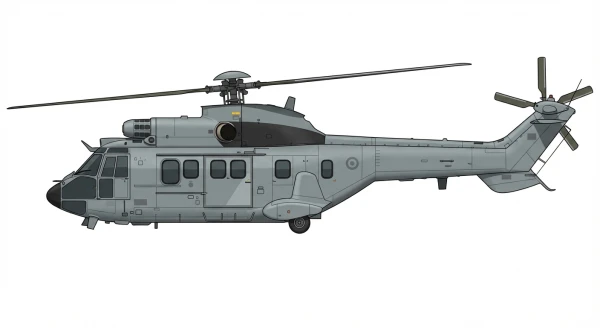
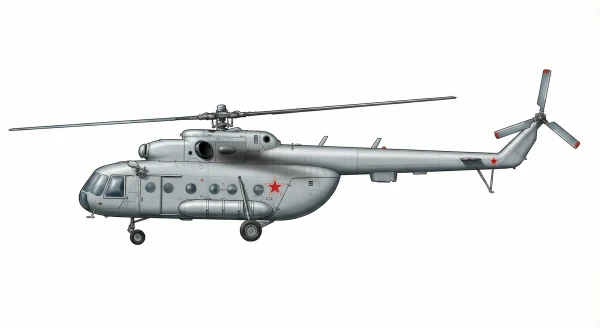
| H215M / AS532 Cougar | Mi-8 Hip | |
|---|---|---|
| Origin country | 🇩🇪 Germany🇫🇷 France | 🇷🇺 Ex-USSR |
| Category | Military Helicopters | Military Helicopters |
| Manufacturer | Airbus Helicopters | Mil |
| First flight | 1 September 1978 | 24 June 1961 |
| Year introduced | 1978 | 1967 |
| Number produced | 408 units | 17000 units |
| Average unit price | $18 million | $4 million |
| Wingspan | 15.6 m | 21.3 m |
| Height | 4.8 m | 5.7 m |
| Length | 18.7 m | 25.2 m |
| Maximum speed | 250 km/h | 250 km/h |
| Operational range | 573 km | 495 km |
| Service ceiling | 4,100 m | 4,500 m |
| Max. takeoff weight | 9,000 kg | 12,000 kg |
| Empty weight | 4,330 kg | 7,160 kg |
| Total thrust | 2 x 1,185 kW | 2 x 1,119 kW |
Detailed Comparison
The Airbus H215M (formerly AS532 Cougar) and the Mil Mi-8 Hip represent the divergent rotary-wing doctrines of Western Europe and the Soviet Bloc. While the Cougar offers a lighter, avionics-driven multi-role platform, the Mi-8 serves as a heavy-lifting workhorse defined by sheer ruggedness and ubiquity. The Cougar is a specialized evolution of the medium-weight Puma, whereas the Mi-8 is a foundational mass-production airframe that bridges the gap between medium utility and heavy transport.
Development and Design
The H215M design utilizes composite rotor blades, crashworthy landing gear, and twin Turbomeca Makila engines, reflecting a philosophy centered on survivability through advanced materials and systems. It is highly adaptable, accommodating specialized naval avionics, including ASIST for high sea state operations. Conversely, the Mi-8 features a robust, largely aluminum airframe designed for austere field maintenance and ease of repair. Its distinctive top-mounted turbines and five-blade main rotor prioritize raw lift and stability over aerodynamic refinement. While the Cougar is a dedicated militarized derivative of a civil platform, the Mi-8 was conceived from the onset as a dual-purpose battlefield asset, capable of transforming from a troop carrier into a heavily armed gunship with window-mounted machine guns and external hardpoints.
Specifications and Performances
The Mi-8 holds a significant advantage in lift capacity, with a Maximum Takeoff Weight (MTOW) of 12,000 kg compared to the Cougar's 9,000 kg. This allows the Hip to transport heavier logistics or larger troop contingents. However, the H215M demonstrates superior aerodynamic efficiency; despite sharing a maximum speed of 250 km/h, the Cougar offers a longer operational range of 573 km versus the Mi-8's 495 km. The Cougar's lighter empty weight (4,330 kg) against the massive Mi-8 (7,160 kg) allows for greater agility and a better power-to-weight ratio for technical maneuvering, whereas the Hip's mass provides a stable firing platform for heavy weaponry.
Deployment and Usage
Deployment of the AS532/H215M leans toward specialized roles, particularly in naval environments where it employs AM 39 Exocet missiles and variable-depth sonar for Anti-Submarine Warfare (ASW). It serves as a sophisticated asset for modern armies requiring avionics standardization, as seen in France's fleet upgrades. The Mi-8, with over 17,000 units built, functions as the logistical backbone for over 50 nations. It operates extensively in "hot-and-high" theaters like Afghanistan, serving simultaneously as a troop transport and fire support platform armed with S-8 rockets and AT-2 Swatter missiles. While the Cougar is often protected in hangars, the Mi-8 is designed to live on the tarmac in extreme climates.
Conclusion
The choice between these aircraft dictates the operational doctrine. The H215M provides a high-tech solution for NATO-standard forces requiring specialized mission equipment and lower acoustic signatures, albeit at a significantly higher unit cost of $18 million. The Mi-8, priced at approximately $4 million, offers unmatched logistical volume and durability for budget-constrained forces needing a resilient, do-it-all platform. The Cougar excels in precision and multi-role versatility, while the Hip remains the superior option for raw utility and heavy lift in contested environments.