Mi-8 Hip vs SA330 Puma
Mi-8 Hip vs SA330 Puma at a glance — top speed 250 vs 257 km/h, range 495 vs 580 km, max takeoff weight 12,000 vs 7,000 kg, built 17,000 vs 697 units.
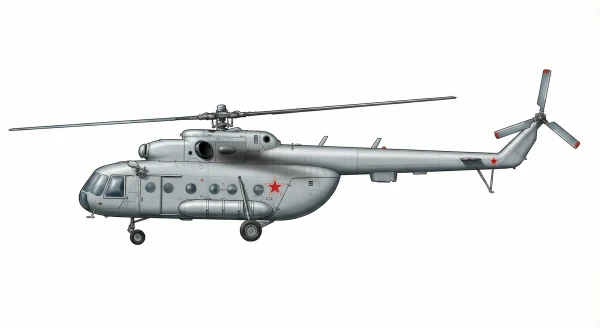
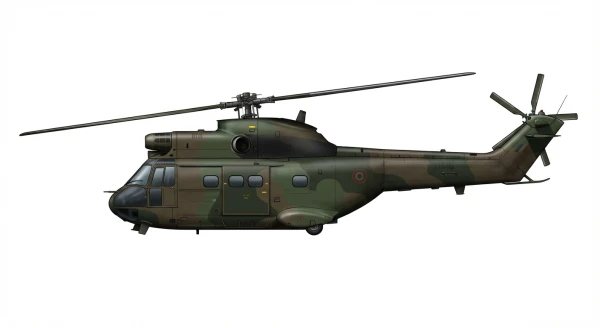
| Mi-8 Hip | SA330 Puma | |
|---|---|---|
| Origin country | 🇷🇺 Ex-USSR | 🇫🇷 France |
| Category | Military Helicopters | Military Helicopters |
| Manufacturer | Mil | Aérospatiale |
| First flight | 24 June 1961 | 15 April 1965 |
| Year introduced | 1967 | 1968 |
| Number produced | 17000 units | 697 units |
| Average unit price | $4 million | $2 million |
| Wingspan | 21.3 m | 15.0 m |
| Height | 5.7 m | 5.1 m |
| Length | 25.2 m | 18.2 m |
| Maximum speed | 250 km/h | 257 km/h |
| Operational range | 495 km | 580 km |
| Service ceiling | 4,500 m | 4,800 m |
| Max. takeoff weight | 12,000 kg | 7,000 kg |
| Empty weight | 7,160 kg | 3,536 kg |
| Total thrust | 2 x 1,119 kW | 2 x 1,175 kW |
Detailed Comparison
The Mil Mi-8 Hip and Aérospatiale SA330 Puma emerged in the 1960s as the definitive utility helicopters for the Eastern and Western blocs, respectively. While both were designed as twin-engine tactical transports, the Soviet Mi-8 prioritized raw lifting capacity and heavy armament, evolving into a hybrid assault transport. In contrast, the French SA330 Puma focused on speed, agility, and "hot-and-high" performance within a significantly lighter airframe.
Development and Design
The Mi-8 utilizes a robust, aluminum semi-monocoque fuselage with a five-blade main rotor, engineered for durability in austere conditions ranging from Siberian cold to desert heat. Its defining design element is the spacious cabin capable of accommodating 24 troops, accessed via rear clamshell doors which facilitate heavy cargo loading. It follows a philosophy of redundancy and mass, allowing it to absorb battle damage and operate with minimal ground infrastructure.
Conversely, Aérospatiale designed the SA330 Puma to meet French Army requirements for an all-weather tactical lifter with high maneuverability. It introduced advanced aerodynamic features to reduce drag, including a streamlined fuselage and retractable landing gear on early models. The Puma utilizes sliding side doors, emphasizing rapid troop ingress/egress rather than the vehicle-hauling capability of the Mi-8. The French design also placed a premium on ease of maintenance and component interchangeability, leading to high availability rates in expeditionary environments.
Specifications and Performances
The most significant differentiator is mass: the Mi-8 possesses a Maximum Takeoff Weight (MTOW) of 12,000 kg, nearly double the Puma’s 7,000 kg. This places them in different weight classes, with the Mi-8 offering superior payload capacity at the cost of fuel consumption and footprint.
- Speed and Range: The Puma is arguably more efficient, boasting a slightly higher max speed of 257 km/h compared to the Mi-8's 250 km/h, and a superior range of 580 km versus 495 km.
- Altitude: The Puma outperforms the Hip in vertical limits, with a service ceiling of 4,800 m, validating its design focus on mountain operations.
- Firepower: The Mi-8's power surplus allows for significant armament, including S-8 rocket pods and AT-2 Swatter missiles, effectively bridging the gap between transport and gunship. The Puma is generally limited to defensive 7.62mm machine guns or 20mm cannons, lacking the integrated heavy assault capability of the Soviet platform.
Deployment and usage
With over 17,000 units produced, the Mi-8 is the ubiquitous backbone of operational logistics for over 50 nations. Its combat history is defined by the Soviet-Afghan War, where it served as a "flying infantry fighting vehicle," and it continues to see high-intensity combat in Syria and Ukraine. It is frequently used for heavy lift and armed assault.
The Puma, with roughly 697 units, served a more specialized role within NATO and export markets. It saw extensive service with the RAF and French Army, proving vital in the Falklands War, the Gulf War, and Balkan interventions. Its legacy is particularly strong in South Africa, where it was developed into the Atlas Oryx to support high-mobility bush warfare operations requiring agility over brute force.
Conclusion
The Mi-8 Hip represents the Soviet doctrine of overwhelming utility, offering a rugged, heavily armed platform that prioritizes survivability and payload volume. The SA330 Puma represents a finesse-based approach, delivering a highly maneuverable and reliable medium-lift solution optimized for rapid tactical insertion in difficult terrain. While the Mi-8 dominates in terms of global proliferation and sheer versatility, the Puma established the Western standard for agile tactical transport, directly influencing the modern Super Puma and H225 families.