Mi-17 Hip-H vs Mi-8 Hip
Mi-17 Hip-H vs Mi-8 Hip at a glance — top speed 250 vs 250 km/h, range 800 vs 495 km, max takeoff weight 13,000 vs 12,000 kg, built 12,000 vs 17,000 units.
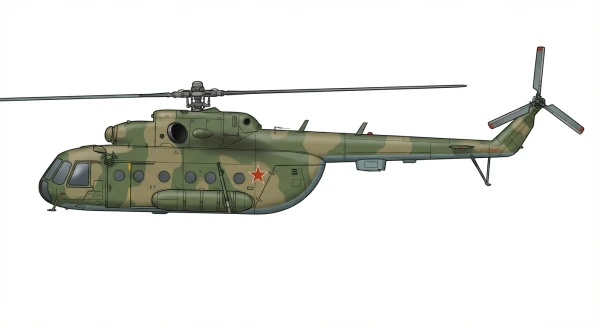
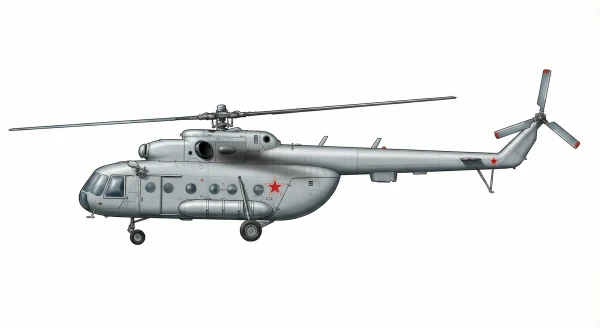
| Mi-17 Hip-H | Mi-8 Hip | |
|---|---|---|
| Origin country | 🇷🇺 Ex-USSR | 🇷🇺 Ex-USSR |
| Category | Military Helicopters | Military Helicopters |
| Manufacturer | Mil | Mil |
| First flight | 1 January 1975 | 24 June 1961 |
| Year introduced | 1977 | 1967 |
| Number produced | 12000 units | 17000 units |
| Average unit price | $15 million | $4 million |
| Wingspan | 21.3 m | 21.3 m |
| Height | 4.8 m | 5.7 m |
| Length | 18.5 m | 25.2 m |
| Maximum speed | 250 km/h | 250 km/h |
| Operational range | 800 km | 495 km |
| Service ceiling | 6,000 m | 4,500 m |
| Max. takeoff weight | 13,000 kg | 12,000 kg |
| Empty weight | 7,489 kg | 7,160 kg |
| Total thrust | 2 x 1,491 kW | 2 x 1,119 kW |
Detailed Comparison
The Mil Mi-8 Hip and its evolutionary successor, the Mi-17 Hip-H, form the backbone of Soviet, Russian, and export medium-lift helicopter fleets. While sharing a common airframe architecture and lineage, the distinction lies primarily in propulsion and flight dynamics, with the Mi-17 specifically engineered to overcome the hot-and-high performance limitations that constrained the original Mi-8 in rigorous operational theaters.
Development and Design
The Mi-8, introduced in 1961, established a robust aluminum semi-monocoque design capable of diverse utility roles, from transport to medical evacuation. However, operational feedback necessitated increased power reserves. The Mi-17, which entered service in 1977, addressed this by integrating larger Klimov TV3-117MT engines and transmission components derived from the Mi-14 naval helicopter.
A critical visual and aerodynamic differentiator is the tail rotor placement: the Mi-8 positions it on the starboard side, whereas the Mi-17 shifts it to the port side. This modification improves yaw control and increases the efficiency of the tail rotor against the main rotor's torque. Furthermore, the Mi-17 features shorter engine cowls and intake dust shields, reflecting a design philosophy centered on durability in austere environments. Notably, the Russian military designates the Mi-17 as the Mi-8MT, reserving the "Mi-17" nomenclature primarily for export markets.
Specifications and Performances
The propulsion upgrade provides the Mi-17 with a significant performance advantage over its predecessor. The Mi-17’s engines generate 1,491 kW each, a substantial increase over the Mi-8’s TV2-117 powerplants, which produce 1,119 kW. This surplus power raises the service ceiling from 4,500 m in the Mi-8 to 6,000 m in the Mi-17, a critical capability for operations in mountainous terrain.
Consequently, the Mi-17 supports a Maximum Takeoff Weight (MTOW) of 13,000 kg, exceeding the Mi-8’s 12,000 kg limit. While maximum speeds remain comparable at roughly 250 km/h, the Mi-17's superior thrust-to-weight ratio allows for safer operations with full payloads in high-altitude zones where the older Mi-8 performance degrades significantly.
Deployment and usage
Both platforms serve as troop transports and makeshift gunships, but the Mi-17 acts as a more effective combat multiplier. The Mi-8 saw extensive use during the Soviet-Afghan War, where it was vulnerable to MANPADS, necessitating field modifications for armor. The Mi-17 has continued this legacy in conflicts ranging from the Indian Air Force's operations in the Kargil War to CIA-led insertions in Afghanistan.
Modern variants of the Mi-17, such as the Mi-171Sh, feature up to six hardpoints capable of deploying precision-guided munitions like Ataka anti-tank missiles and gun pods. While the Mi-8T can carry rockets, the Mi-17 acts as a true assault transport, bridging the gap between utility logistics and dedicated attack roles more effectively than the base Mi-8.
Conclusion
The Mi-8 remains one of the most prolific helicopters in aviation history, offering cost-effective utility for benign environments with over 17,000 units built. However, the Mi-17 represents the necessary modernization for contemporary combat, providing the essential power required for heavy armament, armor plating, and high-altitude maneuverability. While the airframes appear visually similar, the Mi-17's advanced propulsion and updated avionics render it a distinct, far more capable asset for modern multi-role military operations.