India (ranked #4 globally) holds a stronger overall military position than Iran (#27) on the ATLAS Index. India fields 1,475,750 active troops — 2.4:1 Iran's 610,000, backed by 1,155,000 reserves and 1,616,050 paramilitary. India's $78B defense budget is 8.2:1 that of Iran ($9.5B).
ATLAS (Aggregate Total of Land, Air and Sea strength) Index face-offFull ranking →
IndiaIranPillar scores 0–100 (weight under each label) over a headline figure from that domain · each conventional pillar read after its branch's availability proxy · Methodology
India holds a decisive overall advantage over Iran, with roughly eight times the defence budget, a modern multirole air force, a blue-water navy built around two carriers, and around 190 nuclear warheads against Iran's non-nuclear arsenal. Iran's strengths — mass mobilisation, dense air defences and a large ballistic and drone missile force — are defensive and regional, and the two states are separated by distance and third countries that make a direct conventional clash improbable.
Domain by domain
Air powerEdge: India
🇮🇳 India588 combat aircraft led by 259 Su-30MKI, plus Rafale, MiG-29, Mirage 2000 and indigenous Tejas; AWACS, tanker and heavy-lift support enable sustained offensive and long-range operations.
🇮🇷 Iran295 combat aircraft dominated by pre-1979 F-4, F-5 and F-14 airframes with limited spares; a small Su-35 and MiG-29 element and scarce tanker or AEW support cap reach.
Naval powerEdge: India
🇮🇳 India351 vessels including carriers INS Vikrant and Vikramaditya, Visakhapatnam- and Kolkata-class destroyers, Kalvari-class SSKs and Arihant-class SSBNs; genuine blue-water and sea-denial reach across the Indian Ocean.
🇮🇷 Iran112 mostly light units, two Kilo-class submarines and midget boats; IRGC Navy doctrine rests on swarming fast attack craft, mines and anti-ship missiles in the Gulf and Strait of Hormuz.
Missiles & air defenceEven
🇮🇳 IndiaAgni and Prithvi families under Strategic Forces Command, BrahMos cruise missiles, S-400 and indigenous Akash and layered ballistic-missile defence over key assets.
🇮🇷 IranThe region's largest ballistic missile and one-way attack drone inventory, plus Bavar-373 and S-300 long-range SAMs; accuracy improving, but coverage is uneven against modern strike packages.
Nuclear deterrentEdge: India
🇮🇳 IndiaRoughly 190 warheads, Credible Minimum Deterrence with No First Use, and a maturing triad of Agni missiles, aircraft delivery and Arihant-class SSBNs.
🇮🇷 IranNo warheads; an advanced enrichment and missile infrastructure gives latent capability, but no demonstrated weapon or delivery-certified system exists.
Defense industry & budgetEdge: India
🇮🇳 India$78.2B at 2.0% of GDP on a $3,910B economy; broad domestic production of tanks, ships, missiles and aircraft, supplemented by Russian, French and US imports.
🇮🇷 Iran$9.5B on a $475B economy under prolonged sanctions; strong low-cost drone, missile and small-craft output, but no access to modern engines, avionics or major platforms.
Wildcards
Geographic separation Pakistan, Afghanistan and the Arabian Sea lie between the two states. Neither has a land border with the other, so any confrontation would be naval, air or missile-based rather than territorial.
Proxy and maritime leverage Iran's regional partner networks and its position on the Strait of Hormuz give it disruptive reach over energy flows on which India, a major importer of Gulf crude, remains dependent.
Overlapping partnerships Both belong to the SCO and both maintain Russian defence ties; India also sits in the Quad and works with Iran on Chabahar port access, creating incentives against direct conflict.
Outlook
Scenario
Short war
Protracted war
Conventional
🇮🇳 Indian air and naval superiority decisive
🇮🇳 Budget and industrial depth compound India's lead
Hybrid/Asymmetric
🇮🇷 Drones, mines and proxies favour Iran
Even Iranian disruption meets Indian depth and reach
Analysis generated by a language model from the figures on this page and public sources; it is an informed reading, not a military assessment or a prediction.
Frequently Asked Questions
Who has more military personnel, India or Iran?
India has approximately 1,475,750 active military personnel compared to Iran's 610,000, giving India a 2.4:1 numerical advantage.
Which country has more combat aircraft, India or Iran?
India operates 588 combat aircraft compared to Iran's 250. This includes fighters, strike aircraft, and multirole combat jets.
Who has the larger navy, India or Iran?
India has a larger navy with 228 warships compared to Iran's 77. India operates 19 submarines while Iran has 2.
Which country spends more on defense, India or Iran?
India has a larger defense budget at $78.2 billion (8.2:1 more) compared to Iran's $9.5 billion annually.
Do India and Iran have nuclear weapons?
India possesses nuclear weapons with approximately 190 warheads, while Iran does not have nuclear weapons.
How do the tank forces of India and Iran compare?
India operates 3,854 main battle tanks compared to Iran's 1,513. Tank numbers reflect both active inventory and reserves.
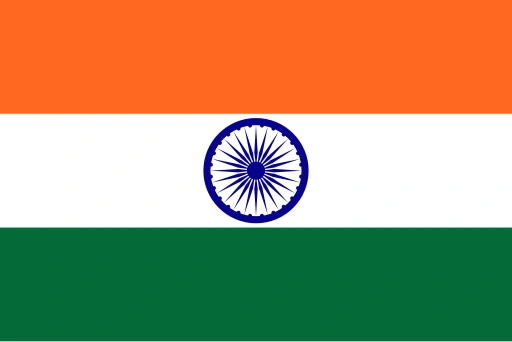 India vs
 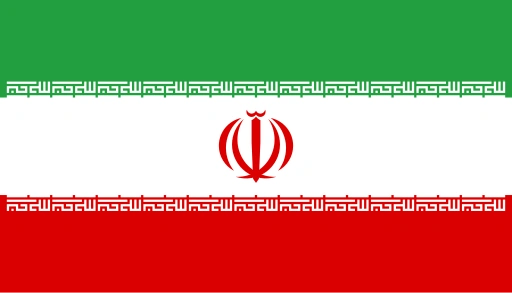 Iran
Iran