GlobalMilitary.net Open-source military intelligence Updated daily
Combat Aircraft ·Sukhoi

Su-30 Flanker-C

Russian multirole fighter, renowned for deployments since the 1990s, widely used in diverse combat operations worldwide. Key figures: top speed 2,125 km/h, range 3,000 km, service ceiling 17,500 m, max takeoff weight 33,000 kg, unit price $37M, built 630. In service with 12 air forces as of 2026 — India (259), China (97), Algeria (63) and 9 others.

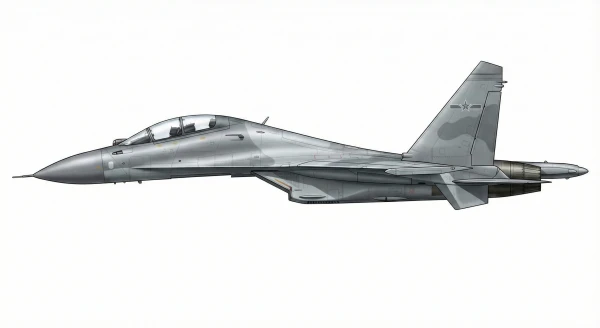
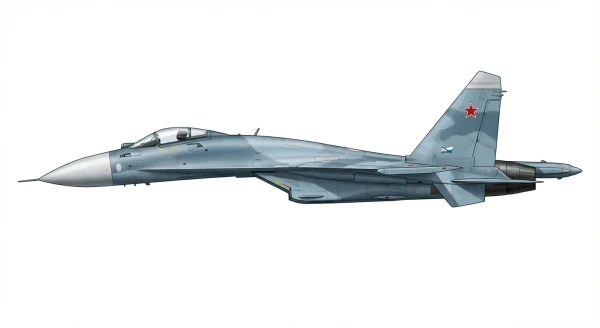
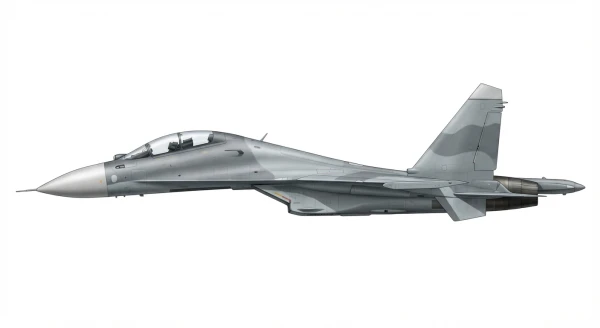
Sukhoi Su-30 Flanker-C combat aircraft side profile drawing
Side profile · Sukhoi Su-30 Flanker-C · length 21.9 m
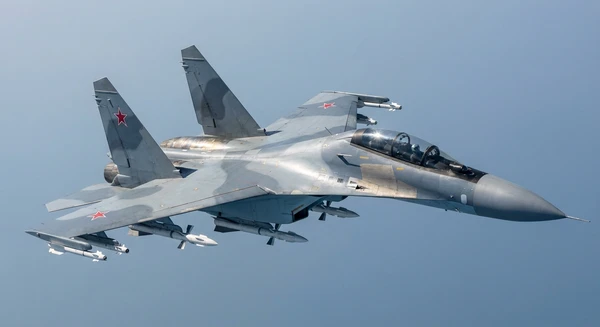
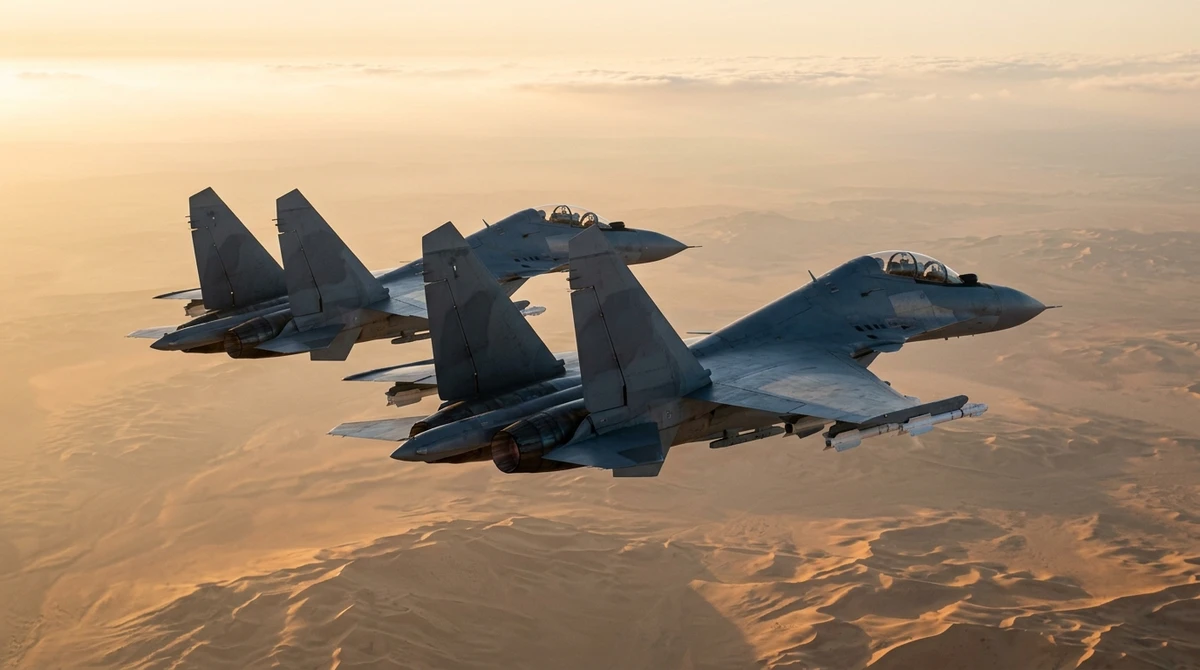
Sukhoi Su-30 Flanker-C combat aircraft in flight
Max speed
2,125km/h
Range
3,000km
Produced
630units
Avg unit price
$37 million
Active worldwide
504+25 on order
Technical SpecificationsVersion: Su-30 Flanker-C
Crew2 (pilot, WSO)
Length21.9 m (72.0 ft)
Wingspan14.7 m (48.2 ft)
Height6.4 m (20.9 ft)
Wing area62.0 m² (667.8 sqft)
Empty weight17,700 kg (39,022 lbs)
Max. takeoff weight33,000 kg (72,752 lbs)
Powerplant2 × turbofans Saturn AL-31FP 12,500 kgf each
Ejection seatZvezda K-36DM
PerformanceVersion: Su-30 Flanker-C
Maximum speed2125 km/h (Mach 2.12)
Operational range3,000 km (1,864 mi)
Service ceiling17,500 m (57,415 ft)
Climb rate230.0 m/s (754.6 ft/s)
Takeoff distance750 m (2,461 ft)
Operators — 2026
ActiveOn order
Russia-Ukraine War Updated daily
Losses logged
14
30 days to Sep 16
1
Latest loss
Aug 232026
Most losses
🇷🇺 Russia14 of 14
  1. Aug 232026 Damaged Su-27/30 · Vityazevo, Anapa, Krasnodar Krai, Russia
  2. Apr 32026 Crash Su-27/30 · Crimea
  3. Oct 172025 Destroyed Su-27/30 · Crimea
All Operators
🇦🇴 Angola· 🇦🇲 Armenia· 🇧🇾 Belarus· 🇨🇳 China· 🇩🇿 Algeria· 🇪🇹 Ethiopia· 🇮🇩 Indonesia· 🇮🇳 India· 🇲🇲 Myanmar· 🇲🇳 Mongolia· 🇲🇾 Malaysia· 🇷🇺 Russia· 🇺🇬 Uganda· 🇻🇪 Venezuela· 🇻🇳 Vietnam
Air Bases — 3
🇨🇳 Wuhu Air Base 9th Air Brigade 🇮🇩 Sultan Hasanuddin Air Force Base 5th Reconnaissance Squadron 🇷🇺 Chernyakhovsk Air Base 4th Guards Naval Attack Aviation Regiment (34th Composite Aviation Division, Baltic Fleet)
Similar Aircraft
Su-30 Flanker-C vs

Description

The Sukhoi Su-30 is a twin-engine, two-seat multirole fighter aircraft developed in the Soviet Union by Russia's Sukhoi Aviation Corporation during the 1980s. Designed for all-weather air-to-air interdiction and strike missions, the initial production aircraft were delivered to the Russian military in 1994. The aircraft is known for its supermaneuverability, long operational range, and widespread adoption across global air forces.

Development

Development began in 1986 under the Su-27PU programme to provide the Soviet Air Defense Forces with a long-range interceptor and airborne command post derived from the two-seat Su-27UB trainer. A demonstrator flew on 6 June 1987, followed by the first prototype flight on 31 December 1989 and the first pre-production model flight on 14 April 1992. The Russian Defense Ministry officially renamed the Su-27PU as the Su-30 in 1996. Production was subsequently split between two competing manufacturers under the Sukhoi umbrella: KnAAPO, which built variants for China and other nations, and the Irkut Corporation, which manufactured the Su-30MKI for India and derivatives for Russia, Malaysia, and Algeria.

Design

The Su-30 utilizes an integrated aerodynamic airframe with a two-seat tandem cockpit and an airbrake positioned behind the canopy. Power is supplied by two Saturn AL-31F afterburning low-bypass turbofans, each generating 122.6 kN of afterburning thrust to reach maximum speeds of Mach 2 at high altitude. Select sub-variants incorporate front canards and canted thrust-vectoring nozzles integrated with a digital fly-by-wire system, enabling high-angle-of-attack maneuvers such as Pugachev's Cobra, though canards increase drag and reduce top speed to Mach 1.75. Sensor suites depend on the variant and include the NIIP N011M Bars, Myech, or Irbis-E radars, paired with OEPS-27 electro-optical targeting systems and OLS-30 infrared search and track sensors.

Armament

The aircraft features 12 external hardpoints capable of carrying up to 8,000 kg of ordnance. Internal armament consists of a single 30 mm Gryazev-Shipunov GSh-30-1 autocannon loaded with 150 rounds. Air-to-air missile options include the R-27, R-73, RVV-AE (R-77), and R-37M, while air-to-surface weapons encompass Kh-29, Kh-59, Kh-31 anti-ship or anti-radiation missiles, S-8, S-13, and S-25 unguided rockets, alongside KAB-series guided bombs and FAB-series general-purpose bombs.

Operational History

The Russian Air Force received its initial Su-30 batch in 1994 for the 54th Guards Fighter Aviation Regiment, later procuring serial Su-30SM models for both aerospace and naval aviation units. Russian Su-30SM aircraft deployed to Khmeimim Air Base during the 2015 military intervention in Syria to execute escort missions and strike ground targets with unguided rockets. Su-30 fighters were subsequently deployed during the Russo-Ukrainian War for air superiority, strike duties, and escort operations, recording air-to-air engagements while incurring losses to surface-to-air missiles, secondary airfield strikes, and uncrewed systems. Major export operators include India, China, Algeria, Vietnam, Malaysia, Venezuela, Indonesia, Belarus, and Kazakhstan.

Variants

  • Su-30 (Su-27PU): Initial long-range interceptor and command post variant produced in limited numbers for Russian air defense units.
  • Su-30MKI: Multirole export variant for the Indian Air Force featuring thrust-vectoring control, canards, and integrated international avionics.
  • Su-30MKK: Dual-role strike fighter manufactured by KnAAPO for the Chinese Air Force featuring a modified radar and no canards.
  • Su-30SM: Modernized thrust-vectoring variant operated by Russian aerospace and naval forces equipped with N011M Bars radar and upgraded ejection seats.
  • Su-30MK2: Upgraded strike variant purchased by China, Vietnam, Uganda, and Indonesia with enhanced anti-ship missile capabilities and maritime strike avionics.
Wikipedia (CC BY-SA) and other open sources. Illustrations generated by AI. Last updated on 6 August 2026. Suggest a change

In the News

All news →
China-Taiwan Tensions 2020–2024

Identified in 486 sorties in the official China-Taiwan Tensions activity reports between 2020 and 2024 — a floor, not a census: only sorties the source identified by type are counted, and how much it disclosed varies by year.

Frequently Asked Questions

What type of aircraft is the Su-30 Flanker-C?
The Sukhoi Su-30 Flanker-C is a combat aircraft aircraft developed by Sukhoi and entered service in 1996.
What is the maximum speed of the Su-30 Flanker-C?
The Sukhoi Su-30 Flanker-C has a maximum speed of 2,125 km/h (Mach 1.7).
What is the range of the Su-30 Flanker-C?
The Sukhoi Su-30 Flanker-C has an operational range of 3,000 km (1,864 miles). This range can vary based on payload, altitude, and mission profile.
When did the Su-30 Flanker-C first fly?
The Sukhoi Su-30 Flanker-C made its first flight on December 30, 1989. It entered operational service in 1996.
How many Su-30 Flanker-C have been built?
Approximately 630 units of the Sukhoi Su-30 Flanker-C have been produced since it entered service in 1996.
Which countries operate the Su-30 Flanker-C?
The Sukhoi Su-30 Flanker-C is operated by 12 countries with approximately 504 aircraft in active service. The largest operators include India, China, and Algeria.
How much does a Su-30 Flanker-C cost?
The Sukhoi Su-30 Flanker-C has an estimated unit cost of approximately $37.0 million. Actual prices vary based on configuration, quantity ordered, and included support packages.
What is the service ceiling of the Su-30 Flanker-C?
The Sukhoi Su-30 Flanker-C has a service ceiling of 17,500 meters (57,414 feet). This is the maximum altitude at which the aircraft can maintain controlled flight.
Latest Data Updates
  1. AUG 62026 Updated Description updated
  2. AUG 52026 Updated Climb rate added; powerplant and thrust updated
  3. APR 72026 Updated Sources and cross-references refreshed
  4. JAN 242026 Updated Thrust updated