Su-35 Flanker-E
Russian multirole fighter, heralded from the late Cold War era, extensively deployed for air superiority and ground attack missions. Key figures: top speed 2,400 km/h, range 4,500 km, service ceiling 18,000 m, max takeoff weight 34,500 kg, unit price $83M, built 151. In service with 2 air forces as of 2026 — China (24), Algeria (9).
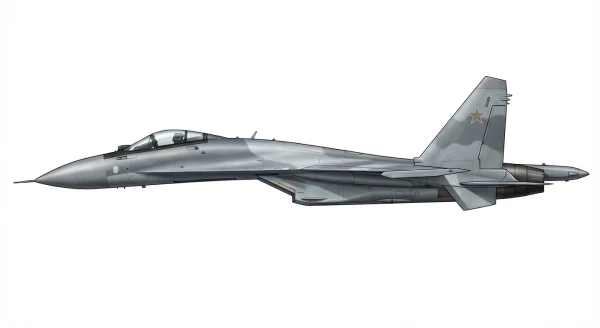
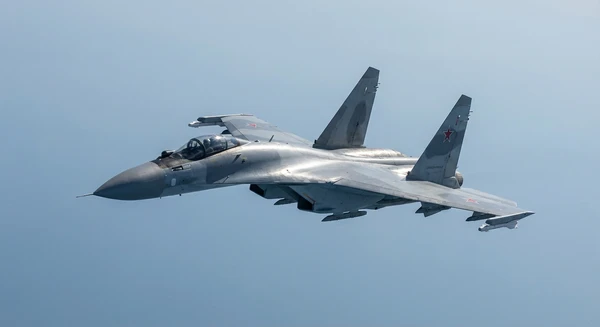
| Crew | 1 |
| Length | 21.9 m (71.9 ft) |
| Wingspan | 15.3 m (50.2 ft) |
| Height | 5.9 m (19.4 ft) |
| Wing area | 62 m² (667.4 sqft) |
| Empty weight | 19,000 kg (41,888 lbs) |
| Max. takeoff weight | 34,500 kg (76,059 lbs) |
| Powerplant | 2 × turbofans Saturn AL-41F1S 14,000 kgf each |
| Ejection seat | Zvezda K-36D-5 |
| Maximum speed | 2400 km/h (Mach 2.4) |
| Operational range | 4,500 km (2,796 mi) |
| Service ceiling | 18,000 m (59,055 ft) |
| Climb rate | 280.0 m/s (918.6 ft/s) |


- Air-to-Air Long-Range Vympel R-27 / K-27 (AA-10 Alamo)
- Air-to-Air Short-Range Vympel R-73 (AA-11 Archer)
- Air-to-Air Medium-Range Vympel R-77 RVV-AE (AA-12 Adder)
- Air-to-Air Long-Range Vympel R-37 (AA-13 Arrow)
- Air-to-Surface Vympel Kh-29 (AS-14 Kedge)
- Anti-Radiation Vympel Kh-31 Taifun (AS-17 Krypton)
- Air-to-Surface Raduga Kh-59M Ovod-M (AS-18 Kazoo)
- Anti-Radiation Raduga Kh-58 (AS-11 Kilter)
- Air-to-Surface Zvezda Kh-35 Uran (AS-20 Kayak)
- Low-Drag FAB-250
- Low-Drag JSC NPO Basalt FAB-500
- Guided KAB-500
- Guided KAB-1500
- Pods Cluster KMGU-2
Recent Events — Su-35 Flanker-E
10 events →-
SEP 72026
 Russia
×2
Two Su-35S collided in mid-air over Kursk Oblast; one pilot killed, the other ejected with serious injuries.
Crash
Russia
×2
Two Su-35S collided in mid-air over Kursk Oblast; one pilot killed, the other ejected with serious injuries.
Crash
-
AUG 272026
Russia
×2
UAC handed over at least two Su-35S from Komsomolsk-on-Amur; third publicly announced batch of 2026 for the Aerospace Forces.
Delivered
-
JUL 82026
Russia
Su-35 shot down near Mostky, Luhansk Oblast, ~42km from the front line; pilot ejected safely.
Shot down
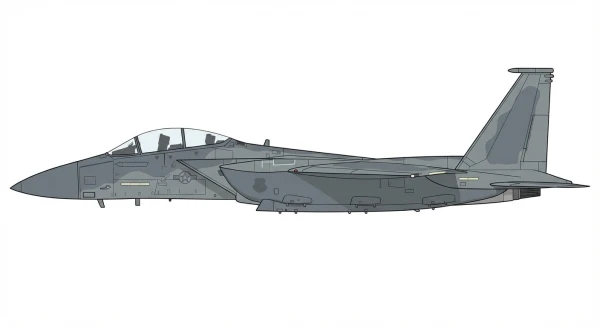
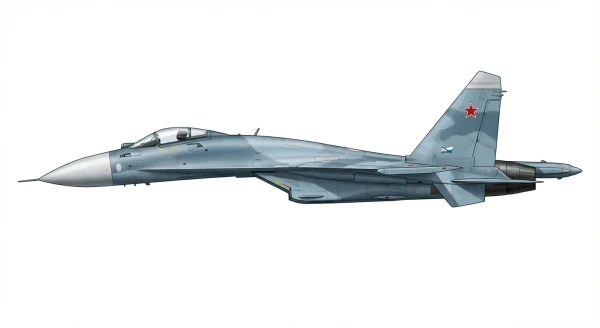
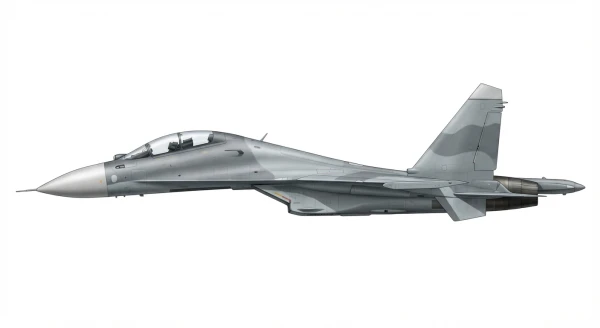
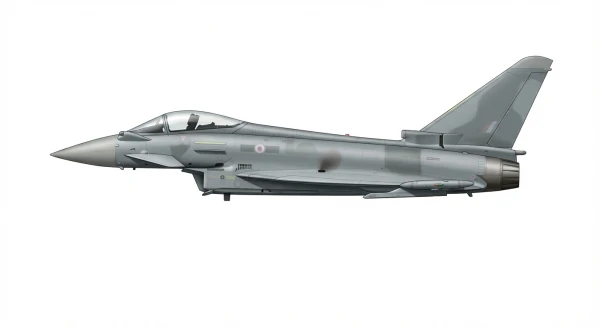
Description
The Sukhoi Su-35 (NATO reporting name Flanker-E/M) is a single-seat, twin-engine, 4.5-generation multirole fighter developed by Russia's Sukhoi Design Bureau and produced by KnAAZ. Evolving from two modernizations of the Su-27 air superiority fighter, the aircraft entered Russian operational service in February 2014. The Su-35 is recognized for its supermaneuverability, thrust-vectoring engines, and post-stall flight envelope capabilities.
Development
Development began in December 1983 as the Su-27M (factory code T-10M) project to construct a multirole Su-27 derivative, making its first flight on June 28, 1988. Relabeled Su-35 in 1992 for export marketing, 14 test and demonstration airframes were built before the original program stalled due to lack of funding. In December 2003, Sukhoi initiated the T-10BM modernization to serve as an interim fighter pending the introduction of the Su-57. The T-10BM prototype made its maiden flight on February 19, 2008, leading to an initial order of 48 production aircraft designated Su-35S for the Russian Aerospace Forces in 2009.
Design
The airframe incorporates composite materials, titanium, and aluminium-lithium alloys. Power is provided by two Saturn AL-41F1S afterburning turbofans with canted thrust-vectoring nozzles, which enable high-angle-of-attack maneuvering and supercruise at speeds above Mach 1.1. Sensor and avionics suites center on the N035 Irbis-E passive electronically scanned array radar capable of tracking 30 airborne targets at ranges up to 400 km, an OLS-35 infra-red search and track system, and the L175M Khibiny-M electronic countermeasures system managed via a glass cockpit with HOTAS controls.
Armament
Internal armament consists of a single 30 mm Gryazev-Shipunov GSh-30-1 autocannon with 150 rounds. Twelve external hardpoints accommodate up to 8,000 kg of payload, including R-27, R-73, R-77M, and R-37 air-to-air missiles. Air-to-surface weapons include Kh-29, Kh-31, and P-800 Oniks missiles, alongside KAB-500 and KAB-1500 guided bombs.
Operational History
The Su-35S achieved full operational capability with Russia in late 2018. It saw its initial combat deployment to Syria in January 2016, operating from Khmeimim Air Base to perform air defense and strike missions. Russian Su-35S aircraft were deployed during the 2022 invasion of Ukraine, sustaining combat losses to surface-to-air missiles while recording aerial victories against Ukrainian aircraft. Export deliveries include 24 aircraft to China between 2016 and 2018 and deliveries to Algeria in 2025.
Variants
- Su-27M / Su-35: Single-seat modernization of the Su-27 featuring canards, taller vertical tails, and an N011 Bars radar, with 14 test airframes constructed between 1988 and 1995.
- Su-37: A single technology demonstrator converted from a Su-27M prototype to evaluate digital fly-by-wire controls and thrust-vectoring engine nozzles.
- Su-35UB: A two-seat trainer prototype combining Su-27M canards with a Su-30MKK forward airframe and thrust-vectoring engines.
- Su-35BM: Single-seat redesign concept that eliminated canards, integrated AL-41F1S engines, and introduced the Irbis-E radar.
- Su-35S: Serial production variant for the Russian Aerospace Forces equipped with the Sh135 weapons control complex and thrust-vectoring propulsion.
Identified in 2 sorties in the official China-Taiwan Tensions activity reports between 2022 and 2022 — a floor, not a census: only sorties the source identified by type are counted, and how much it disclosed varies by year.
Frequently Asked Questions
What type of aircraft is the Su-35 Flanker-E?
What is the maximum speed of the Su-35 Flanker-E?
What is the range of the Su-35 Flanker-E?
When did the Su-35 Flanker-E first fly?
How many Su-35 Flanker-E have been built?
Which countries operate the Su-35 Flanker-E?
How much does a Su-35 Flanker-E cost?
What is the service ceiling of the Su-35 Flanker-E?
- AUG 132026 Updated First flight corrected to the Su-35S maiden flight
- AUG 122026 Updated Range corrected to the ferry range with 2 external tanks
- AUG 62026 Updated Description updated
- AUG 52026 Updated Climb rate added; wingspan, height and 6 more fields updated
- JUN 262026 Updated Bombs and missiles added
- APR 72026 Updated Sources and cross-references refreshed
- APR 52026 Updated Ejection seat added