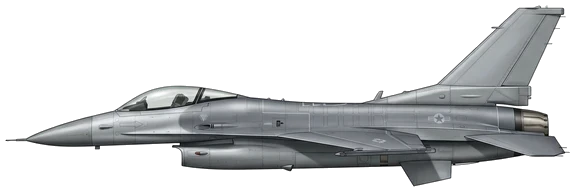
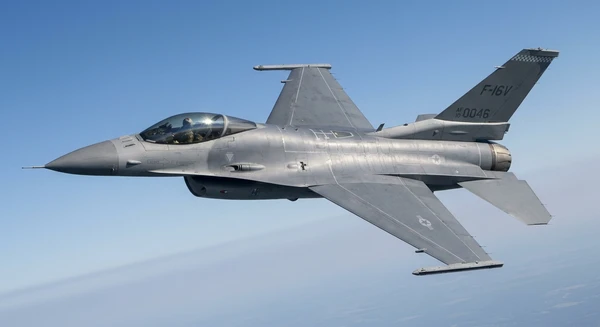
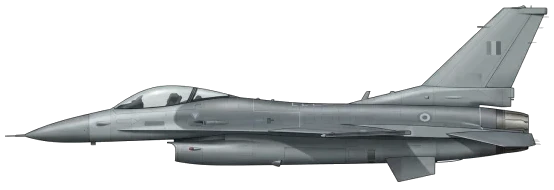
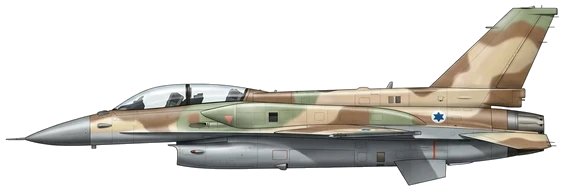
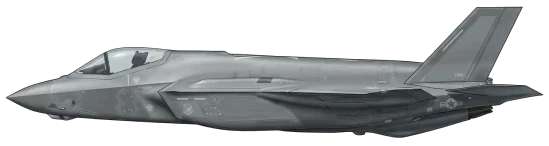
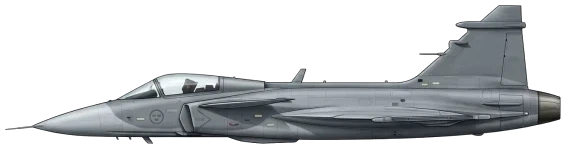
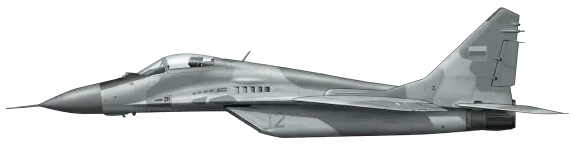
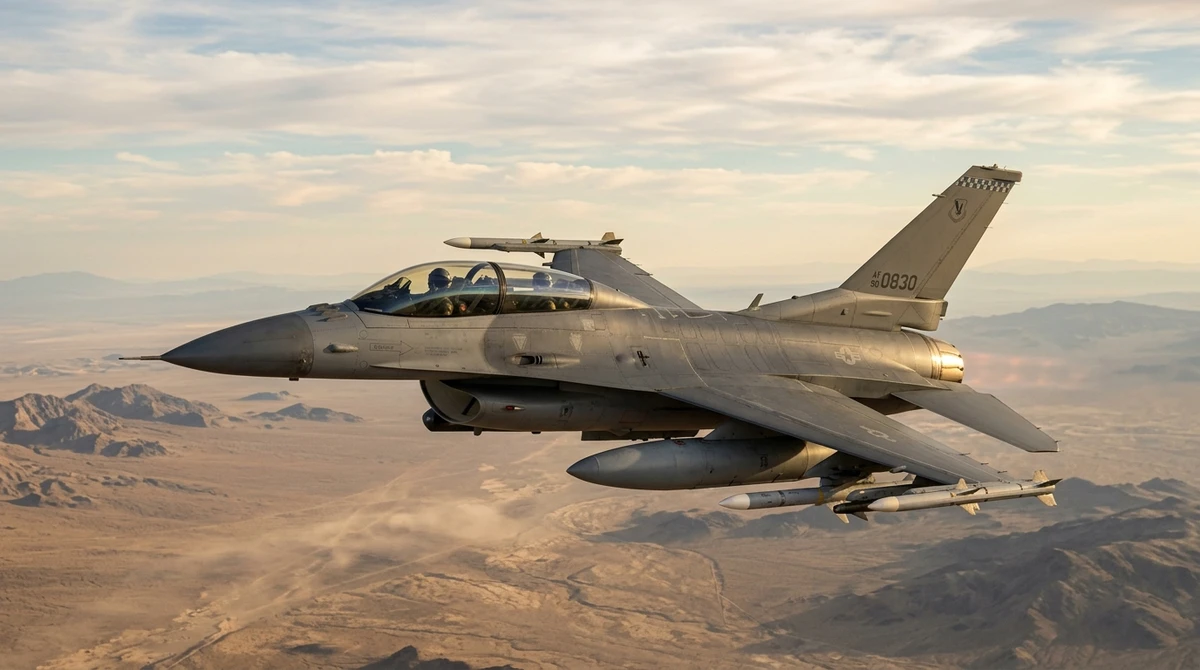
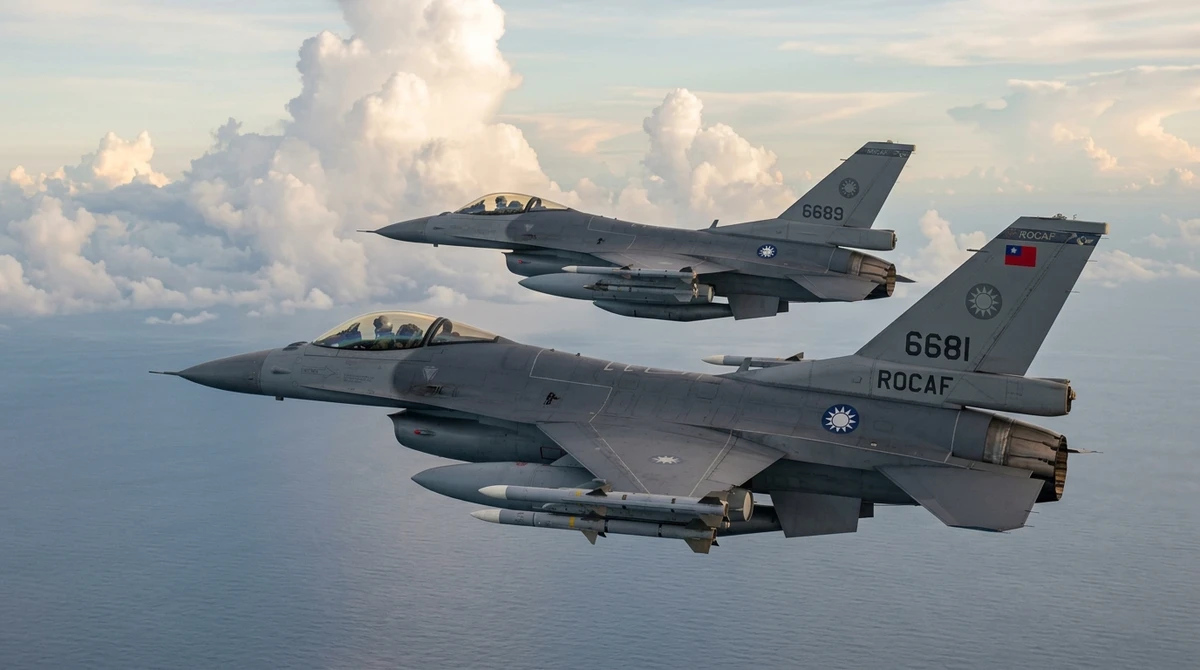
The F-16V "Viper" is the current-production and current-upgrade standard of the Lockheed Martin F-16 Fighting Falcon, a single-engine multirole fighter built in the United States. It exists as newly built F-16C/D Block 70 and Block 72 aircraft and as a retrofit package applied to earlier F-16A/B and F-16C/D airframes. Block 70 uses the General Electric F110-GE-129 and Block 72 the Pratt & Whitney F100-PW-229, both in the 29,000 lbf (129 kN) afterburning class; the blocks are otherwise identical. The retrofit entered service with the Republic of China Air Force from 2018; the first new-build Block 70 was delivered in 2023.
Development
Lockheed Martin unveiled the F-16V at the Singapore Airshow on 15 February 2012, bundling the AN/APG-83 radar, a new mission computer and avionics architecture, and cockpit changes. The name draws on the "Viper" nickname used by F-16 crews since the 1970s; it is distinct from the earlier F-16IN "Super Viper" offered to India. The demonstrator flew on 16 October 2015 with the APG-83 Scalable Agile Beam Radar, Center Pedestal Display, modernized mission computer and Automatic Ground Collision Avoidance System. Taiwan was the first retrofit customer, converting 141 F-16A/B Block 20 aircraft (144 planned) in a program completed in late 2023. New-build production moved from Fort Worth, Texas, to Greenville, South Carolina, where the first Block 70, a Royal Bahraini Air Force aircraft, flew on 24 January 2023 and was delivered that March. By 2026 Lockheed Martin was working toward four aircraft a month against a backlog exceeding one hundred jets.
Design
The Block 70/72 retains the Block 50/52 airframe and engines. The Northrop Grumman AN/APG-83 SABR shares hardware and software with the F-22 and F-35 radars, tracking more than twenty targets simultaneously and providing synthetic aperture mapping and interleaved air-to-air and air-to-surface modes; Northrop Grumman claims reliability three to five times that of the APG-68. The cockpit adds a 6 x 8 in Center Pedestal Display with colour moving maps and digital flight instrument data. Other equipment includes a high-capacity Ethernet databus, Auto GCAS, a Martin-Baker US18E ejection seat, Link 16, and provision for the Sniper targeting pod and Legion-ES IRST. New-build aircraft have a 12,000-hour structural service life, a maximum take-off weight of 48,000 lb (21,772 kg) and optional conformal fuel tanks; retrofits receive avionics only.
Armament
The aircraft retains the 20 mm M61A1 cannon and eleven stations. Air-to-air weapons include the AIM-120 AMRAAM and AIM-9X; strike and anti-ship options include the AGM-88 HARM, AGM-65 Maverick, AGM-84 Harpoon and AGM-84H/K SLAM-ER. Guided munitions comprise GBU-31 and GBU-38 JDAM, GBU-39/B SDB, AGM-154 JSOW and Paveway II/III series, alongside Mk 82 and Mk 84 bombs.
Operational History
Taiwan's 141 upgraded aircraft entered service progressively from 2018, with the first converted wing commissioned at Chiayi Air Base in November 2021. Taiwan ordered 66 new-build Block 70 aircraft in 2019 under an $8 billion package; the first two arrived at Chihhang Air Base on 2 October 2026 after delays at Greenville. Bahrain ordered 16 aircraft in June 2018 under a $1.12 billion contract. Slovakia ordered 14 in December 2018 to replace MiG-29s, receiving two in July 2024, with production completed in December 2025. Bulgaria ordered eight aircraft in 2019 and eight in 2022. Greece is upgrading 83 Block 52+ aircraft to the F-16V configuration, receiving the 60th in September 2026; parliament approved a second phase for 38 Block 50s in December 2025. South Korea is upgrading 134 KF-16C/D. Morocco ordered 24 new aircraft and 23 upgrades; its first Block 72, a two-seat F-16D, made the variant's maiden flight at Greenville in October 2026. Jordan ordered 12, Turkey 40 and Peru 12; the Philippines was cleared for 20 in 2025.
Variants
- F-16C/D Block 70: New-build aircraft with the General Electric F110-GE-129 engine.
- F-16C/D Block 72: New-build aircraft with the Pratt & Whitney F100-PW-229 engine.
- F-16V upgrade: Retrofit of Block 70/72 avionics to existing F-16A/B Block 20 and F-16C/D Block 50/52 airframes, as applied by Taiwan, Greece and South Korea.