GlobalMilitary.net Open-source military intelligence Updated daily
Asia ยท New Delhi

India Military Forces

Open-source order of battle for 2026: 1,475,750 active troops, 2,217 aircraft, 350 warships, 15,413 ground vehicles, 180 nuclear warheads.

World rank #4 Military index 69.0/100
Map of India Flag of India
Active troops
1.5M
Reserve troops
1.2M
Defense budget
$78.2B2024
Share of GDP
2.0%
Population
1450.9M2024

Armed Forces in 2026

Domain Strength Composition
Air Force 2,217 aircraft 588 combat 993 helicopters 68 air bases +587 on order
Indian Navy 350 warships 52 major combatants 2 carriers 19 submarines
Ground Forces 15,413 vehicles 4,201 main battle tanks
Nuclear Forces 180 warheads Air, Sea, Land Active
Personnel 1,475,750 active 1,155,000 reserve 1,616,050 paramilitary

Global Military Index

Full ranking โ†’
Score & Pillar Breakdown World #4
69.0/ 100
The Global Military Index scores India's overall capability on a 0โ€“100 scale from verifiable data across six pillars: manpower, ground forces, naval power, air power, nuclear deterrent and defense budget, with a readiness modifier derived from budget per soldier.
Pillar Weight Score Basis
Manpower 15% 97.9 Active, reserve & paramilitary personnel
Ground forces 20% 79.5 Tanks, armor & artillery weighted by type
Naval power 20% 74.1 Weighted by hull type: carrier tiers, nuclear vs conventional submarines
Air power 25% 75.7 Weighted by aircraft type and fleet age
Nuclear deterrent 10% 44.6 Warhead count with delivery-mode modifiers
Defense budget 10% 84.2 Annual spending, purchasing-power adjusted
Readiness modifier ×1.02 Budget per soldier: proxy for training, maintenance & technology

Country File

Defense Statistics & Key Metrics
Population1450.9M (2024)
GDP$3.9 trillion (2024)
GDP per capita$2,695
Military budget$78.2 billion (2024)
Share of GDP2.0% (2024)
Military spending per capita$54 (2024)
Inflation rate4.95% (2024)
Military Budget History CIA World Factbook
2020 โ€” $67B, 2.50% of GDP $67B 2020 2021 โ€” $70B, 2.20% of GDP $70B 2021 2022 โ€” $70B, 2.10% of GDP $70B 2022 2023 โ€” $84B, 2.30% of GDP $84B 2023 2024 โ€” $78B, 2.00% of GDP $78B 2024
Budget (US$) Share of GDP (0-2.5%)
Geography
CapitalNew Delhi
RegionAsia
Land area2,973,190 kmยฒ
Coastline7,000 km
Land borders14,209 km
Bordering countries6
CurrencyINR
National Flag Adopted 1947
Flag of India
Aspect ratio2:3
ColorsBlue, green, white, orange
Compare this Country
๐Ÿ‡ฎ๐Ÿ‡ณ India vs

Strategic Overview in 2026

Strategic Position

India maintains a territorial presence in South Asia, bordering Pakistan to the west and China to the north and east. Security policy is primarily shaped by the management of the Line of Control (LoC) with Pakistan and the Line of Actual Control (LAC) with China. India is a member of the Quadrilateral Security Dialogue (Quad) alongside the United States, Japan, and Australia, and participates in the Shanghai Cooperation Organisation (SCO).

Military doctrine centers on a "two-front" contingency capability. Nuclear posture is defined by Credible Minimum Deterrence and a No-First-Use (NFU) policy. Strategic command is vested in the Cabinet Committee on Security (CCS), with the Chief of Defence Staff (CDS) providing integrated military advice to the government.

Military Forces

The Indian Armed Forces consist of the Army, Navy, and Air Force, supported by the Indian Coast Guard and various paramilitary organizations.

  • The Indian Army comprises approximately 1.2 million active personnel and 1 million reserve personnel. It is organized into operational commands, including a dedicated training command. Primary equipment includes T-90S Bhishma and T-72M1 Ajeya main battle tanks, Arjun Mk-1A tanks, and BMP-2 Sarath infantry fighting vehicles. Artillery assets include K9-Vajra self-propelled howitzers, M777 ultra-light howitzers, and Pinaka multi-barrel rocket launchers.
  • The Indian Navy operates a fleet designed for blue-water operations. It maintains two aircraft carriers, the INS Vikrant and INS Vikramaditya. Submarine assets include the Kalvari-class (Scorpene) diesel-electric attack submarines and the Arihant-class nuclear-powered ballistic missile submarines (SSBNs). Surface combatants include Visakhapatnam-class and Kolkata-class stealth guided-missile destroyers, and Shivalik-class frigates.
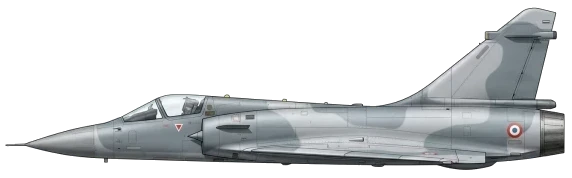
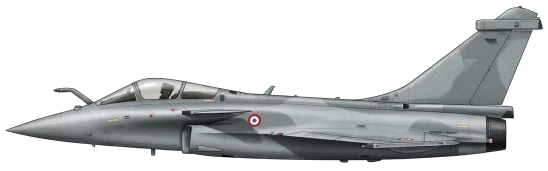
  • The Indian Air Force (IAF) operates a mix of multi-role fighters, including the Rafale, Su-30MKI, MiG-29, Mirage 2000, and the indigenous Tejas Light Combat Aircraft (LCA). The transport fleet utilizes C-17 Globemaster III, C-130J Super Hercules, and Il-76 aircraft. Rotary assets include AH-64E Apache attack helicopters and CH-47F Chinook heavy-lift helicopters.
  • Specialized capabilities include the Strategic Forces Command (SFC), which manages the nuclear triad (Agni and Prithvi missiles). The Defence Cyber Agency (DCyA) and the Defence Space Agency (DSA) handle non-kinetic operations. Paramilitary forces under the Ministry of Home Affairs, such as the Border Security Force (BSF) and Central Reserve Police Force (CRPF), provide internal security and border management.

Defense Industry

Indiaโ€™s defense industry is undergoing a transition toward indigenization under the "Aatmanirbhar Bharat" (Self-Reliant India) initiative.

  • Domestic production is led by Defence Public Sector Undertakings (DPSUs) such as Hindustan Aeronautics Limited (HAL), Bharat Electronics Limited (BEL), and Mazagon Dock Shipbuilders Limited.
  • Major indigenous platforms include the Tejas fighter, the Dhruv Advanced Light Helicopter (ALH), and the BrahMos supersonic cruise missile, the latter produced through a joint venture with Russia.
  • The Ministry of Defence issues "Positive Indigenization Lists" which mandate the domestic procurement of specific weapons systems and components, effectively banning their import.
  • Export programs have expanded in 2025, with India supplying BrahMos missiles to Southeast Asian nations and seeking international markets for the Tejas LCA and Pinaka rocket systems.

Strategic Trends

The Indian military is currently implementing structural and recruitment reforms.

  • The "Agnipath" scheme, introduced recently, serves as the primary model for recruiting personnel below officer rank on short-term four-year contracts.
  • A reorganization into integrated theater commands is ongoing as of 2025, aimed at consolidating the independent command structures of the Army, Navy, and Air Force into unified geographical commands.
  • Modernization priorities for 2025 and 2026 include the procurement of Multi-Role Fighter Aircraft (MRFA) for the Air Force and the development of the Advanced Medium Combat Aircraft (AMCA) fifth-generation fighter.
  • Naval procurement focuses on the Project 75I submarine program and the potential acquisition of a third aircraft carrier.
  • Defense spending for the 2025-2026 period is estimated at approximately 1.9% to 2.1% of GDP.

Indian Defense Manufacturing

Designed in India
Naval Shipbuilding 21 classes
Veer CorvetteKumbhir Tank landing shipMk IV LCU Utility landing craftNilgiri Guided-missile frigateSaryu Offshore patrol vesselKora Guided-missile corvetteAbhay CorvetteArihant Nuclear-powered ballistic missile submarineKamorta Anti-submarine corvetteKhukri CorvetteVisakhapatnam Guided-missile destroyerBrahmaputra Guided-missile frigateDelhi Guided-missile destroyerGodavari Guided-missile frigateKolkata Guided-missile destroyerShardul Tank landing shipShivalik Guided-missile frigateMagar Amphibious warfare vesselDhruv Ocean surveillance and missile tracking shipVikramaditya Aircraft carrierVikrant Aircraft carrier
Military Vehicles 1 model
Arjun Heavy Main Battle Tank
Missile Systems 13 systems
Akash Surface-to-AirAgni-I BallisticPrithvi-II BallisticAgni-II BallisticASTRA Air-to-AirAgni-III BallisticAgni-IV BallisticAgni-Prime BallisticAgni-V BallisticBarak 8 Surface-to-AirBrahMos Anti-ShipK-100 Air-to-AirNirbhay Cruise
Firearms 3 models
AK-203 Assault rifleINSAS Assault rifleJVPC Submachine gun

In the News

All news โ†’
Illustration
AUG 3, 2026

Seven Navies Keep 45 Ballistic Missile Submarines in Service, GlobalMilitary.net Data Shows

The United States and Russia hold 27 of the world's 45 operational ballistic missile submarines. Five other navies field the remaining 18, and every established fleet is being replaced at the same time.

๐Ÿ‡จ๐Ÿ‡ณ ๐Ÿ‡ซ๐Ÿ‡ท ๐Ÿ‡ฌ๐Ÿ‡ง ๐Ÿ‡ฎ๐Ÿ‡ณ ๐Ÿ‡ฐ๐Ÿ‡ต ๐Ÿ‡ท๐Ÿ‡บ ๐Ÿ‡บ๐Ÿ‡ธ

Frequently Asked Questions

How large is India's military?
India has 1,475,750 active military personnel with an additional 1,155,000 in reserve. This includes army, navy, and air force service members.
What is India's defense budget?
India's annual defense budget is approximately $78.2 billion. This covers personnel costs, equipment procurement, operations, and maintenance of military forces.
How does India rank militarily in the world?
India ranks #4 globally on the Global Military Index with a score of 69.0 out of 100. This composite index measures military capability across manpower, ground forces, naval power, air power, nuclear deterrent, and defense budget, adjusted for equipment quality and readiness.
Does India have nuclear weapons?
Yes, India is a nuclear-armed state with approximately 180 nuclear warheads.
How many aircraft does India's air force have?
India operates 2,217 military aircraft including 588 combat aircraft. The fleet includes fighters, transport planes, helicopters, and training aircraft.
How large is India's navy?
India's navy operates 350 vessels including 19 submarines and 2 aircraft carrier(s). The fleet includes surface combatants, support ships, and coastal patrol craft.
How many tanks does India have?
India operates approximately 4,201 main battle tanks. This figure includes both active inventory and reserve stocks available for mobilization.
What percentage of GDP does India spend on defense?
India spends approximately 2.0% of its GDP on defense. This meets the NATO target of 2% of GDP.
What is India's military personnel per capita?
India has approximately 1.0 active military personnel per 1,000 citizens. This ratio reflects the country's military manpower relative to its population of 1,450,935,791.
Does India have submarines?
Yes, India operates 19 submarines. The submarine fleet may include nuclear-powered attack submarines, ballistic missile submarines, and conventional diesel-electric boats depending on the country's naval doctrine.
Does India have aircraft carriers?
Yes, India operates 2 aircraft carrier(s). Aircraft carriers provide significant power projection capability and serve as mobile air bases for naval aviation operations worldwide.
Does India have paramilitary forces?
Yes, India maintains 1,616,050 paramilitary personnel. These forces typically include gendarmerie, border guards, coast guard, and internal security troops that supplement regular military capabilities.
Population, GDP, Inflation and Personnel: World Bank.
Military Expenditure: CIA World Factbook. Suggest a change