Milei Escalates Falklands Dispute: How UK and Argentine Forces Compare in 2026
Argentina's president announced sanctions, a sovereignty bill and a new naval base near the Falklands on September 3 — while GlobalMilitary.net data show the UK holding a 23-to-1 defense budget advantage and a decisive edge at sea and in the air.

President Javier Milei of Argentina sharply escalated the dispute over the Falkland Islands in a nationally televised address on Thursday, September 3, declaring that "Argentina will not stand idly by" and that "any further advance on the Malvinas Islands will be considered a violation of our national security," the Associated Press reported.
According to the Buenos Aires Times, Milei announced a package of measures:
- tighter sanctions on companies involved in oil projects around the islands;
- additional defense resources for Argentina's south;
- a bill to Congress on responses to violations of sovereignty;
- extra funding for a new naval base in Tierra del Fuego, the province closest to the islands.
"We can argue about my style. We can disagree over fiscal or exchange-rate policy. But there are causes that rise above any political difference. The Malvinas is one of them," Milei said, according to the AP.
The immediate trigger is the Sea Lion deep-water oil project about 220 km north of the islands, operated by Britain's Rockhopper Exploration and Israel's Navitas Petroleum, with drilling planned in the coming months and production targeted for 2028, the AP reported.
US President Donald Trump, asked in a GB News interview whether Washington could reconsider its neutral stance on the islands' sovereignty, said, "I always review every position. That's just one of many," according to the AP. Trump also complained that Britain "was not there to help me" in the US-led bombing campaign against Iran, calling it "pretty sad, the whole thing." Milei, for his part, told viewers that "the United States is considering this change in position because it knows that Argentina has a reliable partner, aligned with Western values, in a strategically important position that can be a valuable ally in the decades to come," per the AP.
London pushed back. A spokesperson for British Prime Minister Andy Burnham said that "sovereignty rests with the U.K., and the islanders' right to self-determination is paramount," the AP reported, while Downing Street said the islanders "have expressed their wish to remain a British overseas territory and our commitment to them is unwavering," according to Newsweek. The two countries fought a ten-week war over the islands in 1982.
Behind the rhetoric, GlobalMilitary.net data show a lopsided military balance. The United Kingdom ranks eighth in the global military power ranking with an ATLAS Index score of 52.5, while Argentina ranks 52nd at 29.4. The UK's $88.5 billion defense budget is 23 times Argentina's $3.8 billion, and it fields 144,400 active troops to Argentina's 72,100 — a gap detailed in the full country comparison.
The air balance follows the same pattern. The UK flies 673 active military aircraft, including 111 Eurofighter Typhoons, alongside 40 F-35B Lightning IIs with 22 more on order. Argentina fields 221 active aircraft, and its only supersonic combat jets are the six F-16AM/BM fighters delivered from Denmark in December 2025, with 18 more due through 2028. Its A-4AR Skyhawks were retired on May 14, 2026, after sixty years, and the navy's Super Etendard was formally retired in August 2026. The full air force comparison sets the two inventories side by side.
At sea, the Royal Navy operates two Queen Elizabeth-class aircraft carriers, 11 major escorts — six destroyers and five frigates — and 10 submarines, including the nuclear-powered Astute class. That escort force is itself historically thin, as GlobalMilitary.net reported this week. Argentina's fleet centers on three destroyers and six corvettes — German-built MEKO-class vessels dating from the 1980s — with no aircraft carrier, and both of its submarines are inactive in reserve; the navy comparison lays out the balance hull by hull.
Attention now turns to the Sea Lion schedule, with drilling planned in the coming months and production targeted for 2028, and to Buenos Aires, where Milei's announced sovereignty bill heads to Congress and funding has been pledged for the new naval base in Tierra del Fuego.
More News
All news →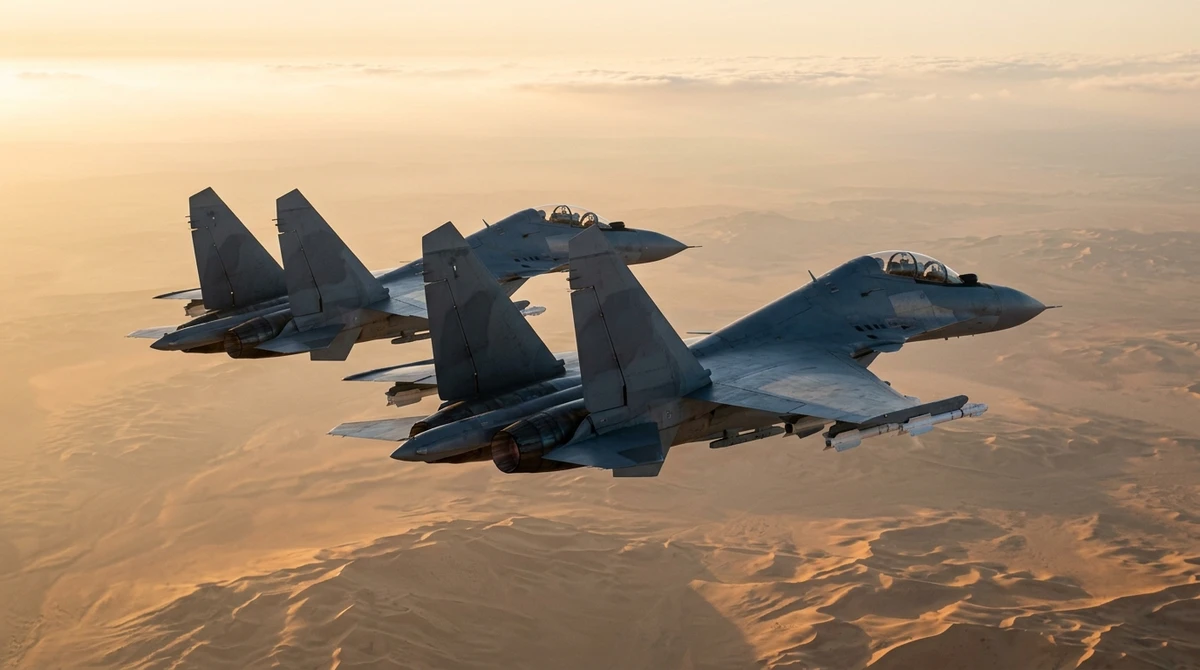
Algeria Flies Four Su-30s and a Tanker Into Niamey After the Failed Mutiny in Niger
Four Algerian Air Force Su-30MKA fighters and an Il-78 tanker landed at Niamey's Diori Hamani International Airport on August 30, 2026, a day after Nigerien forces put down a mutiny by soldiers in the capital, in what AeroTime calls a rare overseas combat deployment for Algeria.
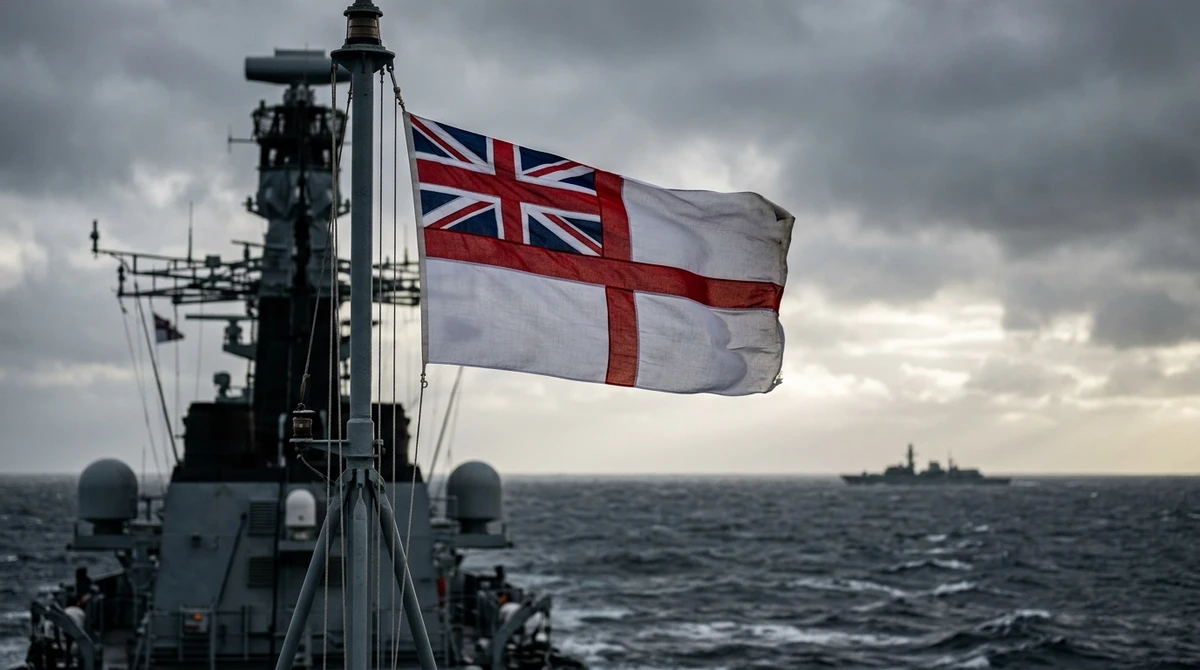
Royal Navy Down to 11 Escorts, Fewer Than Greece, as Type 45 Extension Study Is Confirmed
A written parliamentary answer on 27 August 2026 confirmed funding for a study into extending the Type 45 destroyers, as GlobalMilitary.net's 2026 snapshot lists the Royal Navy at 11 active destroyers and frigates, down from 14 a year earlier.
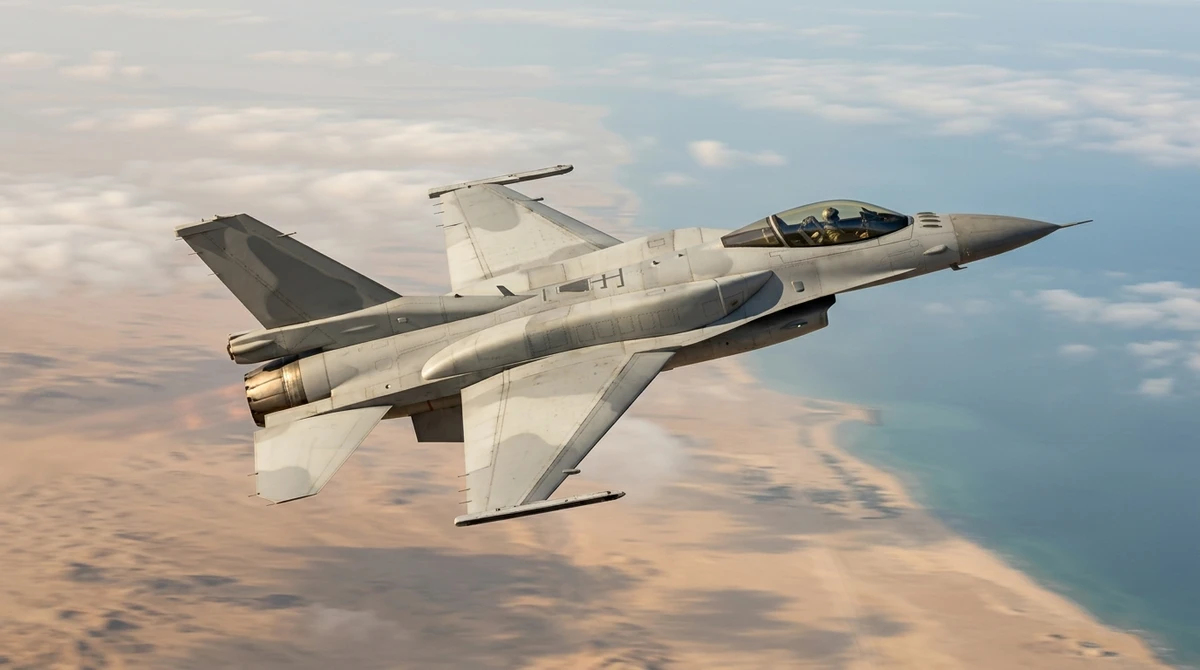
Iran Claims Drone Strikes on Al Minhad Air Base, UAE Denies Its Base Was Targeted
Iran's army said it attacked Al Minhad Air Base in the United Arab Emirates with drones on August 31, 2026. The Emirati defense ministry denied the base was targeted and said its air force engaged a drone approaching from Iran.
UK Clears MBDA to Give Ukraine Storm Shadow Blueprints for Battlefield AI Data
British Prime Minister Andy Burnham authorized MBDA on August 24 to release technical data on the UK-controlled components of the Storm Shadow and SCALP cruise missile, according to Breaking Defense, unblocking Ukrainian production of a weapon whose donor stockpiles are close to exhausted.
Ukraine Parades Nine Naval Drones on the Dnipro, from Air-Defense Fits to a Drone Carrier
Kyiv's 35th Independence Day parade on 24 August 2026 carried no tanks and no marching troops: nine unmanned surface vessels ran down the Dnipro, in air-defense, drone-carrier, rocket-artillery and strike configurations that show Ukraine's sea drones splitting into specialized roles.
The US Navy Fields Four Minesweepers to Europe's 157, and Sailed Two From Japan to Hormuz
The United States decommissioned its four Bahrain-based Avenger-class mine hunters in September 2025 and shipped the hulls home in January 2026. When Iran began mining the Strait of Hormuz two months later, according to CENTCOM, the Navy had to sail two of its last four minesweepers from Japan.