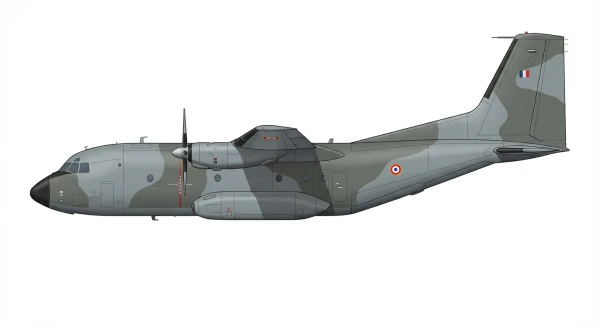
G.222
Italian tactical military transporter, produced during the Cold War, notably employed by NATO and UN peacekeeping missions. Key figures: top speed 540 km/h, range 1,371 km, service ceiling 7,620 m, max takeoff weight 28,000 kg, built 111.
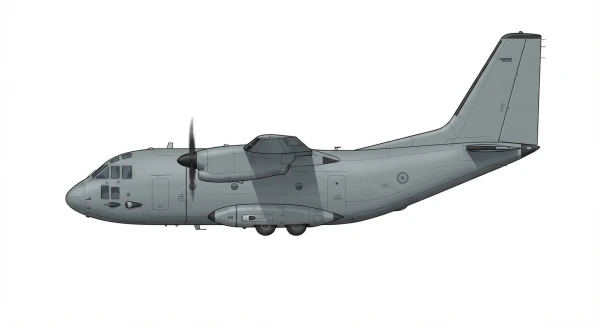
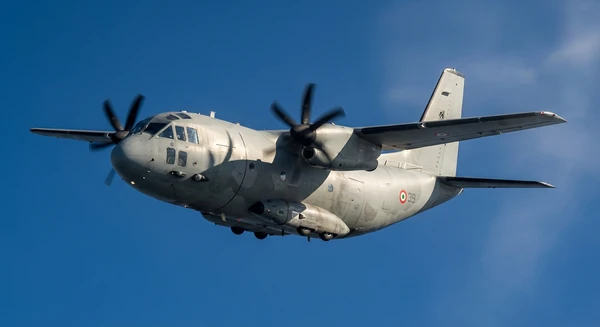
| Length | 22.7 m (74.5 ft) |
| Wingspan | 28.7 m (94.2 ft) |
| Height | 9.8 m (32.2 ft) |
| Wing area | 82 m² (882.6 sqft) |
| Empty weight | 15,400 kg (33,951 lbs) |
| Max. takeoff weight | 28,000 kg (61,729 lbs) |
| Powerplant | 2 × turboprops General Electric T64-GE-4PD 2,501 kW each |
| Maximum speed | 540 km/h (336 mph) |
| Operational range | 1,371 km (852 mi) |
| Service ceiling | 7,620 m (25,000 ft) |
| Climb rate | 8.6 m/s (28.2 ft/s) |
| Takeoff distance | 662 m (2,172 ft) |
Description
During 1992, Alenia Aermacchi signed a cooperation agreement with Russian aircraft company Yakovlev to support a new trainer that the firm was developing for the Russian Air Force. Aermacchi secured the right to modify and market the aircraft for the Western market, resulting in an aircraft that first flew in 1996, marketed as the Yak/AEM-130.
Development
By 1998, due to a lack of Russian financial support, the venture increasingly became an Italian-led effort. By mid-2000, differences between the two firms and a lack of backing from the Russian participants had ended the partnership, with each company pursuing independent development. Yakovlev received a final payment of US$77 million for technical documents and was granted rights to sell the Yak-130 to countries such as those in the Commonwealth of Independent States, India, Slovakia, and Algeria, while Aermacchi had the right to sell the M-346 to NATO nations and others.
The M-346 is a highly modified version of the aircraft developed under the joint venture, using equipment exclusively from Western manufacturers.
The first M-346 prototype rolled out on 7 June 2003 and conducted its maiden flight on 15 July 2004. On 20 June 2011, a Military Type Certification was granted to Alenia Aermacchi for the M-346 Master by the General Directorate for Aeronautical Armaments of the Italian Ministry of Defence in Rome.
Variants
Main Variants:
-
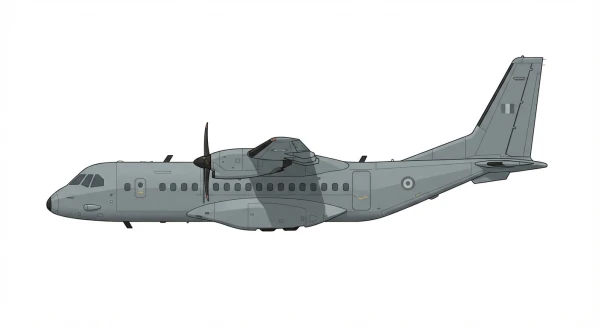
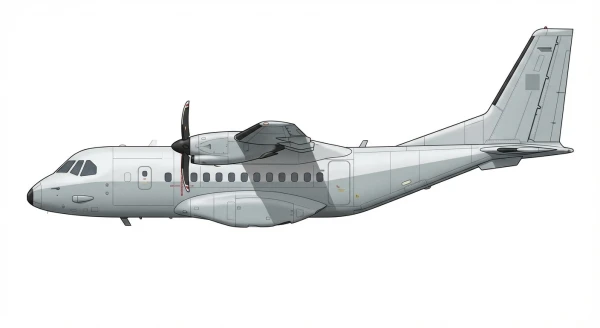
C-27J Spartan: A military transport aircraft developed as a joint venture with Lockheed Martin, featuring a glass cockpit and enhanced engines.
-
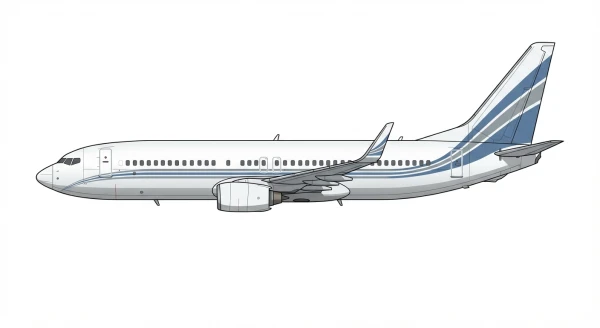
ATR 42: A regional airliner produced as part of a joint venture, known for its short take-off and landing capabilities.
-
ATR 72: A larger version of the ATR 42, also a regional airliner, offering increased passenger capacity.
-
Alenia Aermacchi M-346 Master: An advanced jet trainer aircraft, derived from a joint development with Yakovlev, featuring Western-sourced equipment.
-
AMX International: A collaborative project with Embraer resulting in a ground-attack aircraft tailored for battlefield interdiction, reconnaissance, and close air support.
Frequently Asked Questions
What type of aircraft is the G.222?
What is the maximum speed of the G.222?
What is the range of the G.222?
When did the G.222 first fly?
How many G.222 have been built?
What is the service ceiling of the G.222?
- AUG 12026 Updated Manufacturer updated
- APR 72026 Updated Sources and cross-references refreshed
- JAN 122026 Updated Range updated in a site-wide editorial pass