Boeing 747 vs KC-130 Hercules
Boeing 747 vs KC-130 Hercules at a glance — top speed 1,014 vs 670 km/h, range 12,150 vs 5,250 km, max takeoff weight 377,842 vs 79,379 kg, built 1,574 vs 124 units.
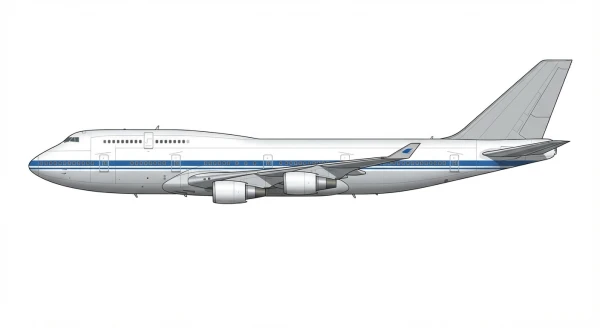
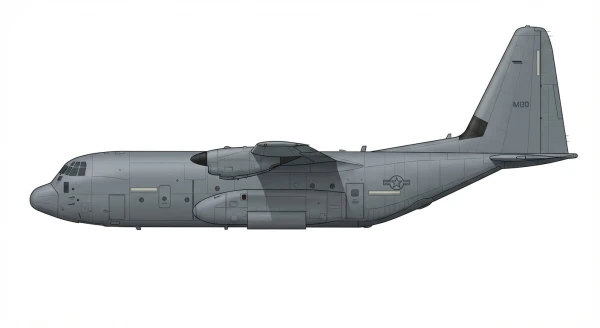
| Boeing 747 | KC-130 Hercules | |
|---|---|---|
| Origin country | 🇺🇸 United States | 🇺🇸 United States |
| Category | Military Special Mission Aircraft | Military Special Mission Aircraft |
| Manufacturer | Boeing | Lockheed Martin |
| First flight | 9 February 1969 | 1 January 1960 |
| Year introduced | 1970 | 1962 |
| Number produced | 1574 units | 124 units |
| Average unit price | $285 million | $22 million |
| Wing area | 511.0 m² | 162.0 m² |
| Wingspan | 59.6 m | 40.4 m |
| Height | 19.3 m | 11.6 m |
| Length | 70.6 m | 29.8 m |
| Maximum speed | 1014 km/h | 670 km/h |
| Operational range | 12,150 km | 5,250 km |
| Service ceiling | 13,746 m | 8,534 m |
| Max. takeoff weight | 377,842 kg | 79,379 kg |
| Empty weight | 173,726 kg | 34,274 kg |
| Total thrust | 4 x 25,719 kgf | 4 x 4,474 kW |
Detailed Comparison
The Boeing 747 and Lockheed Martin KC-130 Hercules operate in separate echelons of military aviation doctrine. The 747 airframe serves as a high-altitude, strategic platform constrained to fixed air bases with 3,000-meter runways. The Pentagon and foreign operators leverage the 747 for heavy, specialized missions, including airborne command posts and experimental weapons testing. Conversely, the Marine Corps dictates the KC-130's use as a tactical, front-line utility aircraft, routinely executing sorties from austere, unimproved dirt strips.
Development and Design
Boeing developed the 747 in the 1960s for Pan American Airways to drive down commercial per-seat flight costs. Its 37.5° wing sweep and high-bypass turbofan engines were engineered for subsonic efficiency, with a raised cockpit to allow front-loading of cargo. This commercial architecture dictates its military limitations: it requires massive tarmac space. Lockheed Martin derived the KC-130 directly from the C-130 tactical airlifter in 1960 to fulfill a specific Marine Corps requirement for expeditionary aerial refueling. The KC-130 relies on a straight wing and four turboprop engines, prioritizing short-field performance and low-speed loiter capabilities over transit speed.
Specifications and Performances
The performance metrics dictate their distinct operational envelopes. The 747 maxes out at 1,014 km/h with a 12,150 km range, supported by a 377,842 kg maximum takeoff weight. This makes it a strategic heavy-lifter, moving extreme payloads across transoceanic distances. The KC-130 operates in a completely different tactical regime. Its Rolls-Royce AE 2100D3 turboprops restrict it to 670 km/h and a 5,250 km range, but enable a 953-meter takeoff distance. While the 747 requires deep infrastructure, the KC-130 can land on dirt strips, offload 27,215 kg of fuel via its probe-and-drogue pods to two aircraft simultaneously, and immediately extract personnel.
Deployment and usage
Military application of the 747 is strictly specialized. Beyond the U.S. E-4B and VC-25, Iran deployed four 747-100s as tankers for its F-4 Phantom fleet prior to 1979. The Pentagon also attempted to mount a chemical oxygen iodine laser inside a modified 747-400F for the YAL-1 ballistic missile defense program, which was canceled in 2011 due to operational impracticality. The KC-130 possesses a broader combat record. In 2005, VMGR-252 deployed KC-130Js to Al Asad, Iraq, flying refueling and resupply missions within small-arms range. The Marine Corps further weaponized the airframe with the Harvest HAWK kit. This modular package includes:
- An AN/AAQ-30 Target Sight System mounted under the left wing
- Four AGM-114 Hellfire missiles
- Ten AGM-176 Griffin GPS-guided missiles managed from a cargo compartment console
This integration turns the tanker into an armed overwatch asset in environments like Afghanistan.
Conclusion
The KC-130 holds a definitive edge in tactical versatility and expeditionary warfare. Its ability to combine ground refueling, aerial refueling, troop transport, and close air support within a single sortie makes it a primary requirement for forward-deployed ground forces. The 747 is completely unsuited for theater-level combat operations. However, the 747 dominates the strategic domain. When a payload exceeds the physical dimensions of standard military transports—or when a mission requires housing a power-intensive command-and-control apparatus across intercontinental distances without refueling—the 747 airframe remains the only viable option between the two.